Central Iowa remodeling guides
How much does fire damage restoration cost in Central Iowa?
Fire damage restoration cost Central Iowa depends on the repair scope. Compare cleanup, rebuilding, insurance documents, and exclusions before signing.
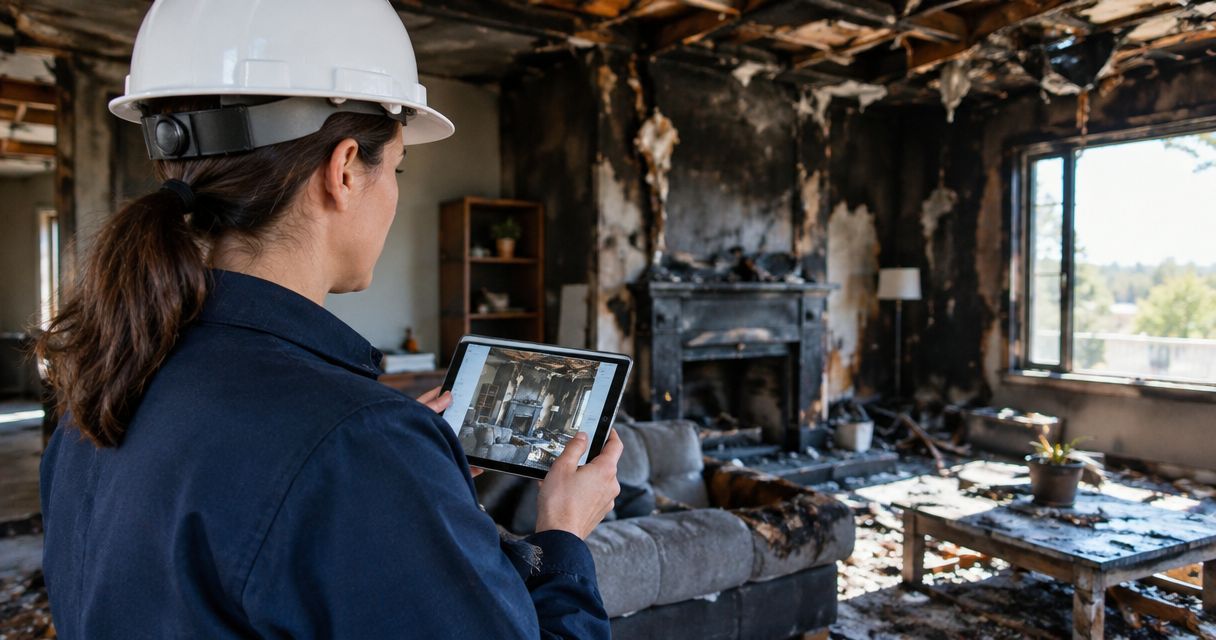
Fire damage restoration cost in Central Iowa depends on what your home needs: smoke cleanup, damaged-material removal, reconstruction, or a combination of those tasks. A useful 2026 estimate separates that work instead of treating restoration as a single service. Your insurance deductible, temporary housing, belongings, and optional upgrades also need separate attention because a construction estimate does not establish what your insurer will pay.
- Fire damage restoration cost Central Iowa estimates need separate cleanup and reconstruction scopes.
- Compare matching repair quantities, materials, exclusions, and responsibilities—not just estimate totals.
- Phoenix Construction Solutions is licensed and insured and provides reconstruction for Central Iowa homeowners.
- Confirm insurance coverage separately from the contractor’s repair scope before authorizing work.
Why this matters
After a fire, getting a number feels urgent. But an estimate for cleaning smoke-affected surfaces does not describe the same job as rebuilding damaged walls, wiring, and finishes. Comparing those totals tells you little about which proposal covers your home’s needs.
Start with the sequence in the fire damage workflow from insurance claim to move-in. Then ask each provider to identify where its responsibility begins and ends, especially at the handoff between cleanup and construction.
How much does fire damage restoration cost in Central Iowa?
Your written repair scope—not a regional average—is the basis for a usable estimate. For a 2026 project in Des Moines or surrounding Central Iowa communities, ask for a breakdown that distinguishes emergency protection, cleanup, demolition, building repairs, and finish restoration.
The table below explains the differences between those work categories. These are scope categories, not packages offered by a particular contractor.
| Work category | Best for | What the scope should explain | Limitation to check |
|---|---|---|---|
| Emergency protection | Securing openings and limiting additional exposure | Temporary protection, access restrictions, and responsibility for follow-up | Does not establish the permanent repair scope |
| Smoke and soot cleanup | Addressing affected surfaces and contents | Areas treated, methods, and items excluded | Cleaning does not repair damaged building components |
| Selective demolition | Removing materials identified for replacement | Removal boundaries, debris handling, and surfaces retained | Concealed conditions remain uncertain until exposed |
| Reconstruction | Rebuilding damaged portions of the home | Framing, building systems, insulation, drywall, and finishes as applicable | Requires clear decisions about materials and repair boundaries |
| Optional remodeling | Making owner-selected changes during rebuilding | Changes beyond the documented restoration scope | Do not assume insurance covers the changes |
Ask the estimator to mark each category as included, excluded, or handled by another provider. A blank line is not an agreement about responsibility.
What belongs in the construction breakdown?
Request room-by-room descriptions rather than a single line labeled fire restoration. Each affected room should identify the surfaces or components being repaired, the proposed work, and the material specification.
Useful quantities include square feet for drywall and flooring, linear feet for trim, and individual counts for doors or fixtures. Require measured quantities wherever the work can be measured. That gives you a way to compare proposals without assuming every contractor interpreted the damage identically.
Smoke cleanup: define what cleaning does not repair
Smoke cleanup and reconstruction solve different problems. Ask the cleanup provider which surfaces and belongings its proposal addresses, how it will document completed work, and what remains for the rebuilding contractor.
The advantage of a clearly bounded cleanup scope is accountability: you know which areas were treated and by whom. Its limitation is equally important. Cleaning an affected room does not establish that damaged framing, electrical components, or other building materials can remain.
Do not choose between cleaning and replacement solely by appearance. Ask the appropriate qualified professional to document why an item is being retained or removed, particularly when the decision affects safety or concealed building components.
Reconstruction: identify the full repair boundary
Reconstruction covers the building work needed after damaged materials are removed and the repair requirements are established. Depending on the documented damage, that scope includes work on structural components, building systems, insulation, wall surfaces, flooring, cabinetry, or trim.
The benefit is a defined path back to a finished space. The trade-off is that rebuilding requires more decisions than replacing visibly burned finishes: access, adjoining materials, inspections, and concealed conditions all need attention.
Ask where each repair stops. Replacing flooring in an affected room raises a different scope question from replacing flooring that continues into adjoining spaces. Write the agreed boundary into the proposal rather than leaving the decision until installation.
Optional remodeling: keep upgrades separate
A fire reconstruction project can prompt you to reconsider a kitchen layout, bathroom arrangement, or finish selection. Those choices belong in a separate owner-requested scope, not hidden inside the damage-repair description.
The benefit is the opportunity to plan changes while affected areas are already being rebuilt. The limitation is that an improvement is not automatically part of an insurance-covered repair. Ask your insurer about coverage before assuming a selected change belongs in the claim.
For your 2026 planning file, keep 2 scopes: damage repair and optional improvements. That separation makes approvals, contractor comparisons, and later changes easier to follow.
Why fire damage restoration cost varies
The damaged area matters, but area alone does not describe the work. A finish repair and a structural repair are different jobs even when they affect the same room.
Use these factors to question the estimate:
- Damage extent: Identify affected rooms and components, including areas requiring further inspection rather than relying only on visible burn marks.
- Cleanup versus replacement: Ask which materials will be treated, retained, removed, or rebuilt and who makes that determination.
- Building systems: Separate electrical, plumbing, and heating or cooling work from surface repairs when those systems are affected.
- Repair boundaries: Establish where flooring, drywall, paint, trim, and cabinetry work begins and ends.
- Permit and inspection requirements: Confirm the requirements with the authority having jurisdiction and identify who handles applications and inspections.
- Material selections and changes: Distinguish restoration materials from owner-selected substitutions or layout changes.
A proposal should connect each included task to a documented condition or an agreed choice. If that connection is unclear, ask for clarification before signing.
How do you get an estimate you can compare?
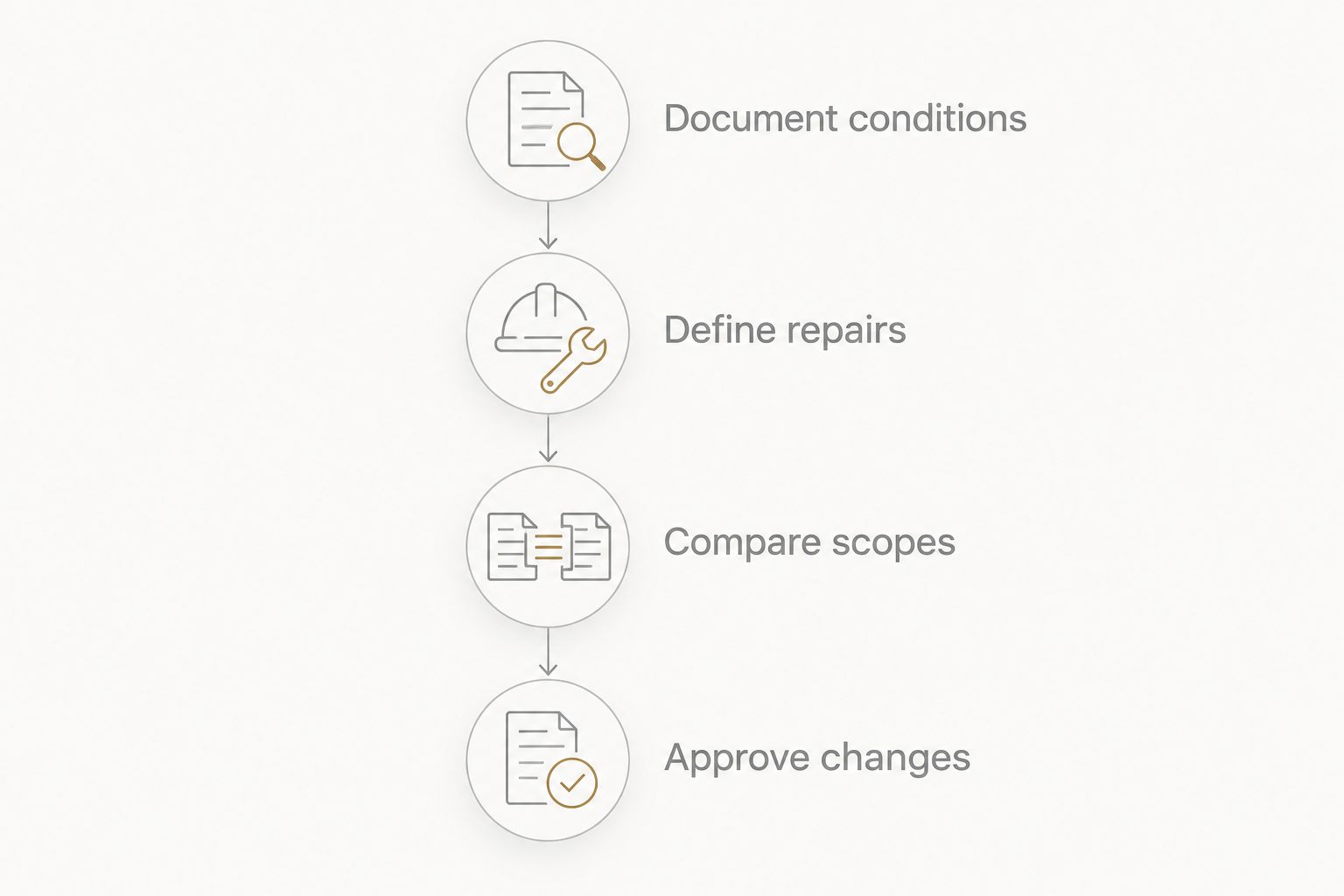
Use 4 steps to turn separate opinions into comparable written proposals. Keep the same damage information and requested repair boundaries in front of every contractor.
- Document conditions. When access is authorized and safe, organize photographs, affected-room notes, available reports, and the insurer’s estimate. Do not enter restricted areas to collect information.
- Define repairs. Ask the contractor to distinguish confirmed work from items that require further evaluation or exposure. Identify who handles cleanup and who handles rebuilding.
- Compare scopes. Check quantities, material descriptions, exclusions, permit responsibilities, and work boundaries side by side. Resolve differences before comparing totals.
- Approve changes. Require a written description and your approval for changes to the agreed work. Confirm how newly discovered damage will be documented and communicated.
A good comparison does not require identical document formatting. It requires enough detail to see whether the contractors are proposing the same result.
Keep 3 documents together: the contractor’s scope, the insurer’s estimate, and your written change approvals. They serve different purposes, but reviewing them together helps you spot an unresolved repair item or an owner-requested addition.
Does homeowners insurance pay for fire reconstruction?
Your policy and claim determination control insurance coverage; the contractor’s proposal describes the work. A detailed construction estimate supports a discussion about repairs, but it is not a coverage decision.
Ask your adjuster to explain the deductible, applicable limits, settlement terms, and documentation needed for disputed or newly discovered damage. Request clarification in writing when a repair appears in the contractor’s scope but not in the insurer’s estimate.
For a 2026 claim, keep dated versions of the documents rather than replacing earlier copies. A version history helps you distinguish the original repair assessment from later discoveries and requested improvements.
What expenses need separate confirmation?
Ask specifically about belongings, temporary housing, storage, and other expenses outside the construction work. Confirm whether each item belongs in the claim, the contractor’s agreement, or a separate arrangement.
Do not treat an approved claim amount as a complete construction scope. Likewise, do not treat a contractor’s complete repair proposal as confirmation that every item is covered.
Can you stay in your home during fire damage repairs?
Occupancy depends on safety, utility status, access restrictions, and the work being performed—not simply on how many rooms look undamaged. Follow restrictions from emergency officials, utility providers, and the professionals evaluating the building.
Before planning to stay, ask who determines whether the home is safe to occupy and what conditions must remain in place during construction. Discuss separation from the work area and access to essential facilities without assuming those arrangements make occupancy acceptable.
Who should handle reconstruction in Central Iowa?
Choose a contractor whose stated services match the building work your home needs. Ask about licensing and insurance, the written scope, responsibility for trade work, and how changes will be approved.
Phoenix Construction Solutions is a fit for Central Iowa homeowners who need licensed and insured reconstruction services. Based in Carlisle, the company provides reconstruction, remodeling, and additions in Des Moines, Norwalk, Pleasant Hill, Ankeny, Urbandale, Waukee, West Des Moines, and surrounding communities.
Review the reconstruction and remodeling services against your documented repair needs. The company’s stated construction services are relevant to rebuilding; do not assume a reconstruction agreement also includes emergency response, contents cleaning, insurance coverage decisions, or every other restoration task. Confirm those responsibilities separately.
For your 2026 consultation, bring the available damage photographs, insurer’s estimate, and a list of unresolved scope questions. Ask Phoenix Construction Solutions to distinguish the proposed building repairs from any optional remodeling you want to discuss.
Book a Consultation
Discuss your Central Iowa reconstruction scope and the building repairs your home needs.
FAQ
What determines fire damage restoration cost in Central Iowa?
Fire damage restoration cost in Central Iowa depends on the documented cleanup and repair scope. Ask for separate descriptions of removal, rebuilding, affected building systems, finishes, and exclusions rather than relying on a single restoration line item.
Is smoke cleanup the same as fire damage reconstruction?
Smoke cleanup is not the same as reconstruction. Cleanup addresses affected surfaces or contents, while reconstruction repairs or replaces damaged parts of the building; confirm the handoff between providers in writing.
Will homeowners insurance cover every repair after a fire?
Coverage depends on your policy and the insurer’s claim determination. Ask your adjuster to explain covered repairs, exclusions, your deductible, and the documentation needed for newly discovered damage.
How do I compare fire damage repair estimates?
Compare the same room-by-room repair scope before comparing estimate totals. Check quantities, materials, exclusions, permit responsibilities, and the boundaries between cleanup and rebuilding.
Can I upgrade my kitchen while rebuilding after a fire?
You can discuss kitchen changes as a separate optional remodeling scope. Keep upgrades distinct from damage repairs and confirm coverage with your insurer rather than assuming the claim includes them.
Should I enter my house to photograph fire damage?
Enter only when access is authorized and safe. Follow emergency officials’ restrictions and do not enter a restricted area to collect photographs or belongings.
Who can I call about reconstruction in Des Moines and Central Iowa?
Call Phoenix Construction Solutions at (515) 505-8781 to discuss reconstruction. The licensed and insured contractor is based in Carlisle and serves homeowners throughout Central Iowa.
One last thing
Ask this before you sign: What happens if demolition reveals damage that is not in this scope? The answer should identify who documents the condition, who prepares the revised work description, and how you approve it.
That question does more for your budget than an unsupported average. It establishes how the project handles the point where the original estimate stops matching the conditions inside your home.