Central Iowa remodeling guides
How to work with your insurance adjuster on a home reconstruction
Working a home reconstruction insurance claim in 2026? Document damage first, get a contractor estimate, and negotiate the adjuster's number line by line.
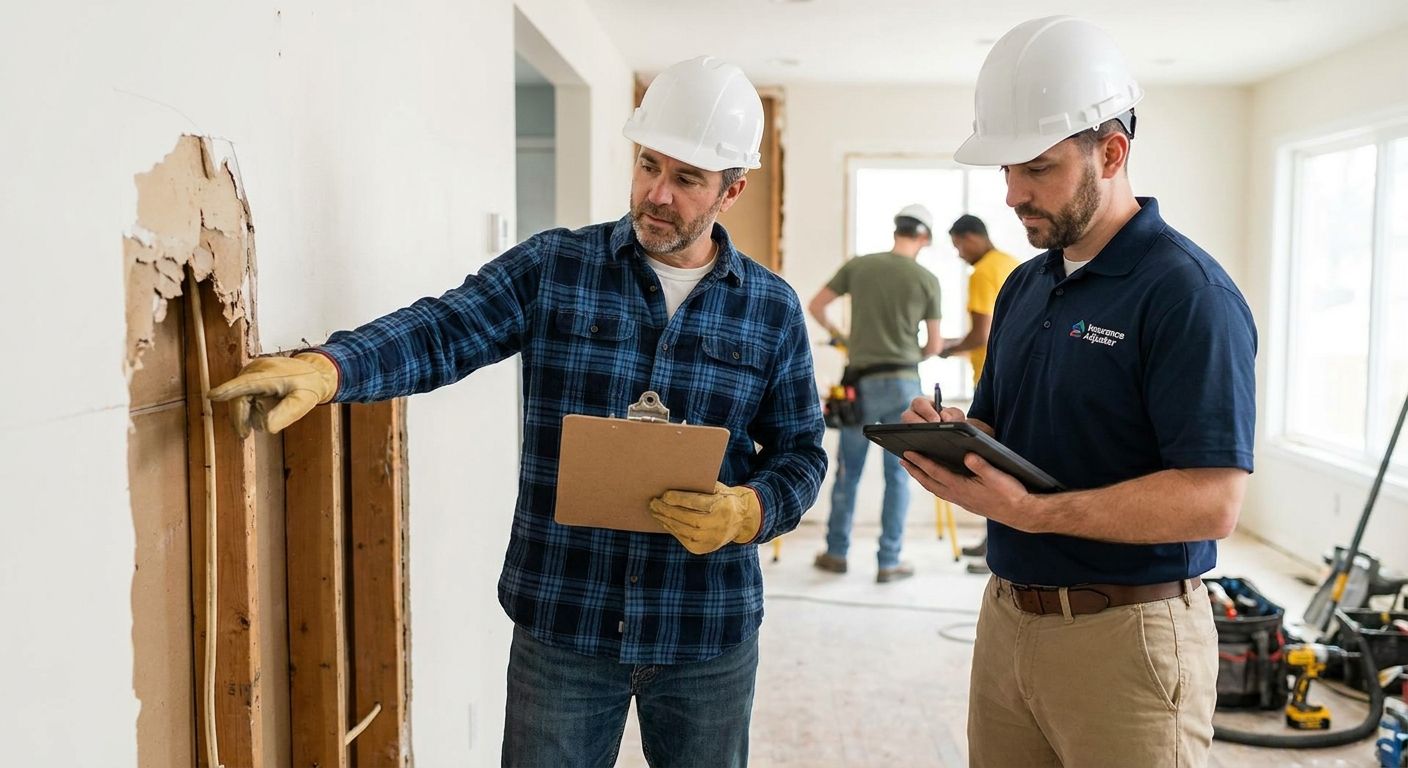
When a storm, fire, or water event forces a full home reconstruction, the insurance adjuster's estimate almost never matches what the rebuild actually costs — the fix is to document damage before the adjuster arrives, get an independent contractor estimate to compare line by line, and negotiate from your own scope of work rather than accepting the first number handed to you.
- Document every room with photos and video before the adjuster's first visit — this is your leverage on a home reconstruction insurance claim.
- Get a written estimate from a licensed contractor like Phoenix Construction Solutions before you sign any settlement.
- Adjusters use pricing software (Xactimate) that often underprices labor in Central Iowa markets — push back with local quotes.
- Supplemental claims are normal — hidden damage found during demolition almost always requires a second adjuster visit in 2026.
- Never start reconstruction work until the scope of work is confirmed in writing by both your contractor and the insurer.
Why this matters
A home reconstruction insurance claim is the single biggest financial negotiation most Iowa homeowners will ever run, and the adjuster works for the insurance company, not for you. Their job is to close the claim at the lowest defensible cost. Your job is to make sure the final settlement actually covers what it takes to rebuild the home to code in Central Iowa in 2026 — not just what a national pricing database estimates from a spreadsheet in another state.
The gap between an adjuster's first number and the real cost of a licensed reconstruction shows up most often in labor rates, code-upgrade requirements, and hidden damage found once demolition starts. None of that gets caught if you sign off on the first estimate without a contractor's counter-scope in hand.
How do you work with your insurance adjuster on a home reconstruction?
Work the claim in this order, and don't skip steps to speed things up — skipping steps is exactly how homeowners end up underpaid.
- Document damage immediately. Photograph and video every affected room, structural element, and piece of damaged property before any cleanup or demolition starts. Timestamp everything.
- File the claim and request a copy of your policy's dwelling coverage limits. Know your deductible and your coverage cap before the adjuster's first visit.
- Get an independent contractor estimate before the adjuster's inspection, if timing allows. A licensed reconstruction contractor sees structural issues an adjuster's walkthrough often misses — framing damage behind drywall, moisture intrusion, foundation cracking.
- Walk the property with the adjuster in person. Point out every area of damage, including anything not visible from the exterior. Take your own notes on what the adjuster measures and photographs.
- Compare the adjuster's written estimate line item by line item against your contractor's scope of work. Flag every discrepancy in materials, labor rate, or square footage in writing.
- Request a supplement if demolition reveals additional damage after work begins. Insurers expect supplemental requests on reconstruction claims — this is standard, not confrontational.
- Get the final scope and payment schedule in writing before your contractor starts rebuilding. Verbal agreements with an adjuster don't hold up if the claim gets reviewed later.
A reconstruction contractor experienced with storm-damaged homes in Central Iowa will typically build the counter-estimate you bring into the negotiation, since they know what local labor and material costs actually run in 2026 — not what a national database assumes.
Adjuster estimate vs. contractor estimate: what usually differs
| Item | Adjuster estimate (typical basis) | Contractor estimate (typical basis) |
|---|---|---|
| Labor rate | National pricing software average | Local 2026 labor market rate |
| Code upgrades | Often excluded unless policy has ordinance coverage | Included if required by current building code |
| Hidden damage | Not assessed until visible | Flagged during walkthrough and demolition |
| Material grade | Standard/builder-grade default | Matched to existing home finish level |
Why insurance adjuster estimates vary
Adjuster numbers on the same reconstruction can swing by thousands of dollars depending on a handful of factors:
- Which pricing software the insurer uses and how current its regional labor rate data is.
- Whether your policy includes ordinance or law coverage, which pays for code upgrades not otherwise reimbursed.
- How much damage is visible at the time of inspection versus what's found once walls, flooring, or roofing are opened up.
- The adjuster's workload — a desk adjuster juggling dozens of claims may spend less time on-site than a dedicated field adjuster.
- Whether you bring a competing contractor estimate into the conversation before signing.
- The age and construction type of the home, since older homes in Carlisle, Norwalk, and Pleasant Hill often carry more code-upgrade exposure than newer builds in Waukee or Ankeny.
“The first adjuster estimate is a starting offer, not a final number — treat it that way.”
What documents do you need for a home reconstruction insurance claim?
You need your policy declarations page, a full damage inventory with photos and video, receipts for any emergency repairs, and a written contractor estimate. Keep every email and letter from the insurer in one file — claims that drag into supplemental requests get resolved faster when the paper trail is organized from day one.
Can you use your own contractor instead of the insurance company's preferred vendor?
Yes, you can choose your own licensed contractor on a home reconstruction insurance claim — insurers cannot force you to use their preferred vendor list. Preferred-vendor programs exist for the insurer's convenience, not because they're required by your policy, so get quotes from an independent, licensed and insured contractor before committing.
What if the adjuster's estimate is lower than your contractor's quote?
If the adjuster's estimate is lower, submit your contractor's itemized scope of work as a formal counter-estimate and request a re-inspection. Most gaps close once the insurer sees line-item detail on labor and code-required upgrades; if the gap stays wide, your policy likely allows for an appraisal process to settle the dispute.
FAQ
How long does a home reconstruction insurance claim take to settle in 2026?
Settlement timelines vary by claim complexity, but claims involving full reconstruction typically take longer than simple repair claims because of the additional documentation and supplemental requests involved. Keeping a complete photo record and organized paperwork from day one shortens the process.
Do you need a public adjuster for a home reconstruction claim?
Not always — many homeowners handle the claim directly with a licensed contractor's estimate as leverage. A public adjuster can help on large or disputed claims, but they typically take a percentage of the settlement, so weigh that against the size of your claim.
Can the insurance adjuster tell you which contractor to hire?
No, the insurance adjuster cannot require you to hire a specific contractor. You have the right to choose any licensed and insured contractor for a home reconstruction insurance claim.
What happens if you find more damage after the adjuster's estimate is approved?
You file a supplemental claim with photos and a contractor's documentation of the newly discovered damage. Supplemental requests are common on reconstruction jobs once demolition opens up walls, flooring, or the roof deck.
Should you start reconstruction before the insurance settlement is final?
No — get the scope of work and payment schedule confirmed in writing before construction starts. Starting early can leave you covering costs the insurer later disputes.
Is ordinance or law coverage important for a reconstruction claim?
Yes — ordinance or law coverage pays for code upgrades that standard dwelling coverage often excludes, which matters most on older homes being rebuilt to current 2026 building codes.
What's the difference between a repair estimate and a reconstruction estimate?
A repair estimate covers patching or replacing damaged sections, while a reconstruction estimate covers rebuilding structural components to current code. Reconstruction estimates run higher because they include framing, code compliance, and full finish work, not just surface repair.
One last thing
Most homeowners lose ground on a home reconstruction insurance claim not because the adjuster is dishonest, but because nobody on the homeowner's side is reading the estimate line by line before signing. A licensed contractor's counter-scope is the single highest-leverage document you can bring to that negotiation in 2026.
Get a reconstruction estimate to counter your claim
Licensed and insured, serving Central Iowa storm and damage rebuilds.