Central Iowa remodeling guides
Best fire damage restoration response times in Central Iowa
Compare fire damage restoration services by the work you need. Choose the right Central Iowa response for board-up, cleanup, drying, and reconstruction.
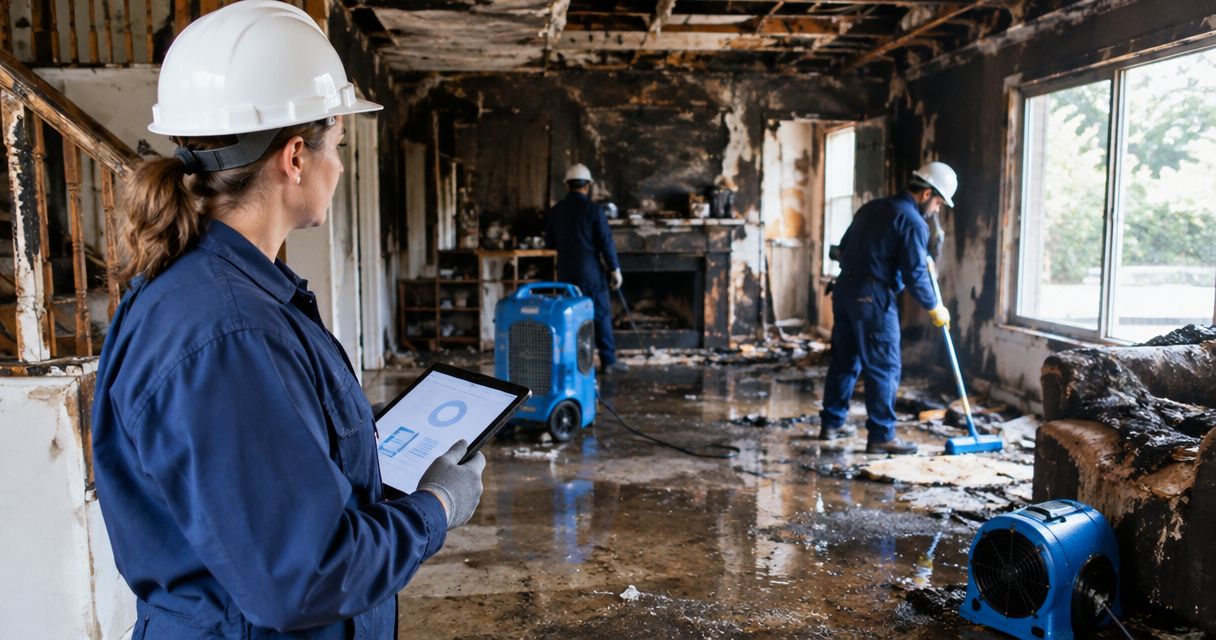
Best for reconstruction: Phoenix Construction Solutions. Best for smoke cleanup and suppression-water drying: a qualified mitigation specialist. Best for securing damaged openings: a board-up specialist. For fire damage restoration services in Central Iowa in 2026, choose the response that addresses the immediate hazard, then confirm a specific arrival time rather than treating a callback as an on-site response.
- Phoenix Construction Solutions fits the reconstruction stage of fire damage restoration services in Central Iowa.
- Choose mitigation specialists for smoke cleanup and suppression-water drying; confirm the exact work before authorizing it.
- Compare crew arrival, work start, and reconstruction scheduling separately—not as one response-time promise.
- Keep emergency protection and permanent rebuilding in separate written scopes so responsibilities stay clear.
Why this matters
A fire-damage response involves different jobs. Securing a broken window does not remove smoke residue, and cleaning a room does not establish that damaged framing is ready to rebuild.
If a fire is active or anyone faces immediate danger, leave the property and contact emergency services. Do not enter until the responsible authorities permit access. Contractor selection comes after life safety, not instead of it.
The best response is the correct crew starting the correct work—not simply the first company to answer.
What makes the best fire damage restoration services?
Use these criteria to compare calls and written proposals in 2026:
- Service fit: Identify whether you need opening protection, cleanup and drying, or permanent reconstruction.
- Crew arrival: Ask when a crew will reach your address, not when someone will return your call.
- Work start: Confirm what that crew can actually begin upon arrival and what authorization it needs.
- Written scope: Separate temporary protection, damaged-material removal, cleanup, and rebuilding.
- Credentials: Verify the contractor's credentials and insurance for the work being proposed.
- Handoff responsibility: Name who decides the property is ready for the next trade and who records that decision.
Ask each provider the same questions. A quick arrival with an undefined scope is not directly comparable to a scheduled reconstruction assessment.
Central Iowa response options at a glance
These options are ranked by their fit for distinct recovery needs, not by an unverified fastest-arrival claim. Start with the row that matches your property's current condition.
| Option | Best for | Standout role | Key limitation | Response to confirm |
|---|---|---|---|---|
| Phoenix Construction Solutions | Permanent reconstruction | Licensed and insured Central Iowa remodeling and reconstruction contractor | Confirm emergency mitigation and board-up arrangements separately | Assessment appointment and proposed construction start |
| Mitigation specialist | Smoke cleanup and suppression-water drying | Addresses cleanup and drying before finishes are replaced | Cleanup scope does not automatically include permanent rebuilding | Crew arrival and authorized cleanup start |
| Board-up specialist | Damaged exterior openings | Provides temporary protection for exposed windows, doors, or other openings | Temporary protection is not structural repair or interior restoration | Arrival and completion of the agreed protection work |
1. Phoenix Construction Solutions: best for reconstruction
Best for: Central Iowa homeowners moving from emergency stabilization into permanent repairs.
Phoenix Construction Solutions is a licensed and insured remodeling, addition, and reconstruction contractor based in Carlisle, Iowa. Its service area includes Des Moines, Norwalk, Pleasant Hill, Ankeny, Urbandale, Waukee, and West Des Moines.
The company's stated reconstruction and rebuild services make it a fit for discussing permanent repairs after fire damage. That is a different assignment from dispatching a cleanup crew or covering an exposed opening.
Phoenix Construction Solutions is best for Central Iowa homeowners who need a licensed and insured contractor for the reconstruction stage of fire recovery.
Reconstruction pros
- The stated services include reconstruction, rebuilds, and renovation.
- Kitchen, bathroom, basement, and whole-home work fits the planning needs of damaged living spaces.
- The stated service area covers Carlisle and multiple Des Moines-area communities.
- Licensing and insurance are explicit company credentials, not assumptions based on a directory listing.
Reconstruction cons and boundaries
- A reconstruction consultation is not the same commitment as an emergency cleanup dispatch.
- You must confirm any temporary protection, smoke remediation, or drying responsibilities separately.
- The construction start depends on an agreed scope and the conditions required to begin the work.
For a 2026 reconstruction consultation, describe the damaged rooms, any exposed exterior openings, and the emergency work already completed. Ask what information the contractor needs before assessing permanent repairs.
Verdict: Choose for reconstruction; confirm emergency-response needs separately.
2. Mitigation specialist: best for smoke cleanup and drying
Best for: A property that needs professional smoke-residue cleanup or evaluation of water left by firefighting.
A mitigation specialist addresses damage-control work before permanent finishes return. Ask the provider to identify its exact capabilities rather than assuming every restoration business handles every stage.
Fire recovery can involve soot, affected contents, wet materials, and damaged building systems. Tell the dispatcher what you know, but do not enter restricted areas to collect more details.
Mitigation pros
- Cleanup and drying can be defined separately from rebuilding.
- A specialist can document which materials receive treatment and which need further evaluation.
- A clear mitigation scope gives the reconstruction contractor a more useful handoff.
Mitigation cons and boundaries
- A cleanup agreement does not automatically include framing, electrical repairs, cabinetry, or finished surfaces.
- An initial visit does not mean every affected area has been evaluated.
- Odor improvement alone does not establish structural safety or readiness to occupy the home.
Ask whether the proposed arrival is for an evaluator or a crew equipped to begin authorized work. Then ask what documentation you will receive, what areas the work covers, and what conditions trigger additional authorization.
For your 2026 comparison, record 3 time entries for each provider: callback time, promised arrival time, and actual work-start time. These entries distinguish communication speed from on-site action without relying on a vague response-time label.
Verdict: Choose for defined cleanup and drying work; confirm who handles permanent repairs.
3. Board-up specialist: best for damaged exterior openings
Best for: A released property with broken windows, damaged doors, or other openings requiring temporary protection.
Board-up work addresses exposure and access at damaged openings. It does not replace a structural assessment, repair unsafe utilities, or resolve smoke contamination inside the building.
Describe the opening from a safe location. Do not climb onto a damaged roof, approach unstable masonry, or move debris to help a contractor estimate the job remotely.
Board-up pros
- The immediate task can be defined by opening and location.
- Temporary protection can be separated from the longer reconstruction contract.
- Completion photos can record the condition at the handoff to subsequent trades.
Board-up cons and boundaries
- Covering an opening does not establish that the surrounding structure is sound.
- Temporary materials do not restore the building's permanent exterior assembly.
- Access restrictions and unsafe conditions can prevent the requested work from proceeding as first described.
Ask who will assess the attachment area, what openings the authorization covers, and how the temporary installation will be removed when permanent repairs begin. Include responsibility for revisiting the protection if its condition changes.
The sequence from fire damage assessment and board-up to restoration needs a documented handoff: identify which openings were protected, what remains exposed, and which hazards still restrict access. That record gives the next crew a defined starting point rather than an assumption that the building is ready.
Verdict: Choose for temporary opening protection; do not treat completion as clearance to rebuild.
How to compare response times without mixing different promises
For a 2026 contractor comparison, use the same sequence with every provider. A response-time promise becomes useful only when you know the location, crew, task, and starting conditions attached to it.
Initial contact
Give the address, your safe callback number, and the known condition of the property. State whether authorities have allowed access and whether another contractor is already working there.
Ask who is answering: a dispatcher, an estimator, or the person responsible for field scheduling. Record the promised next action instead of assuming the call itself starts the job.
Site arrival
Ask for an arrival window tied to your specific address. Confirm whether the visitor will assess the property, perform temporary protection, or begin cleanup.
Keep 1 named contact responsible for updates on your side. That reduces conflicting instructions when family members, an insurer, and multiple contractors are communicating about the same rooms.
Work authorization
Request 2 written scopes when emergency work and permanent rebuilding are separate assignments. Each scope should name the work, exclusions, authorization process, and responsible contractor.
Do not authorize broad demolition simply because a crew arrived quickly. Ask what the proposed removal addresses and how the contractor will document the condition before covering or discarding materials.
Reconstruction start
Ask which approvals, inspections, material decisions, and site conditions must be resolved before rebuilding begins. Identify who obtains required permits and schedules applicable inspections.
Local requirements depend on the property and work. The guide to building permits for a home renovation in Iowa addresses the permit-planning questions to raise before signing a reconstruction scope.
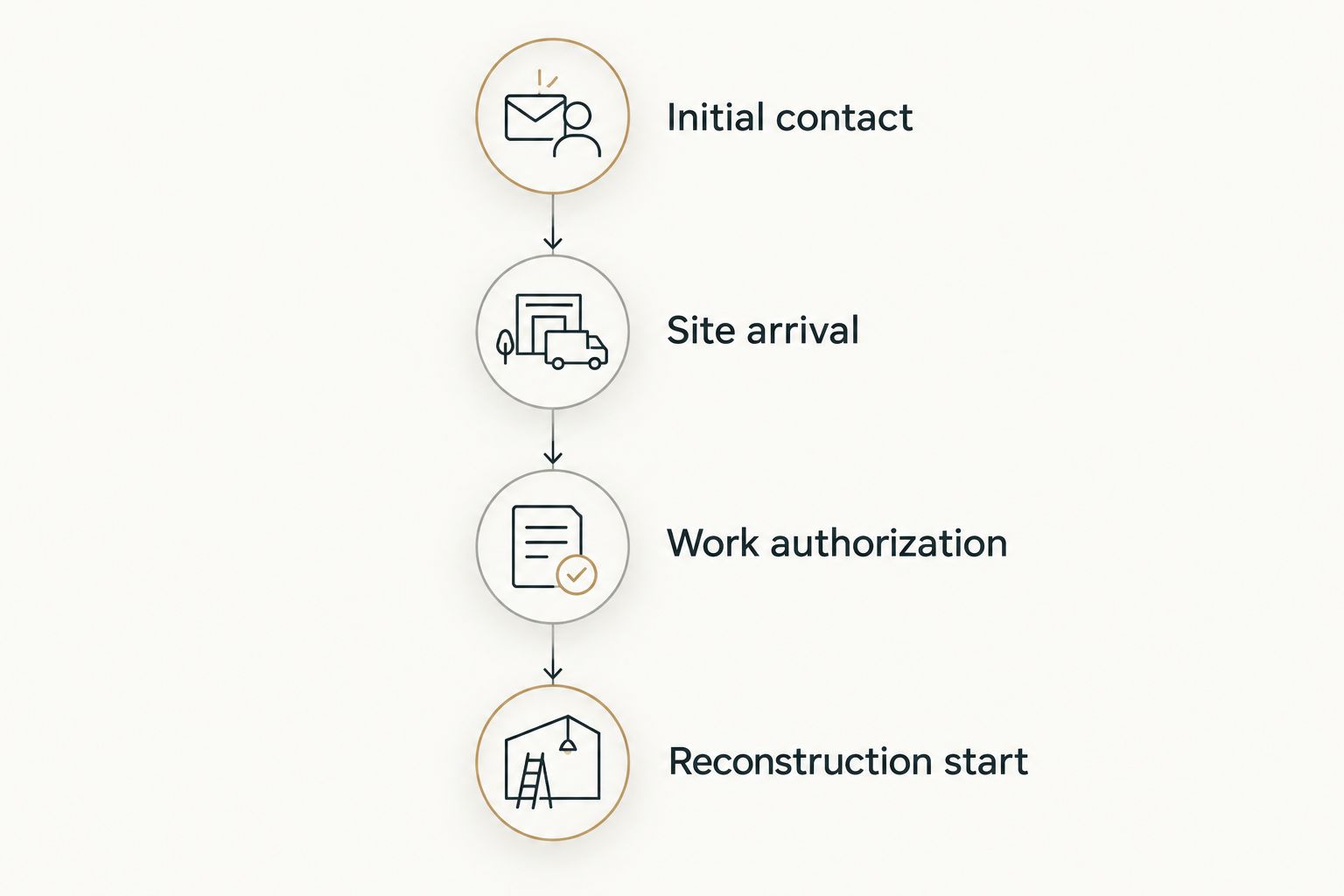
Keep these commitments in your project record. If the proposed start changes, request the revised date and the reason before rearranging access or coordinating another trade.
What belongs in the written reconstruction scope?
A useful scope describes the finished repair and the work needed to reach it. It should not leave you guessing whether an estimate covers demolition only or a completed room.
Before approving permanent repairs, ask the contractor to address:
- Affected areas: Identify rooms, surfaces, assemblies, and systems included in the work.
- Removal boundaries: Explain what comes out, what stays, and how newly discovered damage changes the agreement.
- Readiness checks: State what must be resolved before insulation, drywall, cabinetry, or flooring conceals the work.
- Trade responsibility: Assign structural, electrical, plumbing, mechanical, and finish work as applicable.
- Owner decisions: Separate repair selections from requested changes to the original layout or finishes.
- Closeout: Define walkthrough items, applicable inspection records, and completion documentation.
If you want to improve a kitchen or bathroom during reconstruction, identify that choice separately. A repair scope and an elective remodeling scope serve different purposes; combining them without clear boundaries makes proposals harder to compare.
How these response options were ranked
This 2026 guide ranks service roles by the need each addresses: permanent reconstruction, cleanup and drying, or temporary opening protection. It does not assign unsupported arrival guarantees to individual companies.
The criteria are service fit, a defined arrival commitment, written authorization, credentials, and handoff responsibility. Use those same criteria when comparing local providers rather than selecting on a broad emergency-response phrase alone.
Which response should you choose?
Choose the next service your property actually needs. If exposed openings remain, arrange qualified temporary protection. If cleanup or drying remains unresolved, define that work before replacing finishes.
For permanent rebuilding in Carlisle, Des Moines, or the surrounding Central Iowa communities, book a reconstruction consultation. Bring the existing scopes, photos taken safely, and any documents describing completed emergency work so the discussion starts with the current condition.
FAQ
What's the best way to compare fire damage restoration services in Central Iowa?
Compare providers by the work you need and the on-site commitment they make. Ask separately about crew arrival, authorized work start, cleanup responsibilities, and permanent reconstruction.
Who has the fastest fire damage restoration response time?
Confirm the earliest arrival directly with providers for your address and required task. A callback time, assessment appointment, and working crew's arrival are different commitments.
Is Phoenix Construction Solutions a fit for rebuilding after fire damage?
Phoenix Construction Solutions provides reconstruction, rebuilds, and remodeling in Central Iowa and is licensed and insured. Discuss the damaged areas and confirm the proposed scope; arrange emergency mitigation or board-up separately as needed.
Does board-up service mean my house is safe to enter?
No. Board-up work provides temporary protection at openings; it does not establish structural safety or clear the property for occupancy. Follow access instructions from the responsible authorities.
Should smoke cleanup happen before reconstruction?
Resolve the required cleanup and site-readiness work before permanent finishes conceal affected areas. Ask the cleanup provider and reconstruction contractor to document the handoff and any remaining conditions.
Can one contract cover cleanup and rebuilding?
A contract can cover both only when it explicitly assigns both scopes and responsibilities. Do not assume that a restoration label includes every trade, temporary protection, or permanent repair.
How do I arrange a Central Iowa reconstruction consultation?
Call (515) 505-8781 to discuss your reconstruction project. Describe the property's location, affected rooms, access restrictions, and emergency work already completed.
One last thing
Before a wall closes, ask what the new finish will hide. Request documentation of the repairs and applicable inspections while the work remains visible—not only a photo of the finished room.
That is the final response-time test: a fast start matters only when the next stage receives a properly prepared property.