Central Iowa remodeling guides
How to get building permits for a home renovation in Iowa
Building permits for a home renovation in Iowa go through your city or county office. Steps, required projects, and egress rules explained for 2026.
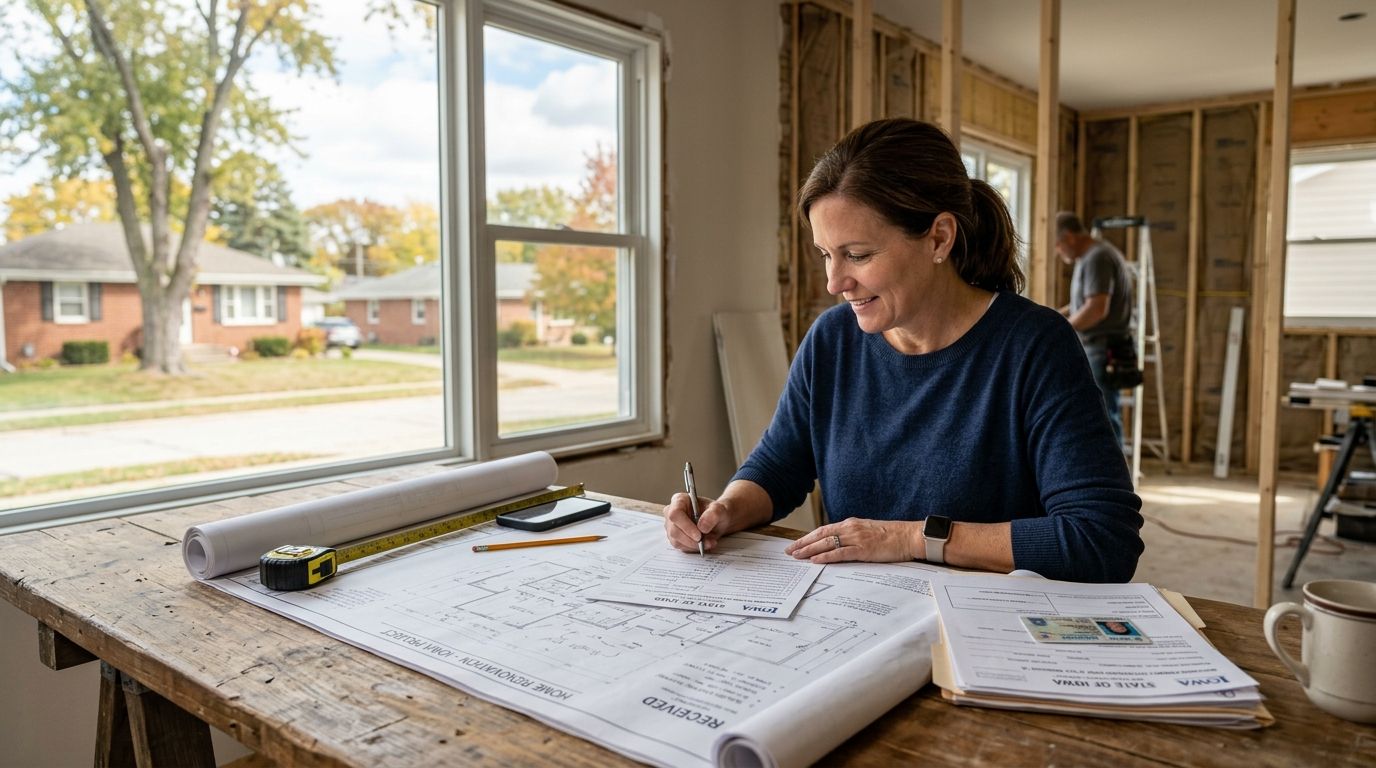
Getting a building permit for a home renovation in Iowa means applying through your city or county building department before work starts, submitting basic plans, paying a fee tied to project scope, and passing inspections at set stages of construction. Central Iowa cities including Des Moines, Ankeny, Waukee, West Des Moines, and Urbandale each run their own permitting office, so the exact application and inspection sequence shifts from one jurisdiction to the next even though the underlying process stays similar.
- Building permits for a home renovation in Iowa are issued by your city or county, not the state.
- Structural, electrical, plumbing, and egress work almost always needs a permit; cosmetic updates usually don't.
- Most jurisdictions follow a model code provision letting a permit lapse after 180 days without an inspection.
- Basement bedroom conversions need an egress window with a minimum 5.7 sq ft net clear opening.
- Phoenix Construction Solutions pulls permits as part of remodeling and addition projects across Central Iowa.
Why this matters
Skipping a permit on a load-bearing wall removal, an electrical panel upgrade, or a basement bedroom conversion creates real exposure: an uninspected project can complicate a home sale, void part of a homeowner's insurance claim after damage, and force a homeowner to open up finished walls later for a retroactive inspection. Phoenix Construction Solutions handles permit applications on renovation, addition, and reconstruction projects throughout Central Iowa, so the paperwork isn't left to a homeowner juggling contractor bids and a construction schedule at the same time.
In 2026, most Central Iowa building departments still process permits the same way they did a few years back: paper or online application, plan review, fee payment, then scheduled inspections. What changes year to year is turnaround time and fee schedules, both of which depend on the specific city office handling the request.
How do you get a building permit for a home renovation in Iowa?
- Confirm the project needs a permit. Structural, electrical, plumbing, mechanical, and egress changes almost always require one; cosmetic work like paint or flooring replacement usually doesn't.
- Contact the city or county building department. Des Moines, Ankeny, Waukee, West Des Moines, Urbandale, Norwalk, and Pleasant Hill each maintain a separate permitting office — there's no single statewide Iowa permit office for residential renovation.
- Submit plans and a project description. Additions and structural work typically need a site plan and basic construction drawings; simpler jobs like a water heater swap may only need a short application.
- Pay the permit fee. Fees are generally scaled to the declared project valuation, so a kitchen remodel with new wiring costs more to permit than a bathroom refresh with no structural changes.
- Schedule inspections at required stages. Framing, electrical rough-in, plumbing rough-in, and final inspection are common checkpoints before a certificate of completion is issued.
- Keep the permit active. Most jurisdictions follow a model code provision that lets a permit lapse if no inspection happens within 180 days of issuance, which means a stalled project can force a homeowner to reapply.
Hiring a contractor who already knows the local review process cuts down on rejected applications. Before signing anything, it's worth learning how to verify a contractor's license and insurance in Iowa, since an unlicensed crew pulling permits under someone else's name is a common source of delay.
Which renovation projects need a permit in Central Iowa?
| Project type | Permit typically required? | Why |
|---|---|---|
| Home addition | Yes | Structural, foundation, and zoning review |
| Kitchen remodel with new wiring/plumbing | Yes | Electrical and plumbing code compliance |
| Bathroom remodel, layout unchanged | Sometimes | Depends on whether plumbing lines move |
| Basement finishing with a new bedroom | Yes | Egress window and smoke detector code |
| Deck construction | Yes | Structural footing and railing height code |
| Interior paint or flooring only | No | Cosmetic work, no code trigger |
| Roof replacement, same footprint | Sometimes | Varies by city; some require a permit for reroofing |
The direct verdict: if a renovation touches framing, wiring, plumbing, or an egress opening, assume a permit is required and confirm with the local building department before demo starts.
Why permit requirements vary across Central Iowa cities
- Jurisdiction size — smaller cities like Carlisle and Norwalk may process applications faster than larger Des Moines-area offices with higher volume.
- Code edition adopted — cities update their adopted version of the International Residential Code on different schedules, which changes exact requirements year to year.
- Zoning overlays — floodplain zones, historic districts, and setback rules add review steps beyond the base building permit.
- Project valuation — higher declared project cost generally means a higher permit fee and sometimes a longer plan review.
- Utility involvement — projects touching gas lines or electrical service upgrades often need a separate utility inspection alongside the building permit.
- Structural scope — removing a load-bearing wall or altering the foundation triggers a more detailed plan review than a like-for-like fixture swap.
Let a licensed crew pull the permits
Phoenix Construction Solutions handles permitting on renovations across Central Iowa.
Do you need a permit to finish a basement in Iowa?
Yes, finishing a basement in Iowa typically needs a permit, especially when a bedroom is added, because code requires a compliant egress window. The IRC standard calls for a minimum 5.7 sq ft net clear opening, a minimum height of 24 inches, a minimum width of 20 inches, and a sill no higher than 44 inches off the finished floor. Homeowners planning a bedroom conversion should read about egress window installation before finalizing a basement layout, since retrofitting an egress opening after drywall is up costs more time and money than planning for it upfront.
How long does a building permit take to process in Central Iowa?
Processing time varies by city and by how complete the submitted plans are, with simple permits often moving faster than applications involving structural review or zoning variances. A stalled or incomplete application is the most common reason a permit takes longer than expected in 2026, more often than department backlog itself.
Can you pull your own permit as a homeowner in Iowa?
In many Iowa jurisdictions a homeowner can pull an owner-builder permit for work on their own primary residence, but the homeowner then takes on the liability and inspection responsibility that a licensed contractor would otherwise carry. Most homeowners tackling anything beyond a small cosmetic project let their contractor pull the permit instead, since the contractor is already listed with the building department and familiar with that city's inspection sequence.
FAQ
Do all home renovations in Iowa need a permit?
No, only renovations that touch structural, electrical, plumbing, mechanical, or egress elements typically need a permit in Iowa. Cosmetic work like paint, flooring, or cabinet swaps usually doesn't trigger a permit requirement.
What happens if you renovate without a permit in Iowa?
Unpermitted work can be flagged during a home sale inspection, complicate an insurance claim after damage, and in some cases force a homeowner to open up finished walls for a retroactive inspection. Cities can also issue stop-work orders on active unpermitted projects.
Does a deck need a permit in Central Iowa?
Yes, deck construction typically needs a permit in Central Iowa because of structural footing and railing height requirements. This applies whether the deck attaches to the house or stands as a separate structure.
Is a permit required for a kitchen remodel with new wiring?
Yes, a kitchen remodel that adds or relocates electrical circuits needs a permit for electrical code compliance. A kitchen remodel that only replaces cabinets and countertops without touching wiring or plumbing often doesn't.
How much does a building permit cost in Iowa?
Permit fees in Iowa are generally scaled to declared project valuation and vary by city, so checking directly with the local building department gives the most accurate figure for a specific project.
Do egress windows need a permit in Iowa?
Yes, installing a new egress window in a basement typically needs a permit because it involves a structural opening in the foundation wall. Code requires a minimum 5.7 sq ft net clear opening for the window to count as a legal egress.
Can a permit expire before a project is finished?
Yes, most jurisdictions follow a model code provision that lets a permit lapse if no inspection occurs within 180 days of issuance. A lapsed permit usually means reapplying and sometimes repaying part of the fee.
Who pulls the permit, the homeowner or the contractor?
Either can pull the permit in most Iowa jurisdictions, but a licensed contractor pulling it takes on the inspection responsibility and liability for the work. Most homeowners let their contractor handle it for anything beyond small cosmetic projects.
One last thing
The detail most homeowners miss isn't the permit application itself — it's the 180-day inspection clock that starts the moment a permit is issued. A renovation that stalls over a winter for budget reasons or contractor scheduling can quietly lapse its own permit, and reopening a lapsed permit in 2026 often means a second review from scratch. Scheduling the first inspection early, even before the full scope of work is done, keeps that clock from becoming a problem.