Central Iowa remodeling guides
Best siding materials ranked by energy efficiency for Iowa winters
Compare the best siding materials for energy efficiency. Prioritize continuous insulation, then choose the right exterior finish for Iowa winters.
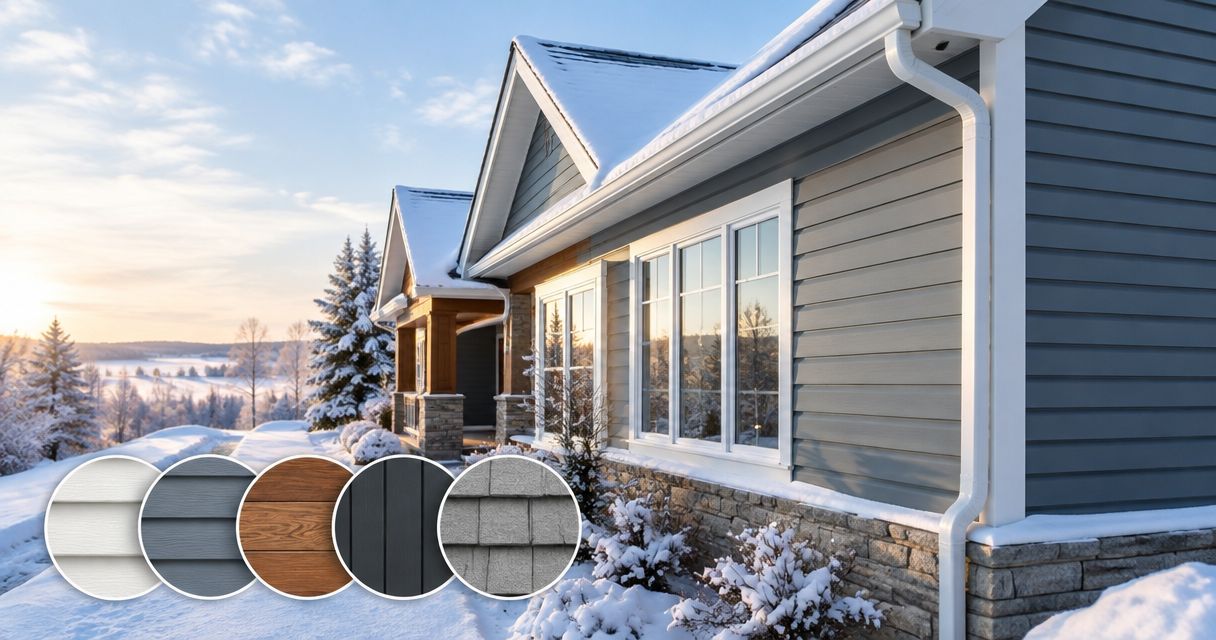
Best overall: siding installed over continuous exterior insulation. Best integrated option: insulated vinyl siding. Best for retaining a traditional wood exterior: wood siding with a separate insulation plan. This 2026 guide ranks the best siding materials for energy efficiency by what they contribute to the wall—not by appearance alone—and explains what to discuss with Phoenix Construction Solutions, a licensed and insured remodeling contractor based in Carlisle, Iowa.
- The best siding materials for energy efficiency combine exterior insulation, air sealing, and reliable water management.
- Insulated vinyl adds thermal resistance, but its backing does not replace a complete wall insulation plan.
- Fiber cement and metal need insulation behind them to deliver meaningful improvements in winter thermal resistance.
- Phoenix Construction Solutions serves Central Iowa homeowners planning remodeling, additions, and reconstruction.
Why this matters for Iowa winters
Siding sheds weather. Insulation slows heat flow. An air barrier controls air leakage. Those jobs overlap at construction details, but one material does not automatically perform all three.
Replacing an exterior without addressing missing insulation or disconnected air barriers leaves important heat-loss paths in place. For your 2026 project, judge the proposed wall assembly rather than accepting an energy-efficiency claim attached to a siding sample.
Phoenix Construction Solutions is best for Central Iowa homeowners planning exterior work within a larger remodeling, addition, or reconstruction project. The company serves Des Moines, Norwalk, Pleasant Hill, Ankeny, Urbandale, Waukee, West Des Moines, and surrounding communities.
What makes the best siding materials for energy efficiency?
Use these criteria before choosing a material:
- Continuous insulation: Insulation outside the framing reduces heat flow through studs as well as insulated cavities.
- Documented thermal resistance: Compare published R-values for the exact insulation or insulated siding assembly, not a generic material claim.
- Air-barrier continuity: Connections at windows, doors, penetrations, and wall transitions matter more than tightly fitted siding joints.
- Water management: Flashing, drainage, and drying must work with the proposed insulation and cladding.
- Installation compatibility: Fasteners, trim, window details, and clearances must accommodate the complete assembly.
Higher R-value means greater resistance to conductive heat flow. It does not measure air leakage, workmanship, or the energy performance of the entire house.
Energy-efficient siding options at a glance
This ranking prioritizes the thermal strategy first, then gives each material a distinct use case. Positions below the insulated options are not measured energy-performance rankings: actual performance depends on the insulation and air barrier behind the siding.
| Rank and option | Best for | Standout feature | Key limitation |
|---|---|---|---|
| 1. Siding over continuous exterior insulation | Whole-wall thermal upgrades | Insulation crosses the framing | Requires coordinated attachment, trim, and moisture details |
| 2. Insulated vinyl siding | Integrated insulation and cladding | Insulating backing attached to siding | Product R-value is not whole-wall R-value |
| 3. Wood siding | Preserving a wood exterior | Wood provides some thermal resistance | Needs a separate insulation strategy and finish maintenance |
| 4. Fiber cement siding | A noncombustible exterior face | Does not depend on wood siding for its appearance | Provides little insulation by itself |
| 5. Steel siding | A metal exterior finish | Noncombustible cladding material | Steel is conductive and needs insulation behind it |
1. Siding over continuous insulation: best for whole-wall upgrades
Continuous exterior insulation sits outside the wall sheathing or another designated layer in a designed assembly. Compatible siding covers it, sometimes supported by furring or another approved attachment system.
This is the strongest starting point for an energy-focused replacement because it addresses thermal bridging through framing. The siding can be vinyl, fiber cement, wood, or metal; the insulation strategy earns the ranking, not the finish material.
Continuous-insulation pros:
- Reduces heat flow through framing members.
- Adds insulation without relying only on existing wall cavities.
- Allows different exterior finishes over a properly designed assembly.
- Creates an opportunity to coordinate air-barrier repairs during replacement.
Continuous-insulation cons:
- Added wall thickness changes window, door, and trim details.
- Attachment must account for insulation thickness and cladding weight.
- Vapor control and drying require assembly-specific decisions.
Best for: Homeowners opening the exterior and prioritizing winter thermal performance.
Verdict: Buy this approach when the project includes a documented attachment, drainage, and moisture-control plan.
2. Insulated vinyl siding: best for integrated insulating backing
Insulated vinyl siding combines a vinyl exterior with insulating backing. The backing contributes thermal resistance, but the amount depends on the exact product and its documented rating.
Do not confuse insulated vinyl with conventional vinyl installed over separate foam board. Both arrangements need their own details, and neither makes the siding joints a continuous air barrier.
Insulated vinyl pros:
- Adds thermal resistance as part of the cladding product.
- Provides backing that supports the siding profile.
- Avoids the periodic painting required by painted wood siding.
Insulated vinyl cons:
- Does not correct every gap in existing cavity insulation.
- Openings and transitions still need separate air-sealing details.
- Vinyl can crack under impact and moves with temperature changes.
For a 2026 proposal, request the exact product identification and published R-value. Ask which repairs and air-sealing tasks remain separate from the siding installation.
Best for: Homeowners who want vinyl siding with an integrated insulation component.
Verdict: Buy when the documented thermal contribution fits the wall plan; skip claims that backing alone solves whole-house heat loss.
3. Wood siding: best for preserving a traditional wood exterior
Wood siding provides some resistance to heat flow, unlike highly conductive metal. Its thickness, species, and profile affect that contribution, so the word wood is not an insulation specification.
Choose wood when retaining a wood exterior is a project requirement. Pair it with separate insulation rather than asking the finish boards to deliver the winter upgrade.
Wood siding pros:
- Contributes some thermal resistance.
- Supports traditional painted or stained exterior treatments.
- Allows localized repairs where matching material and access permit.
Wood siding cons:
- Requires maintenance appropriate to its finish and exposure.
- Remains vulnerable to moisture damage when details fail.
- Cannot substitute for a designed insulation layer.
Best for: Homeowners preserving wood character during an exterior renovation.
Verdict: Buy for the exterior character; hold any energy-efficiency decision until the insulation scope is defined.
4. Fiber cement siding: best for a noncombustible exterior face
Fiber cement is an exterior cladding material, not a meaningful insulation upgrade on its own. Its thermal performance depends primarily on the wall assembly behind it.
Fiber cement belongs on an energy-focused shortlist when you want its exterior characteristics and will specify insulation separately. Do not rank it above insulated vinyl on winter performance simply because the boards feel denser.
Fiber cement pros:
- Provides a noncombustible cladding material.
- Offers lap and panel formats.
- Works with exterior-insulation assemblies when attachment details support the combination.
Fiber cement cons:
- Adds little thermal resistance by itself.
- Requires appropriate handling, cutting, fastening, and clearances.
- Painted finishes still require maintenance.
Best for: Homeowners choosing a noncombustible exterior face over a separately insulated wall.
Verdict: Buy for cladding requirements; skip it as a stand-alone energy upgrade.
5. Steel siding: best for a metal exterior finish
Steel siding supplies the exterior weather-shedding finish. Steel conducts heat readily, so insulation behind the cladding—not the metal itself—must provide the thermal improvement.
Steel over a well-designed insulated wall can be part of an energy-efficient house. Steel installed over an unchanged, poorly insulated wall does not resolve that wall's thermal weaknesses.
Steel siding pros:
- Provides a noncombustible exterior material.
- Offers formed profiles for different exterior treatments.
- Can cover a separately insulated assembly with suitable attachment details.
Steel siding cons:
- Contributes negligible insulating value.
- Can dent under impact.
- Cut edges, coatings, and flashing details need attention to limit corrosion.
Best for: Homeowners who specifically want a metal exterior while handling insulation separately.
Verdict: Buy for the metal finish; skip any claim that steel itself improves winter insulation.
How this ranking works
The order follows the criteria above: continuous thermal coverage, documented insulation, air-barrier continuity, moisture management, and installation compatibility. It is a decision guide, not a laboratory comparison of named products.
For Phoenix Construction Solutions remodeling discussions, the useful comparison is between complete written scopes. Two proposals naming the same siding material can describe very different wall improvements.
What your 2026 siding scope should include
Ask for a scope that separates the exterior finish from the work hidden behind it. The distinction makes competing proposals easier to compare and gives you specific acceptance points.
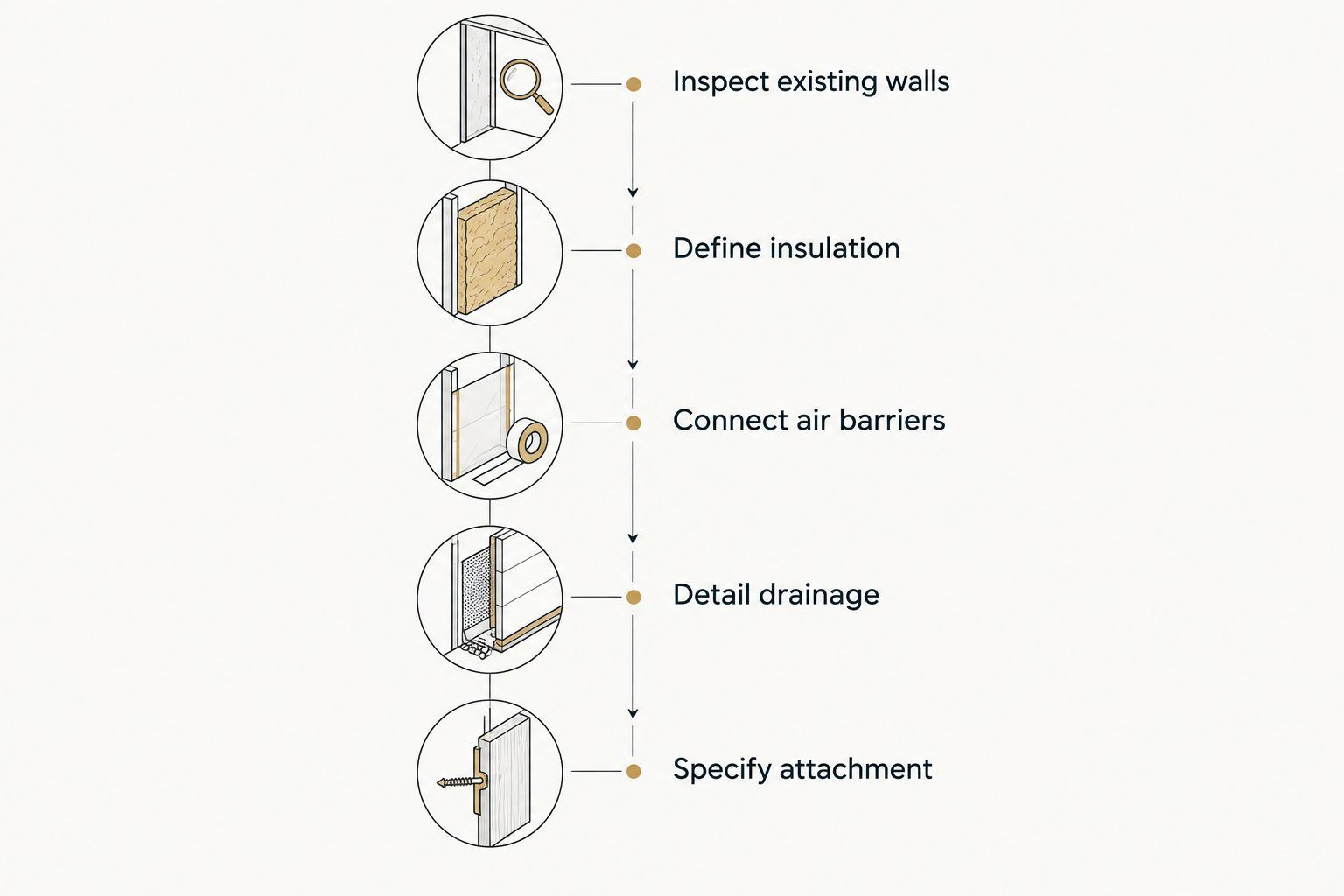
Use this sequence:
- Inspect existing walls: Identify damaged sheathing, water entry, and insulation conditions before finalizing corrective work.
- Define insulation: Name the material, thickness, published R-value, and locations receiving it.
- Connect air barriers: Show how wall layers connect at openings, penetrations, and adjacent assemblies.
- Detail drainage: Explain flashing, drainage paths, and connections at the base of the wall.
- Specify attachment: Document how siding and trim attach through the proposed wall build-up.
These decisions belong together. Moving windows outward, adding exterior insulation, and changing trim depth affect the same openings; treating them as unrelated tasks invites conflicting details.
Your written scope should also distinguish confirmed work from conditions discovered after removal. Ask how concealed damage will be documented and how changes receive approval before additional work proceeds.
For more exterior-specific planning, the sequence covered in siding installation for Central Iowa home exteriors belongs alongside the material selection—not after it.
Existing cavity insulation is a separate decision
Exterior replacement and cavity insulation address different parts of the wall. If existing cavities lack insulation, adding exterior insulation does not erase the need to understand those conditions.
Evaluating injected foam insulation requires separating cavity filling from continuous exterior insulation: filling between studs does not eliminate heat flow through the studs themselves. It also does not prove that the wall's air barrier is continuous.
Before choosing a cavity retrofit, establish what is already inside the wall and how the proposed material affects drying. Existing wiring, inaccessible voids, water damage, and wall construction all belong in that assessment.
Do not cover an unresolved moisture problem with new insulation and siding. Find the water source, define the repair, and then settle the insulation assembly.
Which siding should you choose in 2026?
Choose compatible siding over continuous exterior insulation when your priority is improving whole-wall thermal performance. Pick the exterior finish after the insulation, attachment, air-barrier, and drainage requirements are clear.
Choose insulated vinyl when integrated backing suits the project and the product's documented contribution meets your goals. Choose wood, fiber cement, or steel for their specific exterior characteristics, with insulation handled as a separate requirement.
For your 2026 consultation, bring photos of problem areas, any existing wall information, and the rooms where you notice winter discomfort. Ask Phoenix Construction Solutions to discuss how the exterior work fits your broader renovation scope.
Book a Consultation
Discuss your Central Iowa remodeling, addition, or reconstruction project.
FAQ
What's the best siding material for energy efficiency in Iowa?
The strongest starting point is compatible siding installed over continuous exterior insulation. Insulated vinyl is an integrated option, while wood, fiber cement, and steel require separate evaluation of the insulation behind them.
Is insulated vinyl siding better than fiber cement for winter insulation?
Insulated vinyl adds insulating backing; fiber cement alone contributes little thermal resistance. Fiber cement over a separately insulated wall can still be part of a strong thermal assembly, so compare complete wall specifications.
Will replacing siding stop cold drafts?
Replacing siding alone does not guarantee draft control. The scope must address air-barrier connections and leakage paths at windows, doors, penetrations, and wall transitions.
Can I add exterior insulation when replacing siding?
Yes, siding replacement is an opportunity to add exterior insulation. The assembly needs coordinated decisions about attachment, window and door trim, flashing, drainage, and moisture control.
Does housewrap count as insulation?
Ordinary housewrap is not a thermal insulation layer. Depending on the product and installation, it serves water-resistive and air-control functions rather than supplying the insulating value of foam board or mineral wool.
Should I choose wood siding because wood insulates better than metal?
No, that material difference alone is not a sound basis for choosing the exterior. Wood contributes some thermal resistance, but insulation continuity and air-barrier details remain central to winter performance.
Who can I contact about a Central Iowa renovation?
Call Phoenix Construction Solutions at (515) 505-8781 to discuss a consultation. The licensed and insured contractor is based in Carlisle and serves homeowners throughout Central Iowa.
One last thing
Ask every bidder to identify what will change behind the siding. If the answer covers only color, profile, and trim, you are comparing exterior finishes—not defined energy upgrades.
Keep the finish decision and the thermal-performance decision separate until the written scope connects them. That single distinction prevents a siding material from receiving credit for insulation work the proposal never includes.