Central Iowa remodeling guides
Energy-efficient home renovations for Central Iowa winters
Energy efficient home renovation in Iowa starts with air sealing, then attic, window, siding, and basement upgrades. Central Iowa winter guide for 2026 owners.
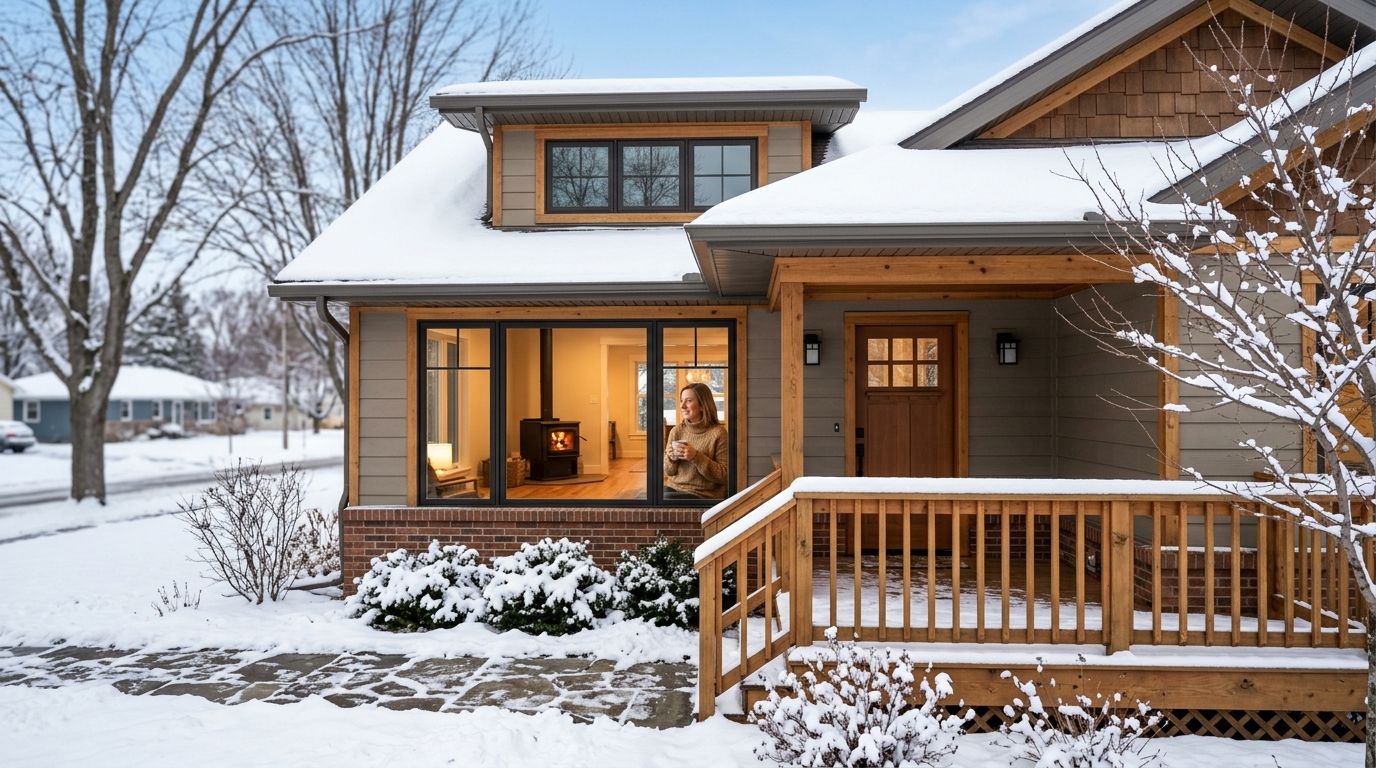
Central Iowa homeowners who renovate for energy efficiency before the cold sets in cut heating bills and eliminate the cold spots that plague older houses in Des Moines, Ankeny, and Waukee. The goal is straightforward: stop conditioned air from leaking out through the attic, walls, windows, and rim joists before those losses show up on a January utility bill. Central Iowa's freeze-thaw cycles and sub-zero stretches punish houses built before modern insulation codes, so the renovation priorities here differ from a mild-climate remodel — air sealing and envelope work come first, cosmetic upgrades come second.
- Air-seal before you insulate — Central Iowa homes lose more heat through gaps than through wall material.
- Attic insulation below R-49 is under the DOE recommendation for Iowa's cold climate zone.
- Window replacement pays off fastest on homes with original single-pane or fogged double-pane glass.
- Basement insulation and waterproofing stop the most common cold-floor complaint in Central Iowa homes.
- An energy efficient home renovation in Iowa bundles sealing, insulation, and one exterior upgrade — not a single fix.
Why energy-efficient renovation matters for Central Iowa homeowners
Des Moines and the surrounding metro see winter lows well below zero most years, and older housing stock in Norwalk, Pleasant Hill, and Carlisle was often built to insulation standards from decades before current energy codes. That gap between what a 1970s or 1980s house has in its walls and what a 2026 energy-efficient renovation delivers is where the heating bill spikes come from.
Homeowners searching for an energy efficient home renovation Iowa contractor are usually reacting to one of three things: a spiking gas bill, a room that never warms up, or ice damming on the roofline. All three point to the same root cause — an envelope that isn't sealed or insulated to current standards. Fixing the envelope, not just swapping the furnace, is what actually moves the needle. Upgrading windows is often the visible piece of that work, but it's rarely the first thing that should happen.
Phoenix Construction Solutions is a licensed and insured remodeling and reconstruction contractor based in Carlisle, Iowa, working across Des Moines, Ankeny, Waukee, Urbandale, West Des Moines, Norwalk, and Pleasant Hill.
Get a home energy audit before you spend a dollar
Start free. A basic DIY walkthrough tells you where the money should go before you commit to a renovation budget.
- Run your hand along window and door frames on a windy day to feel drafts
- Check outlet and switch plates on exterior walls for cold air movement
- Look at the attic hatch or pull-down stairs for gaps around the frame
- Inspect the rim joist in the basement — the band of framing where the foundation meets the house
- Note any rooms that consistently run colder than the thermostat setting
- Check for ice damming or icicles along the roof edge after a snow event
A professional audit with a blower door test gives you actual numbers instead of guesswork, and it's worth doing before a full 2026 renovation.
Seal air leaks before adding insulation
Insulation slows heat transfer through a surface; air sealing stops air from moving through gaps entirely. Skipping this step means paying for insulation that never performs to its rated value.
- Caulk gaps around window and door trim, especially on older Des Moines and Ankeny homes
- Weatherstrip exterior doors, including the often-ignored attic access door
- Seal the rim joist band in the basement with foam board and spray foam
- Close gaps around plumbing and electrical penetrations in the basement ceiling
- Add foam gaskets behind outlet and switch covers on exterior walls
- Seal the attic hatch with weatherstripping and an insulated cover
If the rim joist isn't sealed, you're heating the outdoors. That single band of framing around a basement perimeter is one of the highest-leakage points in Central Iowa homes.
“If the rim joist isn't sealed, you're heating the outdoors.”
Upgrade attic insulation to Iowa's climate zone standard
Central Iowa sits in a cold climate zone where the Department of Energy recommends attic insulation in the R-49 to R-60 range. Many houses built before the 1990s sit closer to R-19 or R-30 — well under that mark.
- Measure current insulation depth against joist height as a quick R-value check
- Add blown-in cellulose or fiberglass over existing insulation rather than removing it
- Insulate and air-seal knee walls in finished attic spaces separately from the attic floor
- Confirm soffit vents aren't blocked by insulation, which causes moisture problems
- Consider a full attic conversion if you're opening the space anyway and want the square footage
Replace aging windows with a real thermal upgrade
Single-pane and early-generation double-pane windows lose heat fast in a Central Iowa winter. This is usually the most visible line item in an energy-efficient renovation because homeowners feel the draft directly.
- Prioritize north- and west-facing windows first — they take the brunt of Iowa's winter wind
- Look for low-E coatings and gas-filled double or triple panes rated for cold climates
- Replace failed units showing fogging between the panes
- Add storm windows as an interim step if full replacement isn't in this year's budget
- Confirm proper flashing and insulation around the frame, not just the glass
Upgrade siding and wall insulation together
Siding replacement is the moment to add continuous exterior insulation, since the wall is already open. Doing it separately later means paying for the same labor twice.
- Add rigid foam board under new siding for a continuous thermal layer
- Choose siding rated for Iowa's freeze-thaw cycles and wind exposure
- Seal all penetrations — hose bibs, vents, electrical — before new siding goes on
- Check house wrap condition and replace it if torn or improperly lapped
Compare materials in the guide to siding options for a whole-home exterior renovation before committing.
Insulate and waterproof the basement
An uninsulated basement is a direct heat sink under the whole house. Central Iowa's clay soil and freeze-thaw pattern make moisture control part of this job, not an optional add-on.
- Insulate basement walls with rigid foam or spray foam rated for below-grade use
- Fix moisture intrusion before insulating — trapped moisture behind insulation causes mold
- Insulate and seal basement window wells and frames
- Grade soil away from the foundation to reduce water pressure against the walls
Start with basement waterproofing before remodeling if moisture hasn't been addressed — insulating over a wet wall wastes the work.
Seal and insulate ductwork
Ductwork running through an unconditioned attic or crawlspace loses heat before it reaches the room. This is a cheap fix that gets skipped constantly.
- Seal duct joints with mastic sealant, not tape
- Insulate ducts running through unconditioned attic or crawlspace areas
- Keep return air paths clear of furniture and renovation debris
- Have a technician balance airflow after insulation or window work changes the house's heat load
Comparison: renovation options for Central Iowa winters
| Option | Best for | Key limitation |
|---|---|---|
| DIY air sealing | Homeowners tackling the cheapest fix first | Doesn't fix insulation gaps or window performance on its own |
| Attic insulation upgrade | Homes under R-49 with accessible attic space | Underperforms if air sealing wasn't done first |
| Window replacement | Homes with original single-pane or fogged double-pane units | Highest visible cost per room compared with insulation work |
| Siding plus exterior insulation | Homeowners already planning a siding replacement | Addresses wall performance only, not attic or basement losses |
| Basement insulation and waterproofing | Homes with cold floors or unfinished basements | Requires fixing moisture issues first, adding time to the project |
The verdict for most Central Iowa homes in 2026: air-seal first, insulate the attic second, then choose windows, siding, or the basement based on which one is actually causing the complaint. Phoenix Construction Solutions handles that envelope work as part of a broader remodeling and reconstruction scope rather than as a one-off product sale.
Plan your energy-efficient renovation
Licensed and insured contractor serving Central Iowa homeowners.
Common mistakes Central Iowa homeowners make
- Insulating before air sealing. Adding insulation over unsealed gaps traps moist air against cold surfaces and invites condensation problems specific to Iowa's humid summers and dry, cold winters.
- Ignoring the rim joist. Homeowners in Des Moines and Norwalk focus on windows and attics while the basement rim joist, often the biggest single leak point, goes untouched.
- Specifying R-value without checking the climate zone. A recommendation of R-30 attic insulation for a Central Iowa home is under the DOE-recommended R-49 to R-60 range for this region.
- Replacing windows without fixing the wall around them. New windows set into an unsealed rough opening still leak, just less visibly.
- Skipping permits on structural window or siding changes. Iowa municipalities require permits for many exterior renovation projects, and skipping that step creates problems at resale.
FAQ
What's the best energy-efficient home renovation for Iowa winters?
Air sealing combined with an attic insulation upgrade delivers the fastest return for most Central Iowa homes, since gaps and under-insulated attics cause the biggest heat loss. Windows and basement work matter too, but they perform better once the envelope is sealed.
How much attic insulation does an Iowa home need?
The Department of Energy recommends R-49 to R-60 for Central Iowa's cold climate zone. Many homes built before the 1990s sit at R-19 to R-30, which is under the current recommendation.
Is it better to replace windows or add storm windows first?
Storm windows are a reasonable interim step when full replacement isn't budgeted for 2026. Full replacement with low-E, gas-filled glass performs better long term, especially on north- and west-facing walls that take Iowa's winter wind directly.
Does basement insulation actually reduce heating costs?
Yes. An uninsulated basement acts as a heat sink for the floor above it, and insulating those walls after fixing moisture issues is one of the more overlooked energy upgrades in Central Iowa homes.
Should I seal air leaks or insulate first?
Seal first. Insulation slows heat transfer through a surface but does not stop air moving through gaps, so unsealed gaps waste the insulation's rated performance.
How do I know if my Central Iowa home needs an energy-efficient renovation?
Cold rooms that never match the thermostat setting, ice damming on the roofline, and rising winter gas bills are the three clearest signs. A blower door test confirms where the losses are happening.
Does new siding help with energy efficiency?
Siding alone adds little insulation value, but adding continuous rigid foam underneath during a siding replacement improves wall performance and costs far less to do during the siding project than afterward.
Who handles energy-efficient renovations in Central Iowa?
Phoenix Construction Solutions is a licensed and insured remodeling and reconstruction contractor based in Carlisle, Iowa, serving Des Moines, Ankeny, Waukee, Urbandale, West Des Moines, Norwalk, and Pleasant Hill. Call (515) 505-8781 to discuss scope.
One last thing
Most Central Iowa homeowners chase the visible fix — new windows, new siding — before the invisible one that actually causes the cold spot: an unsealed rim joist or an attic sitting 20 R-value points under the recommendation. Do the walkthrough first, seal before you insulate, and let the findings decide which visible upgrade gets the 2026 budget.