Central Iowa remodeling guides
Best siding materials for a home addition in Iowa
Best siding home addition Iowa guide for 2026: fiber cement wins overall, steel wins on hail, vinyl wins on budget. Compare all six materials before you build.
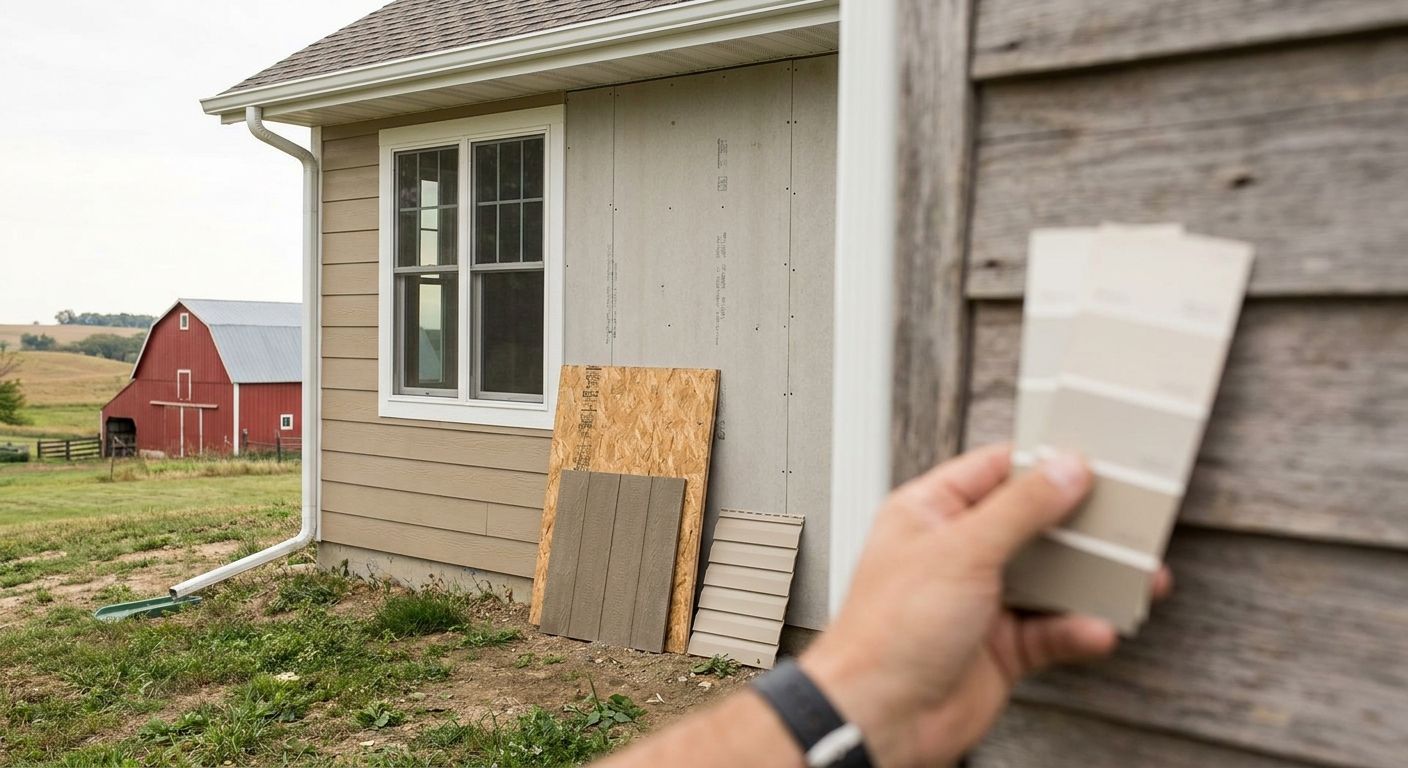
Fiber cement siding is the best overall choice for a home addition in Iowa in 2026, especially for additions on brick or stone-accented homes. Steel siding wins for hail-prone and storm-exposed properties, and vinyl siding is the best budget option when the addition needs to match an existing vinyl-clad house.
- Fiber cement siding is the best siding home addition Iowa homeowners can choose for freeze-thaw durability in 2026.
- Steel siding wins for hail and storm-prone lots; vinyl siding wins on budget for vinyl-clad homes.
- Cedar and stucco are situational picks that demand a real maintenance commitment or a stucco-matched exterior.
- Matching the addition's siding seam to the existing house matters as much as the material itself.
Why this matters
A home addition in Central Iowa gets hit by the same climate that stresses the original house: sub-zero winter snaps, humid 90-degree summers, spring hail, and repeated freeze-thaw cycling on every exterior surface. Siding that looks fine on a showroom sample can crack, warp, or fail at the seam within a few winters if it's mismatched to that swing.
Most homeowners planning an addition treat siding as a color decision. It's actually a durability decision first, and a matching-the-existing-house decision second. Get those two things right and the addition disappears into the original structure instead of looking bolted on. Phoenix Construction Solutions installs all six materials below on additions across planning a home addition in Central Iowa, and the ranking below reflects how each one actually performs against Iowa's climate, not just how it looks in a brochure.
What makes the best siding for a Central Iowa addition
- Freeze-thaw durability — does the material crack or delaminate after repeated winter cycling
- Moisture and humidity resistance — how it handles Iowa's humid summers and wet springs
- Wind and hail impact resistance — critical given the region's spring storm season
- Maintenance schedule — how often it needs paint, stain, or caulk attention
- Ability to match the existing home — an addition that doesn't blend costs resale value
- Relative cost tier — where it lands against the other five options, since exact pricing varies by installer and material grade
Siding materials at a glance
| Material | Best for | Standout feature | Key limitation |
|---|---|---|---|
| Fiber cement | Iowa's freeze-thaw climate | Non-combustible, holds paint for years | Heavier, needs experienced installers |
| Vinyl | Budget-conscious additions | Lowest relative cost, no repainting | Can crack in deep cold, warp in intense sun |
| Engineered wood (LP SmartSide) | Matching a wood-look exterior | Warranted against fungal decay | Cut edges need field treatment |
| Steel/metal | Hail and storm exposure | Resists dents better than vinyl | Higher cost tier, fewer traditional looks |
| Cedar wood | Natural, high-end aesthetic | Distinct grain, renewable material | Highest maintenance of the group |
| Stucco | Matching an existing stucco home | Textured look, insulating mass | Prone to cracking without control joints |
1. Fiber cement siding: best siding for Iowa's freeze-thaw climate
Fiber cement is a composite of cement, sand, and cellulose fibers formed into planks or panels, installed over house wrap and sheathing, and typically factory-primed. It's the material Central Iowa's freeze-thaw cycle punishes the least.
Fiber cement pros:
- Non-combustible, Class 1 fire rating
- Resists cracking through repeated freeze-thaw cycling
- Holds paint longer than wood or engineered wood
- Resists insects and rot
Fiber cement cons:
- Heavier material, requires an experienced install crew
- Edges can chip from a direct impact
- Needs occasional caulk and paint touch-up over the years
Best for: additions that need to match a brick, stone, or masonry-accented Central Iowa home and hold up for decades. Verdict: Buy.
2. Vinyl siding: best budget siding for a Central Iowa addition
Vinyl siding is extruded PVC panels that interlock and install directly over sheathing, with no painting required at any point. It's the fastest and cheapest option on this list.
Vinyl pros:
- Lowest relative material cost of the six options
- Never needs repainting
- Wide color and profile selection
- Fast installation timeline
Vinyl cons:
- Can crack or become brittle during deep winter cold snaps
- Can warp on south-facing walls under intense summer sun
- Patched sections can show a visible color mismatch as older panels fade
Best for: additions on a tight budget where the existing house is already vinyl-clad. Verdict: Buy for vinyl-clad homes; Hold if the existing house is brick or fiber cement.
3. Engineered wood siding (LP SmartSide): best for matching a wood-look exterior without cedar's upkeep
Engineered wood siding uses wood strands treated with resin and zinc borate, pressed into panels or lap boards, then primed for paint. It reads as real wood grain at a fraction of cedar's maintenance load.
Engineered wood pros:
- Warranted against fungal decay
- Takes and holds paint like solid wood
- Lighter than fiber cement, easier to handle on site
- Close match to real wood texture
Engineered wood cons:
- Cut edges need field treatment during installation or they're vulnerable
- Still requires periodic repainting like real wood
- Less impact-resistant than fiber cement
Best for: additions matching an existing wood-look home where the owner wants a lower-maintenance alternative to cedar. Verdict: Buy.
4. Steel/metal siding: best for hail-prone and storm-exposed properties
Steel or aluminum siding is roll-formed into panels, often with an insulated backer, and fastened over furring strips or sheathing. It's the toughest option against Iowa's spring hail and wind season. Homes rebuilding after storm damage see this material most often — the same durability logic drives storm damage reconstruction services across Central Iowa.
Steel siding pros:
- Resists hail denting far better than vinyl
- Doesn't rot or feed insects
- Non-combustible
- Holds up to sustained wind exposure
Steel siding cons:
- Can still dent under a major direct impact
- Higher cost tier than vinyl or engineered wood
- Fewer color and profile options for a traditional lap-siding look
Best for: additions on storm-exposed lots or homeowners prioritizing maximum durability after hail or wind damage. Verdict: Buy for storm-prone properties; Wait if matching a traditional lap-siding look is the priority.
5. Cedar wood siding: best for a natural, high-end addition aesthetic
Cedar siding is solid wood installed as lap boards, shingles, or board-and-batten, then stained or sealed after installation. It's the most distinctive-looking option and the highest-maintenance one on this list.
Cedar pros:
- Distinct natural grain and texture
- Ages into a deep patina if sealed correctly
- Renewable material
- Easy to field-cut and patch
Cedar cons:
- Highest maintenance schedule of any material here, with restaining needed on a recurring cycle
- Most vulnerable to Iowa's humidity swings and wood-boring insects
- Runs at a premium cost tier
Best for: additions where the owner wants a natural wood look and will commit to a recurring maintenance schedule. Verdict: Hold — only with a realistic maintenance plan; Skip for low-maintenance priorities.
6. Stucco: best for matching an existing stucco exterior
Stucco is a cement-based plaster applied in coats over wire lath, then textured and tinted or painted. It only makes sense on additions attaching to a house that's already stucco-clad.
Stucco pros:
- Distinct textured look
- Seamless match to an existing stucco home
- Good insulating mass
Stucco cons:
- Prone to cracking in Iowa's freeze-thaw cycle without properly placed control joints
- Repairs are visible unless handled by an experienced crew
- Rarely a good match for most Central Iowa architecture outside stucco-built homes
Best for: additions onto homes that are already stucco-clad and need a seamless material match. Verdict: Wait — get a stucco specialist's freeze-thaw assessment before committing.
How we ranked these
Freeze-thaw durability carried the most weight, since it determines whether siding survives Iowa's climate at all. Matching the existing exterior came next, since a mismatched addition drags down resale appeal even when the new material performs well. Maintenance burden and relative cost tier rounded out the ranking, in that order.
“Freeze-thaw damage shows up in the caulk lines before it shows up in the siding itself.”
Which siding should you choose for your Iowa addition?
For most Central Iowa additions in 2026, fiber cement siding is the default answer — it survives the freeze-thaw cycle, holds paint, and matches brick or stone accents without a premium maintenance schedule. Pick vinyl only if the existing house is already vinyl-clad and budget is the deciding factor. Pick steel siding if the lot has a history of hail or wind damage. Reserve cedar and stucco for homeowners who are matching an existing material and have already accepted the maintenance or crack-risk tradeoff that comes with it.
Get a siding estimate for your addition
Licensed and insured additions across Central Iowa.
FAQ
What's the best siding for a home addition in Iowa?
Fiber cement siding is the best overall choice in 2026 because it resists Iowa's freeze-thaw cycling and holds paint for years without cracking. Vinyl is the better pick when budget is the priority and the existing home is already vinyl-clad.
Is vinyl siding good for Iowa winters?
Vinyl siding holds up in Iowa winters overall but can become brittle and crack during deep cold snaps. It's still the lowest-cost option and works well on additions matching an existing vinyl-clad house.
Does new siding on an addition need to match the existing house exactly?
It should match closely, or the addition will look visibly bolted on and can hurt resale value. Fiber cement, engineered wood, and vinyl all come in colors and profiles close enough to blend with most existing exteriors.
Is metal siding worth it for hail-prone Iowa homes?
Yes, steel siding resists hail denting far better than vinyl and holds up to sustained wind, which makes it the strongest pick for storm-exposed properties. It runs at a higher cost tier and offers fewer traditional lap-siding looks than fiber cement.
How long does cedar siding last in Iowa?
Cedar siding lasts for decades in Iowa if it's restained and sealed on a recurring schedule, since it's the most vulnerable of these materials to humidity swings and wood-boring insects. Skipping maintenance shortens its lifespan faster than any other option on this list.
Can stucco crack in Iowa's climate?
Yes, stucco is prone to cracking during Iowa's freeze-thaw cycles if control joints aren't placed correctly during installation. It only makes sense on additions attaching to a house that's already stucco-clad.
Do I need a permit for new siding on a home addition in Central Iowa?
Permitting requirements vary by city across Central Iowa, so check with the local building department before installation begins. A licensed contractor handling the addition typically manages the permit process as part of the project.
What's the most low-maintenance siding option for an Iowa addition?
Vinyl siding requires the least ongoing maintenance since it never needs repainting or staining. Fiber cement is a close second, needing only occasional caulk and paint touch-up over the years.
One last thing
The siding material rarely fails first on an Iowa addition — the caulk joint where the new wall meets the old one does. Whatever material gets picked, insist on a proper transition detail at that seam; it's the single spot where freeze-thaw cycling in 2026 does the most damage, regardless of whether the siding above it is fiber cement, vinyl, or steel.