Central Iowa remodeling guides
Best bathroom flooring ranked by water resistance in Iowa
Compare the best bathroom flooring options for Iowa homes. Porcelain leads on water resistance; see material limits, wet-use checks, and installation details.
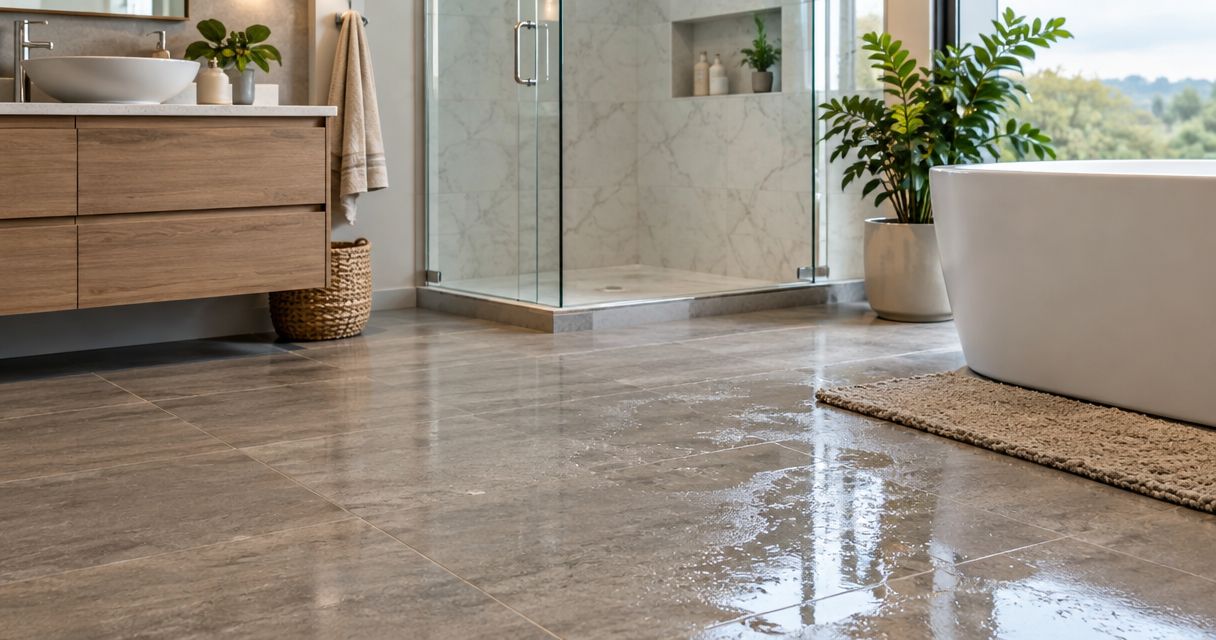
Best overall: porcelain tile. Best for minimizing seams: sheet vinyl. Best for a softer surface outside the shower: bathroom-approved luxury vinyl tile. This 2026 guide ranks the best bathroom flooring options for Iowa homes by water resistance, then explains the installation details that protect the floor underneath.
- Porcelain tile leads the best bathroom flooring options for low water absorption; the assembly still needs moisture protection.
- Sheet vinyl reduces seams, but edges, penetrations, and installation details remain vulnerable.
- Luxury vinyl tile suits bathroom floors outside showers when the manufacturer approves the exact product and installation.
- Phoenix Construction Solutions provides licensed and insured bathroom remodeling for Des Moines and Central Iowa homeowners.
Why this matters
A flooring sample tells you little about what happens when water reaches the toilet flange, doorway, or shower entrance. Water-resistant flooring is not the same as a waterproof bathroom. The finish, seams, substrate, and perimeter details must work together.
For bathroom remodeling in Des Moines, Iowa, choose the floor alongside the shower layout and subfloor repairs—not after those decisions. Phoenix Construction Solutions is a licensed and insured contractor based in Carlisle, serving Des Moines and Central Iowa.
The practical question for your 2026 remodel is where water lands and how it leaves. A powder room, children's bathroom, and curbless shower demand different details, even when you choose the same material.
What makes the best bathroom flooring options?
Use these criteria before comparing colors or patterns:
- Material absorption: How readily does the flooring itself take up water?
- Seam protection: What stops water at joints, edges, and plumbing openings?
- Wet-use approval: Is the exact product approved for your bathroom floor or shower application?
- Wet traction: Does the manufacturer identify the surface as appropriate for the intended wet location?
- Subfloor requirements: What preparation, stiffness, flatness, and moisture conditions does installation require?
- Repair and upkeep: Can you maintain joints, replace damaged sections, and access leaks without unnecessary demolition?
A material earns its place here through its fit for a specific bathroom use. Appearance breaks a tie; it does not override wet-location suitability.
Bathroom flooring at a glance
This is a practical water-resistance ranking, not a laboratory comparison of every product. Individual products and complete installations differ. Sheet vinyl ranks highly because fewer field seams reduce potential entry points; porcelain leads because of its low absorption and suitability for properly designed wet-area assemblies.
| Rank and material | Best for | Standout feature | Key limitation |
|---|---|---|---|
| 1. Porcelain tile | Overall bathroom and shower coordination | Very low water absorption | Tile and grout alone do not waterproof the assembly |
| 2. Sheet vinyl | Minimizing seams outside the shower | Broad sheets reduce field joints | Edges, cuts, and penetrations need careful detailing |
| 3. Luxury vinyl tile | A softer bathroom floor outside the shower | Resilient surface with individual pieces | Joint and perimeter performance depends on the system |
| 4. Non-porcelain ceramic tile | Glazed designs outside the shower | Broad choice of floor-rated finishes | More absorbent body than porcelain |
| 5. Natural stone | A specific natural appearance | Variation inherent in the material | Absorption, sealing, and care vary by stone |
1. Porcelain tile: best bathroom flooring for wet-area planning
Porcelain tile is the default choice when water resistance comes first. Its dense body absorbs little water, and suitable products can cover both the bathroom floor and a separately designed shower floor.
The ANSI A137.1 classification identifies porcelain tile by water absorption of 0.5% or less, tested under ASTM C373. That measures the tile body—not the waterproofness of grout joints or the completed room.
Porcelain tile pros:
- Low absorption makes the material well suited to repeated bathroom splashes.
- Floor-rated products offer different textures, formats, and appearances.
- Appropriate selections work with designed shower waterproofing systems.
Porcelain tile cons:
- Its hard surface feels unforgiving underfoot.
- Inadequate substrate preparation can contribute to cracking.
- A polished or otherwise unsuitable finish is a poor choice for wet footing.
Best for: A primary or family bathroom where water resistance takes priority over softness.
For a 2026 selection, request the exact product's floor-use and wet-location information. Do not assume that every porcelain tile suits a shower floor simply because the material absorbs little water.
Verdict: Buy porcelain tile as the default, with the substrate and waterproofing specified separately.
2. Sheet vinyl: best bathroom flooring for fewer seams
Sheet vinyl covers the floor in broad sections rather than a grid of individual pieces. A layout that fits within the available sheet dimensions can eliminate field seams, although room shape and product dimensions determine the actual layout.
That advantage stops at the edges. Water still needs a route past the perimeter, toilet opening, or damaged area to reach the substrate, so detailing matters as much as the sheet itself.
Sheet vinyl pros:
- Fewer field joints reduce potential water-entry locations.
- The resilient surface is less rigid underfoot than tile.
- Routine cleaning does not involve a network of grout joints.
Sheet vinyl cons:
- Cuts, punctures, and poorly finished edges compromise protection.
- Uneven substrate conditions can show through the surface.
- A repair can remain visible within the continuous pattern.
Best for: A bathroom outside the shower where reducing seams is the main objective.
Ask for the proposed seam locations before selecting the pattern. Also confirm how the installation will handle the toilet flange, tub edge, doorway, and any existing floor damage.
Verdict: Buy sheet vinyl when seam reduction matters more than a tile finish.
3. Luxury vinyl tile: best bathroom flooring for underfoot comfort
Luxury vinyl tile, including plank-shaped products, provides a resilient surface in individual pieces. Bathroom suitability depends on the exact product, its installation instructions, and whether the system uses adhesive or locking joints.
A water-resistant or waterproof product description does not establish that the installed floor contains leaks. Water can still reach the substrate through openings or installation defects.
Luxury vinyl tile pros:
- The surface feels less rigid than ceramic or porcelain tile.
- Tile and plank formats provide different layout choices.
- Some systems allow localized replacement, depending on installation method and access.
Luxury vinyl tile cons:
- Numerous joints create details that a continuous sheet avoids.
- Required expansion gaps and edge treatments need careful coordination.
- Bathroom approval does not automatically include shower-floor approval.
Best for: A bathroom outside the shower where you prefer a resilient walking surface.
For your 2026 project, read the installation instructions before approving the product. Check bathroom use, substrate moisture limits, perimeter treatment, and restrictions involving fixed cabinets or fixtures.
Verdict: Buy bathroom-approved luxury vinyl tile outside the shower; skip unverified wet-area applications.
4. Ceramic tile: best bathroom flooring for glazed design choices
Non-porcelain ceramic tile offers glazed patterns and colors for bathroom floors. The exposed glaze resists ordinary splashes, but the tile body is more absorbent than porcelain under the porcelain classification boundary.
Specify floor-rated ceramic tile rather than assuming a matching wall tile can carry foot traffic. Wet-use suitability is a separate check from appearance.
Ceramic tile pros:
- Glazed surfaces provide varied decorative choices.
- Floor-rated products suit ordinary bathroom use when installed correctly.
- Individual damaged tiles can be replaced when matching material is available.
Ceramic tile cons:
- The body absorbs more water than porcelain.
- Chips can expose the underlying body.
- Grout, transitions, and substrate preparation remain essential.
Best for: A bathroom floor outside the shower where a particular glazed design drives the selection.
Use porcelain as the comparison point. If the ceramic product has the right floor and wet-use approvals, the decision becomes one of design and installation suitability rather than an assumption that all ceramic is unsuitable.
Verdict: Buy floor-rated ceramic for an approved application; choose porcelain when lower absorption is the priority.
5. Natural stone: best bathroom flooring for natural variation
Natural stone is a group of materials, not a single performance specification. Marble, limestone, slate, and granite differ in absorption, surface texture, and maintenance requirements.
Choose the exact stone and finish before judging bathroom suitability. A sealer can reduce absorption or staining for appropriate materials, but it does not turn stone flooring into a waterproof assembly.
Natural stone pros:
- Natural variation gives individual pieces a distinct appearance.
- Different finishes offer different textures.
- Suitable stone can coordinate with other bathroom surfaces.
Natural stone cons:
- Absorption and maintenance requirements vary substantially.
- Acid-sensitive stones can etch from unsuitable cleaners.
- Some polished finishes are inappropriate for wet footing.
Best for: A design-led bathroom where you accept material-specific maintenance.
Ask for care instructions before committing. If you want the appearance without stone-specific upkeep, compare a stone-look porcelain sample alongside the actual stone.
Verdict: Hold until the exact stone, finish, wet-use suitability, and care requirements are confirmed.
How the ranking works
Porcelain leads on low material absorption and its usefulness within properly designed wet-area assemblies. Sheet vinyl follows for seam reduction, while luxury vinyl tile serves a different need: a resilient surface outside the shower.
Ceramic and natural stone remain valid selections, but require closer attention to the exact material. No position in this ranking substitutes for product instructions or a complete installation specification.
Phoenix Construction Solutions bathroom remodeling serves homeowners in Carlisle, Des Moines, Norwalk, Ankeny, Waukee, and other Central Iowa communities. Bring the flooring choice into the remodeling discussion before approving the room layout.
Put the installation into the written scope
For a 2026 bathroom remodel, request 3 written scope sections: Subfloor, Water protection, and Transitions. These are separate decisions; a material name alone does not describe the work.
Subfloor
Identify existing damage, movement, uneven areas, and moisture concerns before covering them. Ask what must be removed and how concealed damage will be documented if demolition exposes it.
For tile, confirm that the supporting structure and underlayment meet the selected system's requirements. For resilient flooring, confirm the required substrate preparation and moisture testing.
Water protection
Distinguish the bathroom floor from the shower receptor. Specify the waterproofing system where required, including seams, corners, penetrations, and the connection to the drain or shower base.
Grout and sealant serve different purposes. Neither should become a vague substitute for a defined wet-area assembly.
Transitions
Resolve the doorway height, toilet flange relationship, tub edge, and shower entrance before installation. These junctions affect both water management and everyday access.
For mobility needs, coordinate flooring with aging-in-place bathroom remodeling. A low threshold and an appropriate wet-use surface need to work together.
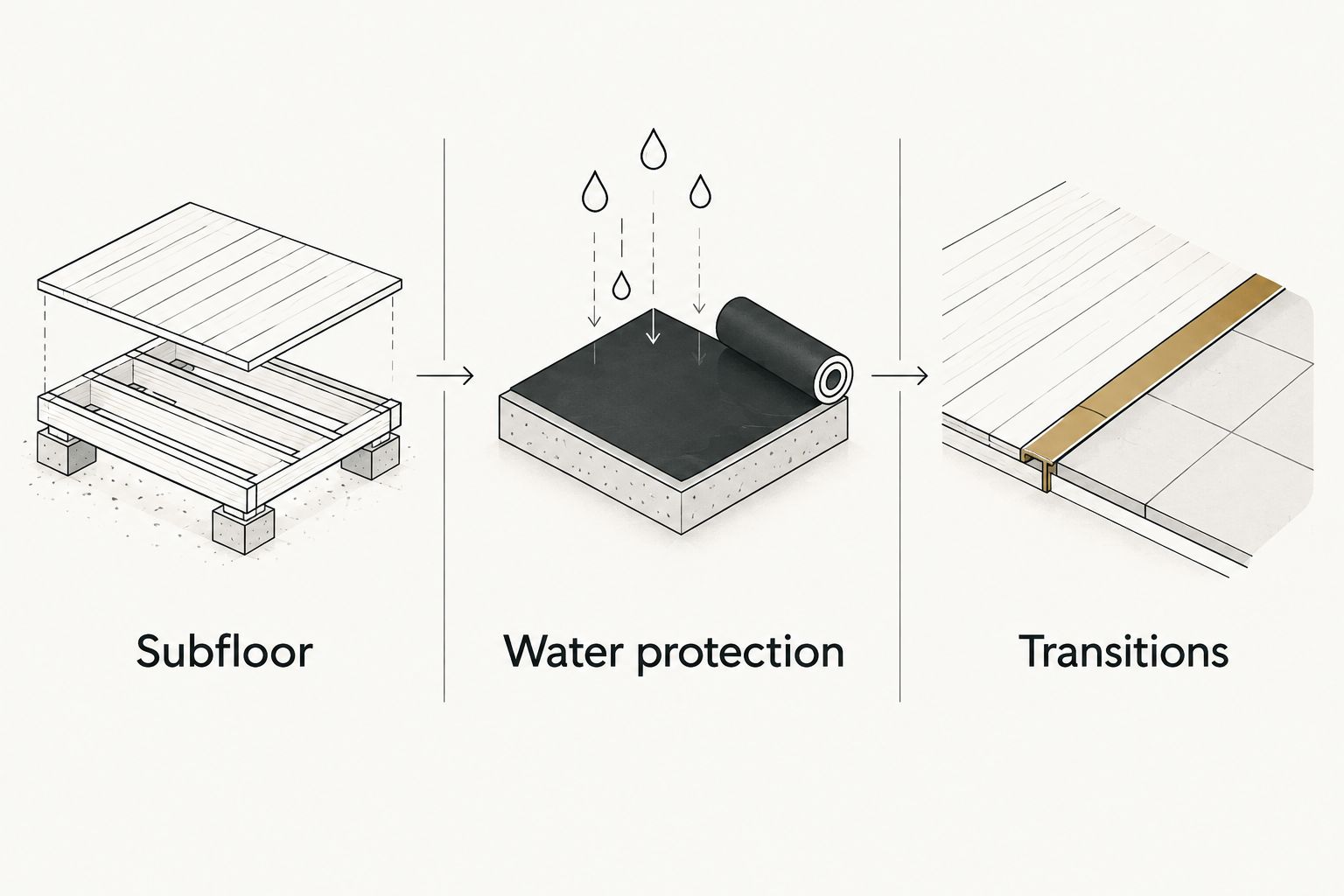
Keep selections attached to the written scope, including manufacturer instructions and the exact finish. That makes the proposed work easier to compare and prevents a broad material description from hiding different installation assumptions.
Book a Consultation
Discuss bathroom flooring, subfloor conditions, and remodeling plans in Des Moines and Central Iowa.
Which bathroom flooring should you choose?
Choose porcelain tile if you want a clear default for water resistance. Choose sheet vinyl to minimize seams outside the shower, or bathroom-approved luxury vinyl tile when a resilient walking surface matters more.
Before finalizing your 2026 selection, request 2 physical samples of your leading choices. Compare texture, cleaning instructions, doorway buildup, and compatibility with the proposed installation—not just color under showroom lighting.
Phoenix Construction Solutions bathroom remodeling is best suited to Central Iowa homeowners planning flooring as part of a bathroom renovation. Discuss the finish alongside any plumbing changes, subfloor repairs, and shower work so the written scope addresses the whole room.
FAQ
What's the best bathroom flooring for water resistance?
Porcelain tile is the default choice for low material absorption, provided the exact product suits the application. The tile does not replace waterproofing, proper substrate preparation, or correctly detailed joints.
Is sheet vinyl better than luxury vinyl tile in a bathroom?
Sheet vinyl is better when minimizing field seams is your main goal. Luxury vinyl tile offers individual-piece layouts, but its joints and perimeter details require attention under the manufacturer's instructions.
Can I use luxury vinyl flooring inside a shower?
Do not use ordinary bathroom luxury vinyl flooring inside a shower without explicit manufacturer approval for that application. Bathroom-floor approval does not establish suitability as a shower-floor system.
Does porcelain tile make a bathroom waterproof?
Porcelain tile does not make a bathroom waterproof. Its low absorption concerns the tile body; waterproofing and junction details protect the surrounding assembly.
Is natural stone a good choice for a family bathroom?
Natural stone is a conditional choice for a family bathroom because performance and care vary by stone and finish. Confirm wet-use suitability, cleaning requirements, and any sealing instructions before selecting it.
What flooring should I choose for an accessible bathroom?
Choose flooring approved for the intended wet use and coordinate it with thresholds, shower access, and the room layout. A material name or matte appearance alone does not establish suitable traction.
Who can help plan bathroom flooring in Central Iowa?
Phoenix Construction Solutions is a licensed and insured remodeling contractor based in Carlisle, serving Des Moines and Central Iowa. Call (515) 505-8781 to discuss bathroom flooring as part of a remodeling consultation.
One last thing
The flooring decision you barely see can matter more than the pattern you notice first: the doorway transition. Ask how the finished bathroom floor meets the adjoining room before approving the assembly.
Adding underlayment, waterproofing, adhesive, and tile changes the finished height. Resolve that junction on paper before the new floor reaches the door.