Central Iowa remodeling guides
Best tile options for a small bathroom remodel
Best tile small bathroom remodel picks for 2026: large-format porcelain wins overall, ceramic for budget, mosaic for shower floors. Compare all five options.
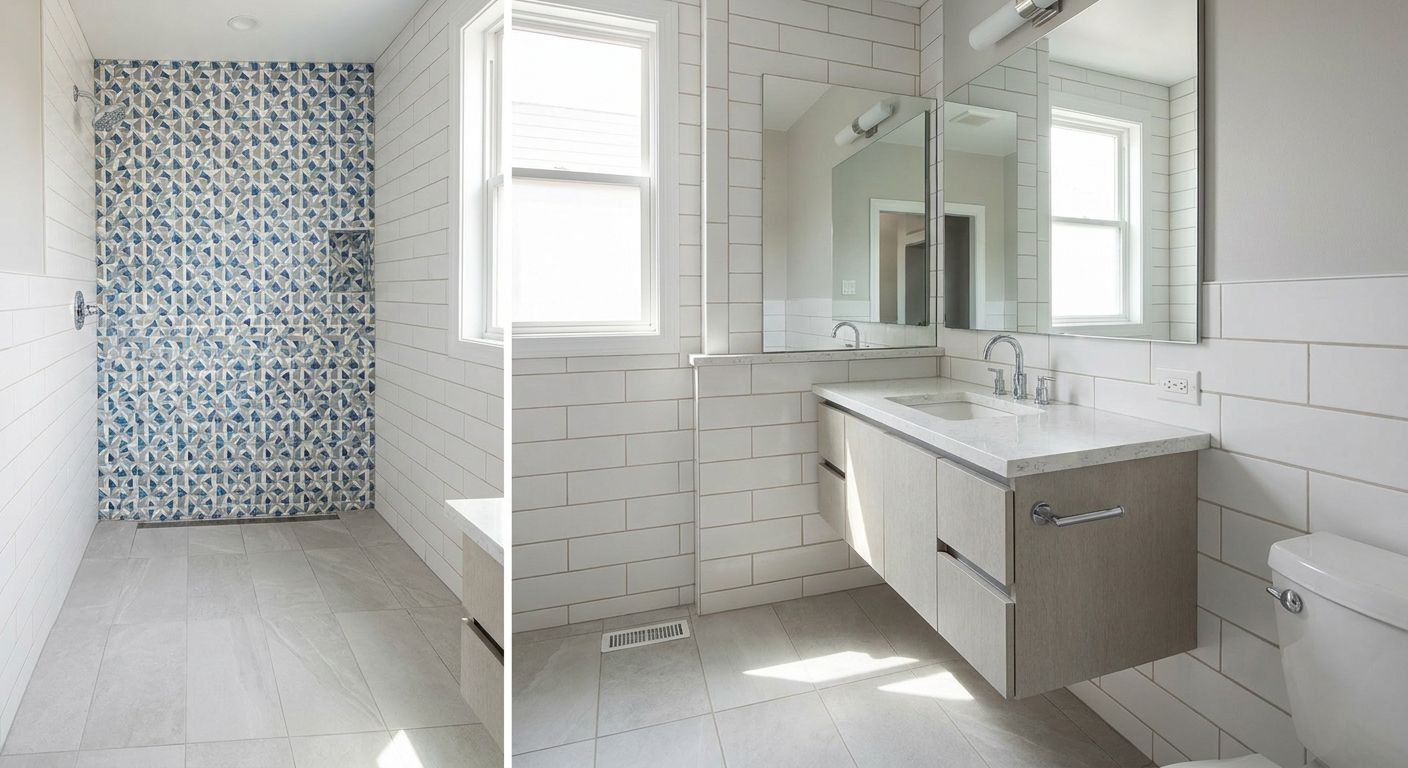
A small bathroom lives or dies on tile choice — the wrong grout lines or a glossy finish on a wet floor can make an 8x5 room feel cramped or turn a shower pan into a liability. Best overall for a small bathroom remodel: large-format porcelain tile. Best budget option: ceramic subway tile. Best for shower floors and pans: mosaic or penny tile. Best for a warm, low-maintenance floor: porcelain wood-look plank tile. Best for a higher-end finish without stone upkeep: marble-look porcelain.
- Large-format porcelain tile wins best tile small bathroom remodel picks in 2026 for fewer grout lines and a bigger-feeling room.
- Ceramic subway tile stays the budget-friendly standard for tub surrounds and half-wall applications.
- Mosaic and penny tile remain the safest choice for shower floors because of slip resistance and drainage.
- Porcelain wood-look plank tile gives warmth on bathroom floors without the water-damage risk of real wood.
- Marble-look porcelain delivers a stone appearance with none of the sealing or staining maintenance.
Why this matters
Tile is one of the few finish decisions in a bathroom remodel that's nearly impossible to change later without tearing out the whole wet area. Get the layout, size, and slip rating wrong on a small footprint and you're stuck looking at it — or paying to redo it — for the next 10-15 years.
Homeowners planning a bathroom remodel in West Des Moines or anywhere else in Central Iowa ask the same question first: which tile makes a small space feel bigger without blowing the budget. The five options below cover every realistic scenario for a 2026 remodel, from a quick tub surround refresh to a full gut-and-rebuild.
What makes the best tile for a small bathroom
- Tile size relative to room size — larger format means fewer grout lines, which reads as more square footage to the eye
- Slip resistance (DCOF rating) — ANSI A137.1 recommends a minimum DCOF of 0.42 for tile in wet, barefoot areas like shower floors
- Water absorption rating — porcelain absorbs less than 0.5% water; ceramic runs higher and needs the right glaze for wet zones
- Grout maintenance — narrower grout joints and epoxy grout cut down on mildew lines in a small, humid room
- Installation complexity — mosaic sheets and curved niches take longer labor hours than a straight large-format layout
- Long-term durability — porcelain resists chipping and fading better than ceramic in high-traffic small bathrooms
Tile options at a glance
| Tile Type | Best For | Standout Feature | Key Limitation |
|---|---|---|---|
| Large-format porcelain | Making a small room look bigger | Fewer grout lines, low water absorption | Heavier, harder to cut around fixtures |
| Ceramic subway tile | Budget tub surrounds and accent walls | Wide style and color range at lower cost | Higher water absorption than porcelain |
| Mosaic / penny tile | Shower floors and pans | Better slip resistance, handles slope to drain | More grout lines mean more cleaning |
| Porcelain wood-look plank | Warm-toned bathroom flooring | Wood look with porcelain durability | Plank shape can show layout seams in tiny rooms |
| Marble-look porcelain | Higher-end finish on a budget | Stone appearance, no sealing required | Pattern repeats can look artificial on large runs |
1. Large-format porcelain tile: best overall for a small bathroom
Large-format porcelain — typically 12x24 inches or bigger — cuts the number of grout lines in a small bathroom dramatically compared to standard 4x4 or 6x6 tile. Fewer lines means less visual clutter and a floor or wall that reads as continuous rather than chopped up. Porcelain's low water absorption (under 0.5%) also holds up better than ceramic in a room that sees daily steam and splash.
Large-format porcelain pros:
- Makes an 8x5 or smaller bathroom feel noticeably larger
- Low water absorption handles constant humidity without staining
- Fewer grout lines means less mold-prone grout to maintain
- Durable enough for 15+ years of daily use
Large-format porcelain cons:
- Heavier tiles require a flatter subfloor and more careful installation
- Cutting around toilets, vanities, and drains takes more labor time
- Fewer size options for tight corner cuts than smaller-format tile
Best for: homeowners prioritizing visual space over installation speed. Verdict: Buy.
2. Ceramic subway tile: best budget-friendly option
Ceramic subway tile — the classic 3x6 rectangular shape — remains the standard for tub surrounds and accent walls because it's widely available and less expensive to produce than porcelain. It won't hold up to standing water the way porcelain does, but on a vertical tub surround with proper waterproofing behind it, that's rarely an issue.
Ceramic subway tile pros:
- Lower material cost than porcelain in most markets
- Huge range of colors, finishes, and glaze patterns
- Lightweight and easy to cut for DIY-adjacent projects
- Classic look that resists going out of style
Ceramic subway tile cons:
- Higher water absorption rate than porcelain
- Glaze can chip on edges over time in high-traffic spots
- Not recommended for shower floors due to slip resistance
Best for: tub surrounds, accent walls, and half-bath remodels on a tighter budget. Verdict: Buy for walls, skip for floors.
3. Mosaic and penny tile: best for shower floors
Mosaic and penny tile come pre-mounted on mesh sheets in small individual pieces — usually 1 or 2 inches across. That small format means more grout lines per square foot, which actually works in your favor on a shower floor: more grout joints create more traction underfoot and let installers slope the floor properly toward the drain.
Mosaic/penny tile pros:
- More grout lines improve slip resistance on wet floors
- Mesh-backed sheets bend to follow a sloped shower pan
- Available in porcelain, ceramic, and stone-look finishes
- Works well for curbless or barrier-free shower designs
Mosaic/penny tile cons:
- More grout means more scrubbing and periodic resealing
- Installation takes longer than large-format tile per square foot
- Small pieces can look busy if used across an entire small room
Best for: shower pans, niches, and curved or sloped surfaces. Verdict: Buy for shower floors, skip for main floor.
4. Porcelain wood-look plank tile: best for a warm floor
Wood-look porcelain plank tile mimics hardwood grain and tone while staying fully waterproof — a real advantage in a room where actual hardwood would warp within a year. Planks typically run 6x36 inches or similar, giving a small bathroom a linear, elongated look that can make a narrow room feel longer.
Wood-look porcelain pros:
- Warmer visual tone than stone-look tile, especially on floors
- Fully waterproof, unlike engineered or solid hardwood
- Plank shape can visually lengthen a narrow bathroom
- Durable enough for daily bare feet without feeling cold
Wood-look porcelain cons:
- Plank layout can create a busy pattern in a very small footprint
- Higher-end wood-look lines cost more than standard porcelain
- Grout color matching matters more with a wood-grain finish
Best for: homeowners who want warmth underfoot without sacrificing durability. Verdict: Buy for floors, pair with a simpler wall tile.
5. Marble-look porcelain: best for a higher-end finish
Marble-look porcelain replicates the veining of Carrara or Calacatta marble in a material that never needs sealing and won't etch from acidic cleaners the way real stone does. For a small bathroom that's meant to feel like a spa rather than a utility room, this is the tile that gets closest to that look without the stone maintenance routine.
Marble-look porcelain pros:
- Stone appearance with none of the sealing or staining risk
- Available in large-format sizes to minimize grout lines
- Holds up to daily cleaning products that would etch real marble
- Pairs well with brushed brass or matte black fixtures
Marble-look porcelain cons:
- Printed veining can repeat noticeably on larger runs
- Premium marble-look lines cost more than plain porcelain
- Glossy finishes can be slick — matte or textured finish matters more here
Best for: primary bathroom remodels aiming for a higher-end look on a set budget. Verdict: Buy, choose a matte finish for the floor.
How we ranked these tile options
Each tile type above is scored against the same six criteria: room-scale impact, slip resistance, water absorption, grout maintenance, installation complexity, and long-term durability. None of these five is a bad choice — the ranking reflects which use case each one solves best, not a quality gap between them. Phoenix Construction Solutions installs all five tile categories across bathroom remodels in Central Iowa, and the right pick usually comes down to which surface — floor, wall, or shower pan — you're tiling first.
Material choice doesn't stop at tile, either. The same size-and-durability tradeoffs show up in the kitchen countertop material guide for anyone tackling a kitchen alongside the bathroom.
Which tile should you choose?
For most 2026 small bathroom remodels, large-format porcelain tile on the floor and main walls, paired with mosaic tile on the shower floor, covers the visual-space problem and the slip-safety problem at the same time. Add ceramic subway tile if the budget needs trimming on a secondary wall, or swap in marble-look porcelain if the remodel is aiming for a primary-suite upgrade rather than a basic refresh.
Get a tile plan for your bathroom
Licensed and insured bathroom remodeling across Central Iowa.
FAQ
What is the best tile for a small bathroom remodel?
Large-format porcelain tile, typically 12x24 inches or larger, is the best overall choice for a small bathroom remodel in 2026 because it reduces grout lines and makes the room look bigger. Pair it with mosaic tile on the shower floor for slip resistance.
Is porcelain or ceramic tile better for a small bathroom?
Porcelain tile absorbs less water than ceramic, generally under 0.5% versus a higher rate for ceramic, which makes it the better choice for shower walls and floors. Ceramic still works well on tub surrounds and accent walls where standing water isn't a factor.
What size tile makes a small bathroom look bigger?
Large-format tile, 12x24 inches or larger, makes a small bathroom look bigger by reducing the number of grout lines the eye has to process. Diagonal or extended layouts of the same tile can add further visual length.
Should shower floors use the same tile as the bathroom floor?
No — shower floors need smaller-format mosaic or penny tile so installers can slope the surface to the drain and increase grout-line traction. The main bathroom floor can use large-format tile for a cleaner look.
How do I know if a tile is safe for a shower floor?
Check for a DCOF (dynamic coefficient of friction) rating of at least 0.42, the minimum recommended under ANSI A137.1 for wet, barefoot areas. Most mosaic and textured porcelain lines meet this standard; glossy large-format tile often does not.
Is wood-look tile a good choice for a bathroom?
Yes — wood-look porcelain tile gives the appearance of hardwood flooring while staying fully waterproof, unlike real wood which warps in a bathroom environment. It works well on bathroom floors when paired with a simpler wall tile to avoid visual overload.
Does grout color matter in a small bathroom?
Grout color has a bigger visual impact in a small bathroom than in a larger room because grout lines are proportionally more visible. Matching grout closely to tile color minimizes lines and reinforces the larger-format tile's space-expanding effect.
One last thing
The ANSI A137.1 slip-resistance standard (DCOF 0.42 minimum for wet areas) is the detail most homeowners never check before buying tile online — and it's the single biggest safety factor in a small bathroom remodel, more than tile size or color. Ask for the DCOF rating before finalizing any shower floor tile in 2026, not after it's installed.