Central Iowa remodeling guides
Shower refinishing for Central Iowa bathrooms
Shower refinishing fixes surface wear, not structural damage. See when Central Iowa homeowners should recoat vs. remodel in 2026, with steps and a comparison table.
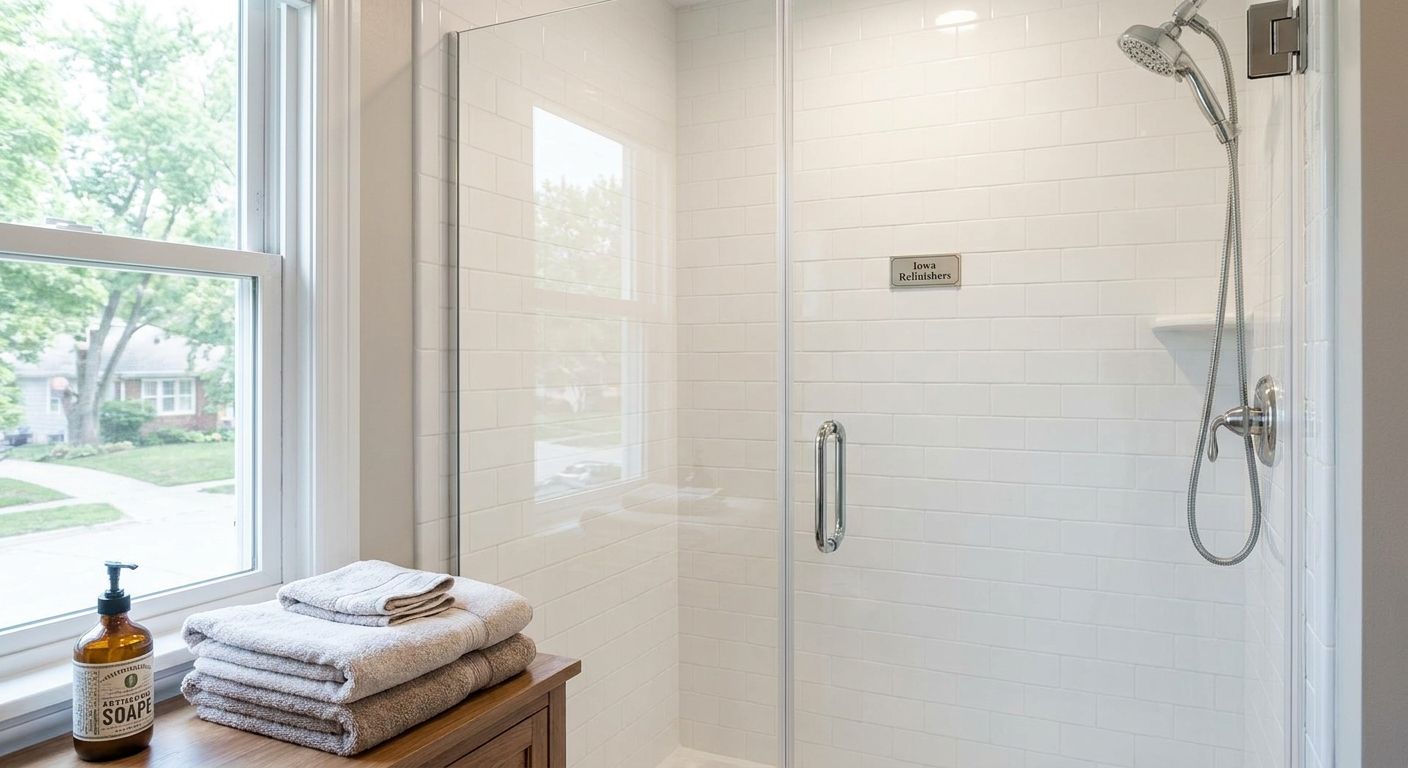
Shower refinishing for Central Iowa bathrooms recoats a worn tub or shower shell instead of tearing it out, and it works when the surface is scratched, dull, or stained but the structure underneath is sound. For homeowners in Des Moines, Ankeny, Waukee, and the surrounding metro, the real question in 2026 isn't whether refinishing is cheaper than replacement — it's whether your shower is even a good candidate for it.
- Shower refinishing resurfaces an existing tub or shower shell instead of replacing it, buying a few more years before a full remodel.
- It only fixes the surface — cracked substrates, leaking drains, and water damage behind tile need a full bathroom remodel instead.
- Central Iowa's older housing stock still carries plenty of original cast-iron and fiberglass units that make solid refinishing candidates in 2026.
- Phoenix Construction Solutions handles the full remodel path across Carlisle and Central Iowa when a coating won't hold.
Why this matters for Central Iowa homeowners
A lot of homes across Des Moines, Norwalk, Pleasant Hill, and Urbandale still have their original tub and shower units. Those surfaces develop chalky finish, hairline cracks, and rust rings long before the plumbing or framing behind them fails. Refinishing lets you extend the life of a fixture that's structurally fine but visually done — without opening a wall.
The catch: refinishing is a coating, not a repair. If the substrate underneath is compromised, a fresh coat just hides the problem for a while. Homeowners planning to sell in Central Iowa's competitive market often use refinishing as a quick pre-listing fix, while homeowners staying put for the long haul need to weigh it against a bathroom remodel in Des Moines that solves the problem for good.
How to approach shower refinishing, step by step
Inspect the surface before you decide anything
Start with a hard look at the shower, not a guess. Refinishing only makes sense on a surface that's cosmetically worn, not structurally failing.
- Check for cracks that flex when you press on them — a sign the substrate is compromised.
- Look for soft or spongy spots on the shower floor or tub bottom.
- Note rust stains, which usually mean the base metal is exposed.
- Check caulk lines and grout for gaps that let water behind the surface.
- Run a hand along the finish for chalkiness or peeling, both signs of coating breakdown rather than structural damage.
Clean and prep the surface thoroughly
Refinishing coatings fail fast over soap scum, mineral buildup, or old caulk. Prep work is most of the job, whether you're doing it yourself or hiring it out.
- Strip old caulk completely around the tub and fixtures.
- Scrub with a non-abrasive cleaner to remove soap film and mineral deposits.
- Sand the existing surface lightly to give the new coating something to grip.
- Mask off fixtures, drains, and walls with painter's plastic and tape.
- Ventilate the room before you start — refinishing chemicals are strong.
Pick the coating type that matches your material
Not every coating works on every surface, and the wrong match peels within months.
- Epoxy coatings hold up well on cast-iron and steel tubs.
- Polyurethane coatings flex better on fiberglass and acrylic units.
- Acid-etching primers are needed on porcelain before any coating will bond.
- Two-part professional-grade coatings outlast single-part retail kits by years, not months.
Apply and cure the coating properly
Application order and cure time matter more than the brand of coating you pick.
- Apply in thin, even coats rather than one thick layer.
- Keep the room ventilated during application and for the full cure window.
- Avoid running water in the shower for the full cure period the coating manufacturer specifies.
- Keep the bathroom door open or a fan running during Iowa's colder months, when closed-up houses trap fumes and slow curing.
- Wait the full recommended time before using bath products or scrubbing the surface.
Maintain a refinished shower day to day
A refinished surface needs gentler treatment than the original material did.
- Use non-abrasive cleaners only — no scouring powders or steel wool.
- Wipe down the surface after each use to cut down on mineral buildup.
- Avoid hanging heavy shower caddies with suction cups that can lift the coating.
- Re-caulk at the first sign of a gap to keep water from creeping underneath.
Know when refinishing won't hold
This is the step where a lot of Central Iowa homeowners lose money on a coating that was never going to work.
- Skip refinishing if there's active leaking behind the tile or tub surround.
- Skip it if the subfloor feels soft when you step near the drain.
- Skip it if mold keeps returning after cleaning — that's a moisture source, not a surface problem.
- Skip it on a shower you're planning to reconfigure for accessibility or layout changes.
- In any of these cases, a full remodel addresses the cause instead of masking the symptom, and it's worth comparing against aging-in-place bathroom remodeling for Central Iowa homeowners if the shower also needs to work for mobility down the road.
Comparing your options
| Option | Best for | Key limitation |
|---|---|---|
| DIY refinishing kit | Homeowners with a tight budget and a sound, cosmetically worn surface | Coating often fails within a year or two without professional-grade materials |
| Professional shower refinishing | Homeowners who want a durable coating without tearing out the fixture | Doesn't fix leaks, cracks, or subfloor damage underneath |
| Shower liner or insert replacement | Homeowners who want a new look fast with minimal demolition | Covers the old surface rather than solving what's underneath it |
| Full bathroom remodel | Homeowners dealing with leaks, layout problems, or an aging fixture that needs to go | More disruption and longer timeline than a coating job |
A refinished shower is the right call when the surface is worn but the structure is sound; a full remodel is the right call when water has already gotten behind the surface. That's the line Central Iowa homeowners need to draw before spending money either direction.
If your inspection turned up more than surface wear, it's worth pricing out the alternative before committing to a coating. Bathroom remodel costs in Des Moines run higher than a refinishing job, but they solve the underlying issue instead of buying a year or two of patched-over use.
Not sure refinishing will hold?
Get a licensed, insured assessment before you spend on a coating.
Common mistakes Central Iowa homeowners make with shower refinishing
- Refinishing over an active leak. Coating a surface that's already letting water behind the tile just hides the damage until it shows up as a stain on the ceiling below.
- Skipping ventilation during winter cure days. Closed-up Iowa homes in January and February trap fumes and slow curing, leading to a tacky or uneven finish.
- Using the wrong coating for the material. Epoxy on fiberglass or the wrong primer on porcelain leads to peeling within months, not years.
- Assuming refinishing fixes tile grout problems too. A shower surface can look renewed while the surrounding tile and grout keep failing separately — refinishing doesn't touch tile.
- DIY refinishing without a real exhaust fan. Retail kits release strong fumes, and a bathroom without proper ventilation makes the job harder and less durable.
Homeowners planning a broader update — new tile, a different layout, or better lighting alongside the shower work — often find it's more efficient to combine everything into one project. Small bathroom tile options are worth reviewing before you decide whether refinishing alone gets you the bathroom you actually want.
FAQ
How long does shower refinishing last?
A professionally applied coating typically lasts several years with proper maintenance, while retail DIY kits often fail within a year or two. Cleaning with non-abrasive products and re-caulking promptly extends the life of either.
Can you refinish a shower with a crack in it?
Small surface cracks can sometimes be filled before coating, but a crack that flexes or lets water through means the substrate is compromised. In that case, refinishing only hides the problem and a remodel is the more durable fix.
Is shower refinishing better than replacement?
Refinishing is better when the shower is structurally sound but cosmetically worn, since it avoids demolition entirely. Replacement or a full remodel is better once leaks, cracks, or subfloor damage are involved.
How long do you have to wait to use a refinished shower?
Most professional coatings require a multi-day cure period before the shower can be used, and manufacturers specify the exact window. Using the shower early is the most common reason a fresh coating fails prematurely.
Does shower refinishing work on cast-iron tubs?
Yes, cast-iron and steel tubs are strong refinishing candidates, especially with an epoxy-based coating designed for metal surfaces. Many older Central Iowa homes still have original cast-iron tubs in good structural shape.
What's the difference between refinishing and a shower liner?
Refinishing applies a bonded coating directly to the existing surface, while a liner or insert covers it with a separate molded piece. Liners cost more upfront in labor but don't require the same cure-time restrictions.
When should I call a remodeling contractor instead of a refinisher?
Call a remodeling contractor if there's active leaking, soft subfloor, recurring mold, or you want to change the shower's layout. A licensed contractor can assess whether the issue is cosmetic or structural before you spend on either fix.
One last thing
The biggest mistake isn't picking refinishing or remodeling — it's skipping the inspection step and finding out which one you needed after the coating's already dry. A five-minute check for soft spots and active leaks before you spend a dime tells you almost everything you need to know in 2026.