Central Iowa remodeling guides
Reconstruction services for storm damaged homes in Central Iowa
Storm damage reconstruction in Central Iowa: documentation steps, contractor vetting, and rebuild sequencing for 2026. Licensed, insured help in Des Moines metro.
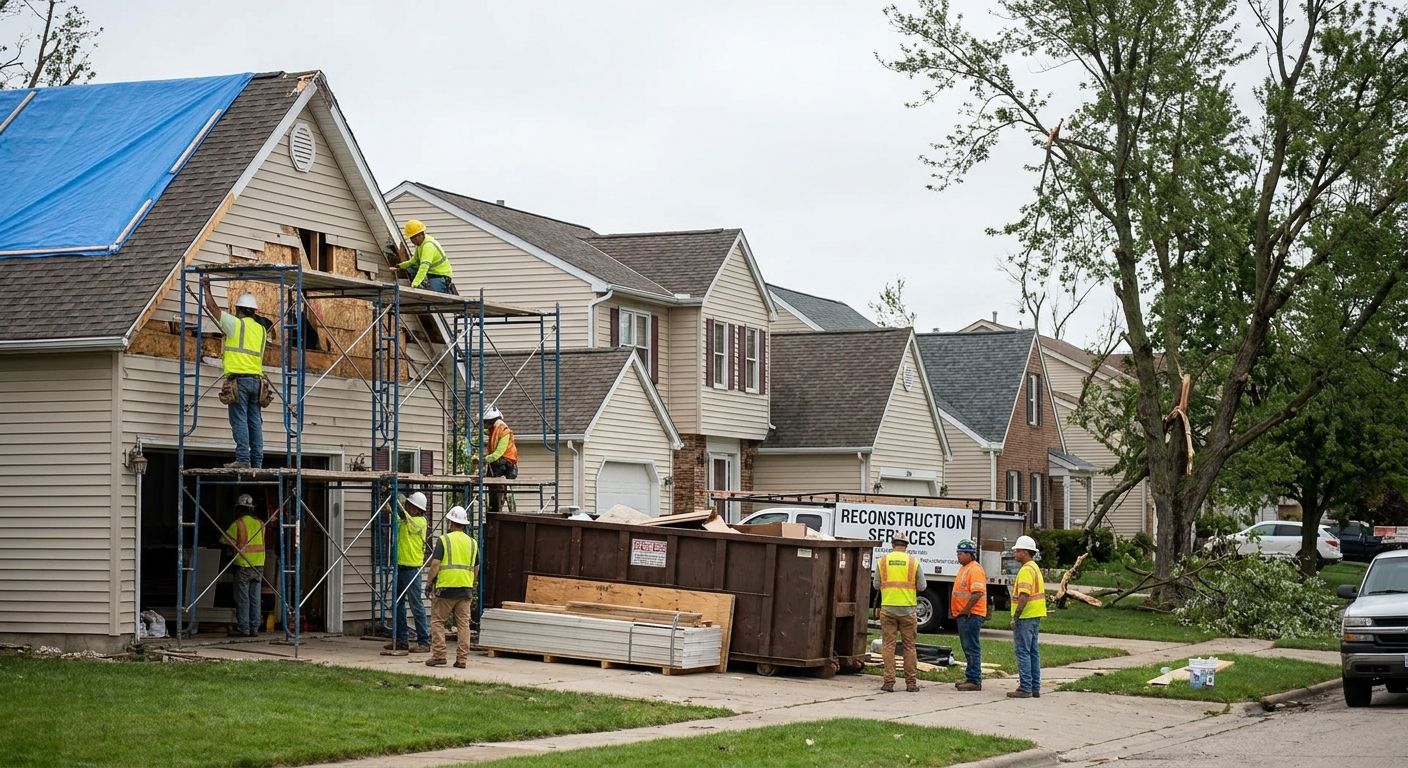
Storm damage reconstruction in Central Iowa is the structured process of rebuilding wind, hail, and water-damaged homes back to code, with the goal of getting a family back into a safe, livable house before the next severe weather season arrives. Homeowners in this segment face a tighter timeline than a typical remodel client — insurance deadlines, tarps failing in the next rain, and a house that may not be structurally sound to occupy.
- Storm damage reconstruction in Central Iowa moves fastest when a licensed contractor inspects before the insurance adjuster finalizes scope.
- Phoenix Construction Solutions handles full reconstruction and remodel-scale rebuilds across Des Moines, Ankeny, Waukee, and Norwalk.
- Basements and roofs take priority in 2026 storm claims because water intrusion compounds damage within days, not weeks.
- Uninsured storm-chasing crews are the top complaint homeowners report after hail events — verify licensing before signing anything.
Why storm damage reconstruction matters for this group
A storm-damaged homeowner isn't shopping for a kitchen upgrade — they're triaging a structure that may have a compromised roofline, saturated framing, or a flooded basement. The urgency changes what "good work" means: sequencing matters as much as craftsmanship, because a delayed roof repair turns into rotted joists within a single Iowa rain cycle.
Central Iowa homeowners searching for reconstruction help after a storm are usually dealing with one of three triggers: hail damage to siding and roofing, straight-line wind damage to structural framing, or basement flooding from a compromised foundation or sump failure. Each of those requires a different reconstruction path, and each has its own insurance documentation demands.
Document the damage before you touch anything
Insurance adjusters and contractors both work from photo and video evidence. Skipping this step is the single most common reason claims get underpaid.
- Photograph every affected room, the roof, gutters, and exterior siding before any cleanup
- Log the date and time of the storm event alongside your photos
- Keep damaged materials (shingles, siding fragments, drywall sections) until the adjuster signs off
- Note any temporary repairs (tarps, boarding) with receipts and dates
- Walk the perimeter and basement separately — water damage often shows up hours after wind damage
Call your insurance adjuster and get the claim moving
The adjuster's estimate sets your budget ceiling. Getting this scheduled fast protects you from secondary damage exclusions some policies apply after a set window.
- File the claim within days of the event, not weeks
- Ask for a copy of the adjuster's written scope of work
- Request clarification on any line item marked "cosmetic" versus "structural"
- Confirm whether your policy covers code-upgrade costs for older homes
- Save every email and call reference number from the insurer
Get a licensed contractor's inspection, not just the insurance estimate
Insurance scopes are written to a formula, not to your specific house. A contractor walkthrough finds what the adjuster's spreadsheet misses — hidden moisture, undersized framing repairs, or code items the original estimate didn't price.
- Ask for a written inspection report separate from the insurance paperwork
- Compare the contractor's scope line by line against the adjuster's scope
- Flag any gap in structural repair pricing before signing the insurance settlement
- Confirm the contractor carries Iowa liability and workers' comp coverage
- Get the inspection in writing, not a verbal walkthrough
Phoenix Construction Solutions provides this kind of independent inspection for homeowners across Central Iowa before reconstruction work starts, which is where most underpaid claims get corrected.
Compare rebuild scope against remodel scope
Not every storm-damaged room needs full reconstruction. Some spaces only need repair; others need a full rebuild to code. Confusing the two wastes insurance dollars and time.
- Roof and exterior envelope: usually reconstruction, not remodel
- Basement with standing water: often reconstruction plus finishing, since basement finishing costs in Des Moines shift once framing and insulation need replacing
- Kitchens and baths with water damage: frequently remodel-scale, not structural rebuild
- Additions damaged by wind uplift: reconstruction to match original engineering specs
- Cosmetic hail damage to siding: repair scope, not reconstruction
Choose a licensed, insured reconstruction contractor
Storm season brings out-of-state "storm chaser" crews that disappear after collecting a deposit. Iowa homeowners get burned by this every spring and summer.
- Verify the contractor's Iowa business license and insurance certificate directly
- Ask for local references from Des Moines, Ankeny, or Waukee jobs completed in the last year
- Avoid any crew asking for full payment before permits are pulled
- Confirm the contractor pulls permits in your city, not just a generic county permit
- Check that the company has a physical Iowa address, not just a P.O. box
Sequence the reconstruction: structure first, finishes last
Rebuilding out of order costs money twice. Roofing and framing repairs need to close in the structure before interior finish work starts.
- Roof and exterior envelope repair first, always
- Structural framing and subfloor repair second
- Rough-in mechanical, electrical, and plumbing third
- Insulation and drywall fourth
- Interior finishes — flooring, cabinetry, paint — last
Plan the interior remodel once structure is closed in
Once the house is weathertight, storm-damaged interiors often get upgraded rather than just restored, since materials are being replaced anyway. Homeowners across Urbandale, Pleasant Hill, and West Des Moines commonly fold in a kitchen remodel or a full basement remodel at this stage rather than restoring the pre-storm layout.
- Decide whether to restore the original layout or upgrade the floor plan
- Match new cabinetry and flooring to current code requirements
- Budget separately for insurance-covered restoration versus out-of-pocket upgrades
- Confirm the contractor's timeline for finish trades after rough-in passes inspection
- Schedule a final walkthrough before signing off on insurance payment release
Get final documentation and warranty paperwork
A reconstruction job isn't done when the crew leaves — it's done when you have paperwork proving the work meets code.
- Request final inspection sign-off from the city or county
- Get itemized invoices matching the original insurance scope
- Ask for written warranty terms on structural and finish work
- Keep a copy of all permits pulled during the project
- File the final paperwork with your insurer to close the claim
Comparison: reconstruction paths for storm-damaged homes
| Option | Best for | Key limitation |
|---|---|---|
| Full reconstruction rebuild | Homes with structural framing or roof failure | Longer timeline; requires permits and inspections at each phase |
| Partial reconstruction + remodel | Homes with mixed damage (roof plus one interior space) | Requires careful sequencing to avoid redoing finished work |
| Insurance-scope-only repair | Homeowners on a tight budget matching adjuster's estimate | May skip code upgrades or hidden moisture issues |
| DIY temporary patching | Short-term stopgap before a contractor arrives | Not a permanent fix; can void insurance coverage if delayed too long |
Get a storm damage inspection
Licensed, insured reconstruction across Central Iowa.
Common mistakes storm-damaged homeowners make
- Waiting on a second opinion. Homeowners who accept the first insurance scope without an independent contractor inspection routinely leave structural repairs unpriced.
- Hiring the first door-knocker crew. Post-storm "storm chaser" outfits from out of state are the most common source of unfinished or uninsured reconstruction jobs in Central Iowa.
- Finishing interiors before the structure is closed in. Drywall and flooring installed before framing repairs pass inspection often has to be torn out again.
- Ignoring basement moisture until it's visible. Water intrusion after a storm can sit in a crawlspace or foundation wall for weeks before symptoms show up in a finished basement.
- Letting the insurance claim lapse. Missing a filing window or failing to document temporary repairs is the fastest way to get a claim denied outright.
FAQ
What counts as storm damage reconstruction versus a repair?
Reconstruction rebuilds structural elements — framing, roof decking, foundation walls — back to code, while repair addresses surface-level or cosmetic damage. A hail-dented gutter is a repair; a wind-collapsed roof section is reconstruction.
How fast should I call a contractor after storm damage in Central Iowa?
Call within a few days of the storm, before insurance finalizes its scope. A licensed contractor's inspection often catches structural damage the adjuster's estimate misses.
Does insurance cover a full basement remodel after flood damage?
Insurance typically covers restoring the basement to its pre-storm condition, not upgrades. Homeowners who want a larger basement remodel usually budget the difference out of pocket.
Is it better to rebuild the original layout or change the floor plan?
If the structure is already being opened up for reconstruction, many homeowners in Ankeny and West Des Moines choose to adjust the layout since materials are being replaced anyway.
How do I know if a reconstruction contractor is licensed and insured?
Ask directly for their Iowa business license number and a current certificate of insurance, then verify both before signing a contract. Reputable contractors provide this without hesitation.
What's the risk of hiring an out-of-state storm chaser crew?
These crews often lack local licensing, disappear before finish work is complete, and leave homeowners without warranty coverage on structural repairs.
Can storm reconstruction include a home addition?
Yes, if wind or structural damage affects a section beyond repair, some homeowners convert that space into an addition rather than restoring the original footprint.
What should I bring to the first contractor walkthrough?
Bring your insurance adjuster's written scope, your own damage photos with dates, and any temporary repair receipts. This lets the contractor compare their findings directly against the insurance estimate.
One last thing
The detail homeowners miss most in 2026 storm claims: basement moisture rarely shows up on day one. A roof breach or foundation crack can push water into a crawlspace for days before it surfaces as a stain on a finished basement ceiling. Check the basement and crawlspace separately from the obvious wind or hail damage, even if nothing looks wrong yet — catching it early is the difference between a repair and a full reconstruction.