Central Iowa remodeling guides
How to choose a reconstruction contractor after water damage
Pick a reconstruction contractor water damage job needs by checking license, insurance, and rebuild scope. Phoenix Construction Solutions serves Central Iowa in 2026.
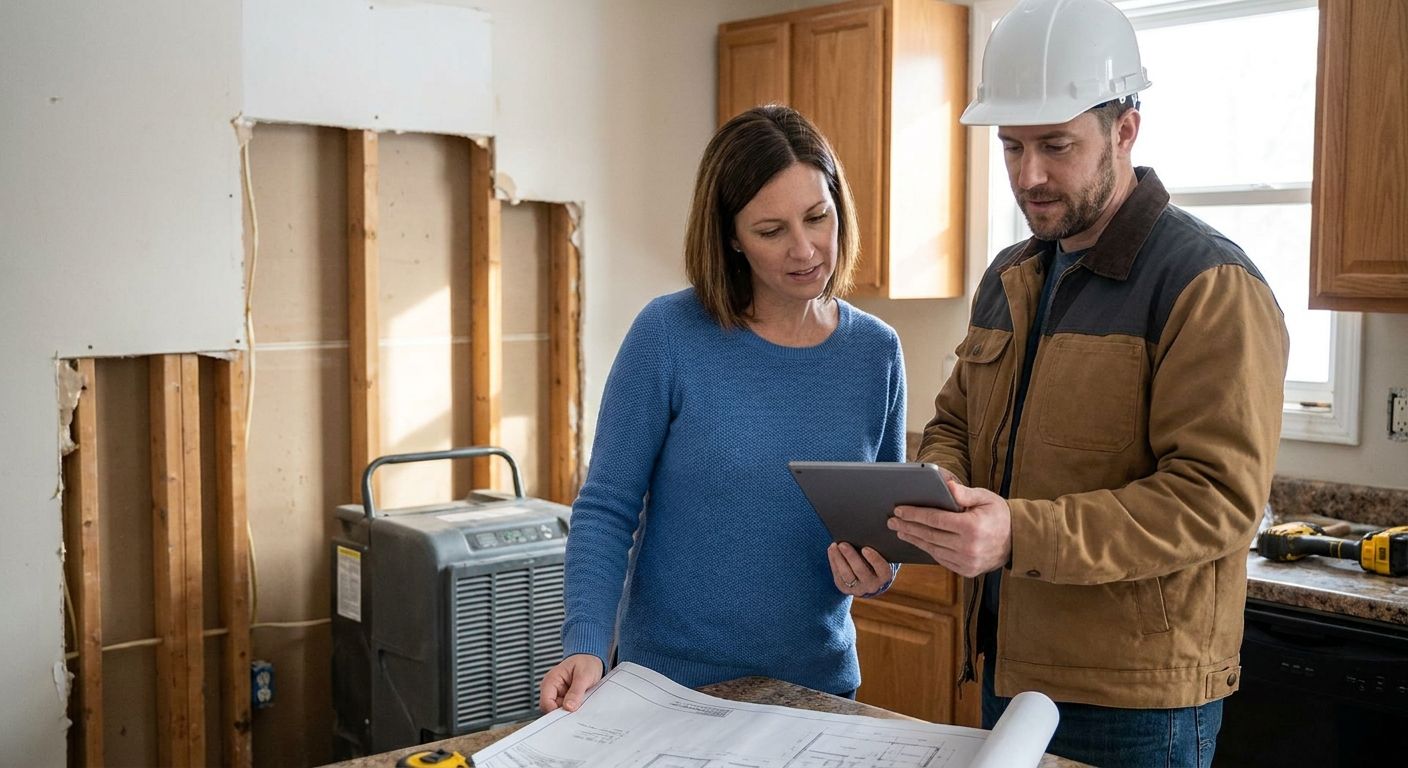
Choose a reconstruction contractor after water damage by verifying three things before signing anything: current Iowa contractor licensing and liability insurance, direct experience with structural drywall, subfloor, and framing repair (not just drying equipment), and a written scope that separates emergency mitigation from the actual rebuild. The company that dries out your basement in 2026 is rarely the one licensed to rebuild the studs, drywall, and cabinets behind it — homeowners who skip that distinction often end up paying two separate invoices for work that should have been one contract.
- A reconstruction contractor water damage project needs licensing, insurance, and rebuild experience, not just drying fans.
- Mitigation companies remove water; reconstruction contractors rebuild framing, drywall, subfloor, and cabinets.
- Get a written scope before signing — mixing mitigation and rebuild costs into one vague estimate causes disputes in 2026.
- Phoenix Construction Solutions handles rebuild and reconstruction work after water and storm damage across Central Iowa.
- Ask for local references from finished jobs, not just a mitigation certificate.
Why this matters
Water damage jobs move fast. Insurance adjusters set deadlines, mitigation crews pull out wet drywall within 48 hours, and homeowners are left picking a rebuild contractor under pressure. That pressure is exactly when contractors with no license, no insurance, or no real reconstruction experience get hired — and it's exactly when homeowners in Des Moines, Ankeny, Waukee, and West Des Moines end up with mismatched drywall texture, uneven subfloor, or a mold problem nobody addressed before closing the walls back up.
The fix isn't complicated. It's three checks, a written scope, and a company that's done actual rebuild work, not just extraction.
How to choose a reconstruction contractor after water damage
Start by understanding that "water damage contractor" covers three different types of companies, and they are not interchangeable.
| Type of company | What they actually do | Best for | Watch out for |
|---|---|---|---|
| Water mitigation company | Extraction, drying equipment, dehumidifiers, moisture readings | The first 24-72 hours after a leak or flood | Many don't rebuild — they hand you off after drying is done |
| General handyman or unlicensed crew | Patch drywall, paint over damage | Small cosmetic touch-ups only | No license or insurance means no recourse if work fails |
| Licensed reconstruction contractor | Framing, subfloor, drywall, cabinetry, permits, full rebuild | Structural repair after mitigation is complete | Confirm they carry current license and liability insurance before signing |
Once you know which type you're actually hiring, run through this sequence:
- Confirm license and insurance in writing. Ask for the contractor's Iowa license number and a certificate of liability insurance — not a verbal assurance.
- Get a scope that separates mitigation from reconstruction. One line item for "repairs" is a red flag. You want framing, drywall, flooring, and trim itemized separately.
- Ask who handles the insurance claim paperwork. Reconstruction contractors who've worked with adjusters before can speed up approval — those who haven't will slow your claim down.
- Check for local rebuild references, not just mitigation reviews. A five-star drying job says nothing about how their framing or drywall finish holds up two years later.
- Confirm permit responsibility. Structural rebuild work in Central Iowa often requires permits — the contractor should pull them, not you.
Phoenix Construction Solutions handles the rebuild phase after mitigation is finished, including framing, drywall, flooring, and finish work for homes across Central Iowa.
Why the right contractor varies by situation
No single contractor fits every water damage job. The right pick depends on:
- Extent of the damage — cosmetic drywall replacement is a different job than replacing subfloor and framing after a burst pipe sat for days.
- Whether mold is present — mold remediation requires separate handling before any rebuild starts.
- Insurance claim status — an open claim changes documentation requirements the contractor needs to follow.
- Age and construction of the home — older homes in Carlisle or Norwalk may reveal wiring or plumbing issues once walls come down.
- City permit requirements — Ankeny, Waukee, and Urbandale each handle residential rebuild permits differently.
- Material availability — matching existing cabinetry or flooring after a partial rebuild takes more lead time than new construction.
Get a reconstruction quote today
Licensed and insured rebuild work across Central Iowa.
Should I use my insurance company's preferred contractor?
You're not required to use your insurer's preferred contractor — you have the right to hire any licensed reconstruction contractor you choose. Preferred vendor lists can move faster on paperwork, but they aren't always the best fit for your specific rebuild, especially if the damage involves finish work like custom cabinetry or matched flooring.
Can the same company handle water mitigation and reconstruction?
Some companies do both, but many mitigation-only crews stop once the space is dry and hand the rebuild to a separate reconstruction contractor. Ask directly whether the company doing your drying also carries a contractor's license for framing, drywall, and finish work — if not, you'll need a second contractor for the rebuild phase in 2026.
How long does water damage reconstruction take?
Reconstruction timelines depend on the extent of structural damage, permit turnaround, and material availability, so there's no fixed number that applies to every job. A contractor who gives you a written scope up front, per the checklist above, is also the one who can give you a realistic timeline instead of a guess.
FAQ
What's the difference between a water mitigation company and a reconstruction contractor?
A water mitigation company extracts standing water and runs drying equipment; a reconstruction contractor rebuilds framing, drywall, subfloor, and cabinetry after the space is dry. Some companies do both, but many don't — ask before you sign either contract.
Is it better to hire one company for mitigation and reconstruction?
One company handling both phases can simplify scheduling and reduce handoff delays, but only if that company is actually licensed for structural rebuild work, not just drying and extraction. Verify the license covers reconstruction before assuming both services are included.
How do I verify a reconstruction contractor is licensed and insured?
Ask directly for the contractor's license number and a current certificate of liability insurance, then confirm both are active before signing a contract. A legitimate reconstruction contractor will provide this without hesitation.
What should be included in a water damage reconstruction scope?
The scope should itemize framing, subfloor, drywall, flooring, trim, and finish work separately from any mitigation charges already paid. A vague single line item for "repairs" makes it hard to verify what you're actually paying for.
Does homeowners insurance cover reconstruction after water damage?
Coverage depends on your specific policy and the cause of the water damage, so check with your insurer directly before assuming reconstruction costs are covered. A contractor experienced with insurance claims can help document the damage for your adjuster.
Who pulls permits for water damage reconstruction work?
The licensed reconstruction contractor should handle permit applications for structural rebuild work, not the homeowner. Permit requirements vary by city across Central Iowa, so confirm this responsibility is written into the contract.
Can I do the reconstruction myself after mitigation is finished?
Cosmetic touch-ups like paint are reasonable for a homeowner, but structural work involving framing, subfloor, or load-bearing repairs should go to a licensed reconstruction contractor. DIY structural work can also void insurance claims tied to the damage.
How do I find a reconstruction contractor near me in Central Iowa?
Search for licensed contractors serving your specific city — Des Moines, Ankeny, Waukee, West Des Moines, Urbandale, or Norwalk — and confirm they handle full reconstruction, not just mitigation. Local references from finished rebuild jobs matter more than online review counts.
One last thing
The detail most homeowners miss in 2026: ask whether your reconstruction contractor documents damage with photos and moisture readings before demolition starts. That documentation is what your insurance adjuster needs to approve the full claim — skip it, and you risk an adjuster disputing scope after the walls are already closed back up.