Central Iowa remodeling guides
How to budget for a whole home renovation in Central Iowa
How to budget for a whole home renovation in Central Iowa: contingency percentages, cost categories, and phased planning from a licensed 2026 contractor.
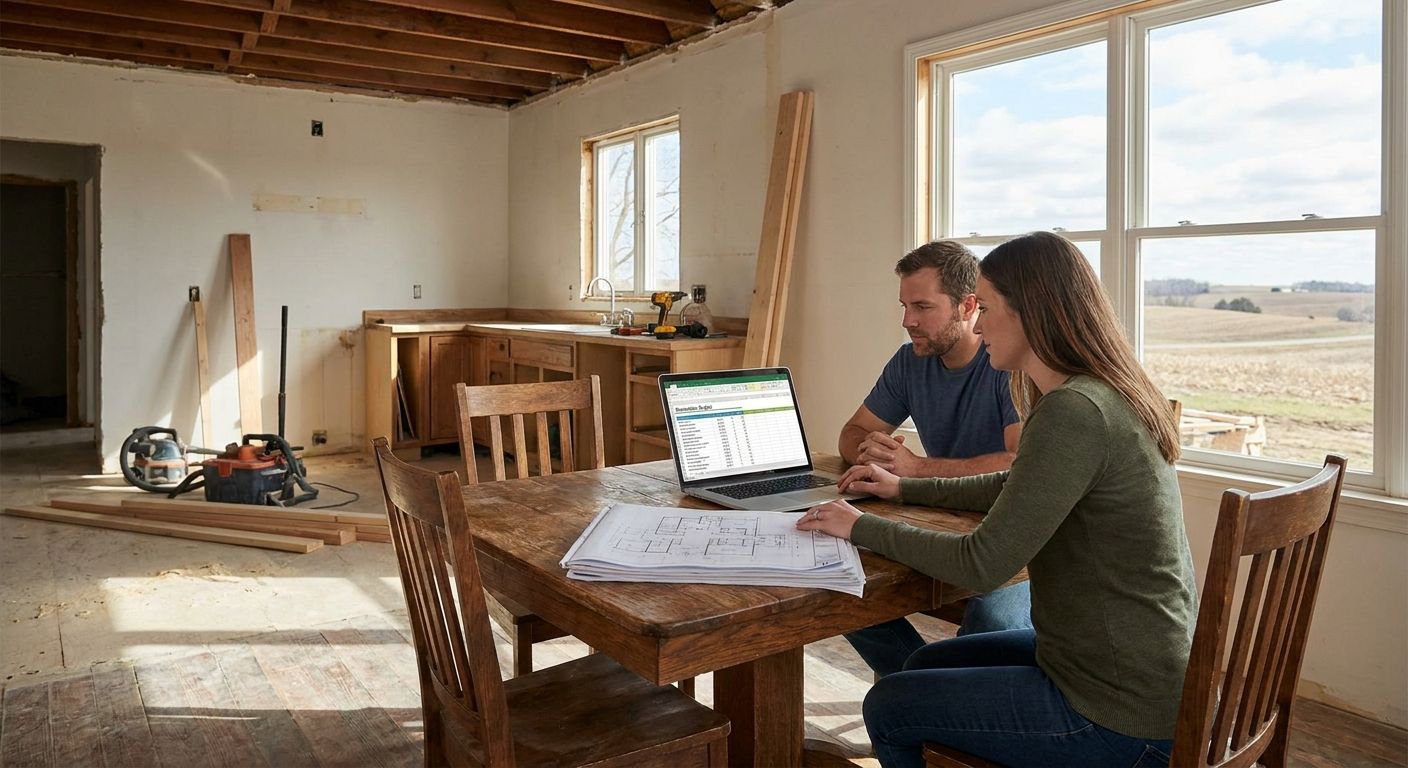
Budgeting for a whole home renovation in Central Iowa comes down to three moves: get a written scope from a licensed contractor, price it category by category, and hold back a contingency reserve before you sign anything. Skip any one of those steps and the number on your first estimate stops meaning anything by week three.
- Build your budget for a whole home renovation around a written scope, not a verbal quote — line items protect you when conditions change.
- Hold a contingency reserve of 10-20% of the total project cost for hidden structural, electrical, or plumbing issues.
- Phoenix Construction Solutions prices Central Iowa whole-home projects by category (structural, systems, finishes) rather than one flat number.
- Insurance-driven reconstruction work needs a separate line for adjuster negotiations before demo starts.
- Phased renovations spread cost over more time but usually cost more in total than one continuous project in 2026.
Why this matters
A whole home renovation touches structure, systems, and finishes at once, which is exactly where budgets fall apart. Homeowners in Des Moines, Ankeny, Waukee, and West Des Moines routinely get a number from an online calculator, then find out the electrical panel needs replacing once the walls open. The number you see before demo is a starting point, not a ceiling.
Central Iowa's older housing stock — plenty of it built before 1980 in Des Moines and Norwalk — adds cost categories that newer suburbs like Waukee and Ankeny don't always carry: knob-and-tube wiring, undersized panels, and clay sewer lines. None of that shows up in a square-footage estimate. It shows up after the first wall comes down.
How do you budget for a whole home renovation
A whole home renovation budget breaks into five categories. Contractors in Central Iowa typically allocate the total project cost across these buckets, though the split shifts depending on the home's age and how much structural work is involved.
| Budget category | Typical share of total | What it covers |
|---|---|---|
| Design and permits | 5-10% | Plans, city permit fees, engineering if load-bearing walls move |
| Demo and structural | 15-25% | Tear-out, framing changes, foundation repair |
| Systems (electrical, plumbing, HVAC) | 20-30% | Panel upgrades, rerouted plumbing, new ductwork |
| Finishes and fixtures | 25-35% | Flooring, cabinets, countertops, paint, trim |
| Contingency reserve | 10-20% | Hidden conditions found after demo |
That contingency line is not optional padding. Set it aside before you get quotes, not after you're over budget. A 2026 renovation in a 1960s Des Moines ranch and a 2026 renovation in a 2005 Waukee build carry very different risk levels — the older home should sit at the high end of that 10-20% range.
Start every whole home renovation project by talking to a licensed Central Iowa contractor before you set a number in stone. A walk-through catches structural and code issues an online estimator never will.
Cosmetic refresh: paint, flooring, and fixtures
This tier stays inside walls and finishes — no structural changes, no moved plumbing. Budget allocation skews heavily toward the finishes category (closer to 40-50% of total spend) since demo and systems work stay minimal. Best for: homeowners who like their floor plan and just want updated surfaces.
Mid-range remodel: kitchens, baths, and systems
This tier reworks kitchens and bathrooms, often touches electrical panels or plumbing runs, and may open a wall or two. Systems work and demo both climb here, which is why contingency planning matters more at this level than at the cosmetic tier. Best for: homeowners tackling one or two rooms plus the systems behind them.
Full gut renovation with structural work or additions
This is the highest-risk tier: load-bearing changes, full system replacement, sometimes a home addition tied into the existing structure. If you're weighing an addition as part of the project, plan a home addition in Central Iowa as its own line item rather than folding it into the whole-home number — additions carry separate permitting and foundation costs that shouldn't get buried in a single lump sum. Best for: homes needing structural correction, added square footage, or full system replacement.
Why your renovation budget varies
- Home age — pre-1980 homes in Des Moines, Norwalk, and Pleasant Hill often need panel and plumbing upgrades that newer Waukee and Ankeny builds skip.
- Structural scope — moving a load-bearing wall adds engineering and framing costs a cosmetic refresh never touches.
- Insurance involvement — reconstruction after storm, fire, or water damage adds adjuster negotiations and documentation that standard remodels don't carry. If your project is insurance-driven, work with your insurance adjuster on a home reconstruction before finalizing your budget, since the settlement amount and the contractor's scope need to match.
- City permitting requirements — permit timelines and fees differ across Central Iowa municipalities, and delays add carrying costs.
- Material selections — countertop, flooring, and cabinet grade swing the finishes category more than any other line.
- Phased vs. continuous work — spreading a renovation over multiple years usually costs more in total than one continuous 2026 project, since mobilization and material price changes repeat with each phase.
“Set the contingency reserve before you get quotes, not after you're over budget.”
Get a Written Renovation Estimate
Licensed, insured pricing by category for your Central Iowa home.
How long does a whole home renovation take in Central Iowa?
Timeline depends directly on scope — a cosmetic refresh runs shorter than a full gut with structural work or an addition, and permitting timelines add weeks on top of construction. Weather also plays a role in 2026 scheduling for any exterior or structural phase, since Central Iowa winters slow foundation and framing work.
Should I renovate in phases or all at once?
One continuous project usually costs less in total than the same scope split across multiple phases, because mobilization, permitting, and material sourcing repeat with each phase. Phasing makes sense mainly when cash flow, not total cost, is the deciding factor.
Do I need a permit for a whole home renovation in Iowa?
Most structural, electrical, and plumbing work requires a permit through the local municipality, and requirements vary by city across Central Iowa. Cosmetic work like paint and flooring replacement typically doesn't require a permit, but any wall removal or system upgrade does.
FAQ
How much contingency should I budget for a whole home renovation?
Set aside 10-20% of the total project cost as a contingency reserve. Older homes in Des Moines and Norwalk should sit at the higher end of that range due to hidden electrical and plumbing conditions.
What's the biggest hidden cost in a whole home renovation?
Electrical panel and plumbing upgrades are the most common hidden cost, especially in homes built before 1980. These rarely show up until walls open during demo.
Is it cheaper to renovate a whole house at once or room by room?
Renovating all at once is usually cheaper in total than room-by-room phasing, since mobilization and permitting costs repeat with each separate phase.
Do renovation costs differ between Des Moines and Waukee?
Yes — older Des Moines housing stock often needs system upgrades that newer Waukee and Ankeny builds don't, which shifts more budget toward the systems category.
How do I budget for a home addition as part of a whole home renovation?
Treat a home addition as a separate line item with its own foundation and permitting costs rather than folding it into the whole-home total, since additions carry different risk than interior remodeling.
What percentage of my renovation budget should go to finishes?
Finishes and fixtures typically take 25-35% of total budget in a full whole-home renovation, higher for cosmetic-only projects that skip structural and systems work.
Does insurance cover any part of a whole home renovation budget?
Only when the renovation is tied to a covered loss like fire, storm, or water damage — standard remodeling and additions are out-of-pocket unless reconstruction is insurance-driven.
Who should I call to get an accurate whole home renovation estimate in Central Iowa?
A licensed, insured contractor who walks the property before quoting gives the most accurate number, since online calculators can't see structural or system conditions behind the walls.
One last thing
The estimate that matters most isn't the first one you get — it's the one that survives demo day. Homeowners who skip a contingency reserve are the ones calling contractors mid-project asking for change orders they didn't budget for, and that's when a whole home renovation stalls or stretches into a second year.