Central Iowa remodeling guides
Home additions in Pleasant Hill, Iowa
Home additions in Pleasant Hill, Iowa compared for 2026 — bump-outs, second stories, in-law suites, and garage conversions with clear buy/skip verdicts.
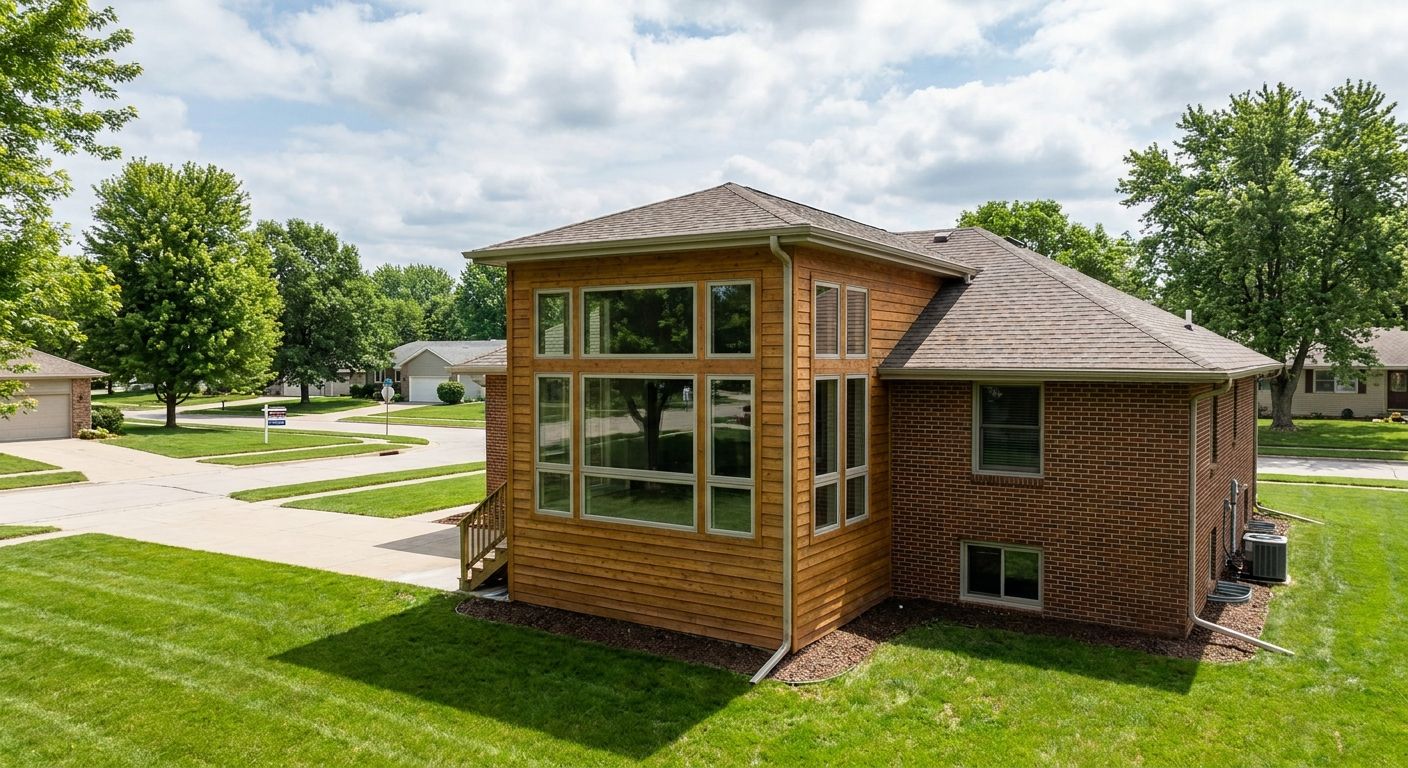
Pleasant Hill homeowners adding square footage in 2026 face a specific set of decisions — foundation type, roofline match, and whether the new space counts as livable square footage for resale. Phoenix Construction Solutions, licensed and insured out of Carlisle, Iowa, builds additions across Central Iowa and knows which choices actually pay off on a Pleasant Hill lot.
- Home additions in Pleasant Hill hinge on foundation match and code review — plan both before design. Buy.
- Second-story additions often cost less per square foot than bump-outs once new foundation work is priced in. Consider.
- Sunrooms skip the foundation dig but rarely count as heated square footage at resale. Consider.
- Garage conversions build fastest but add the least resale value on typical Pleasant Hill lots. Skip if resale is the goal.
Why this matters
Pleasant Hill's housing stock is a mix of ranch-style homes from the 1970s-90s and newer two-story builds off Copper Creek and Pleasant Hill Park. That mix matters because an addition that matches a 1980s ranch roofline doesn't automatically work on a newer build, and a contractor who doesn't check the existing foundation before framing a second story is setting you up for a structural problem later. Planning a home addition in Central Iowa starts with matching the addition type to the house you already have, not the addition you saw on a renovation show.
Who this is for
This guide is for Pleasant Hill homeowners who've outgrown their current square footage — a growing family needing a fourth bedroom, a household adding an aging parent, or an owner who wants a home office that isn't the dining room table. It assumes you own the home, plan to stay past 2026, and want the addition to add resale value, not just temporary space.
What to look for in home additions for Pleasant Hill
Foundation type matched to your lot
A slab, crawlspace, or full basement foundation each carries different costs and different structural limits for what can go on top. A contractor who quotes a price before checking your existing foundation is guessing, not estimating.
Local code and setback compliance
Pleasant Hill enforces setback and lot-coverage rules like every Central Iowa municipality, and additions that push into a setback get rejected at permit review, not after the framing crew shows up. Confirm this before design work starts, not after.
Matching roofline and siding
An addition with a mismatched roof pitch or siding profile reads as an addition, not part of the house, and that shows up in appraisals. Getting the roofline right at the framing stage costs far less than fixing it after drywall.
Whether the addition needs its own HVAC zone
A bedroom or suite addition that shares a single HVAC zone with the rest of the house is usually too hot in summer and too cold in winter. Budget for a dedicated zone or mini-split from the start, not as a retrofit.
How the addition affects resale value in Pleasant Hill's market
Not every added square foot returns equal value. A bathroom-adjacent bedroom addition or an in-law suite with its own entrance tends to outperform a sunroom that doesn't count as heated living space on an appraisal.
Contractor licensing and insurance
An addition ties into your home's structure, electrical, and plumbing — a contractor without current licensing and insurance leaves you holding liability if something fails inspection or causes damage. Confirm both before signing anything.
Top picks: addition types for Pleasant Hill homes
Single-story bump-out — the safe pick. Typical depth runs 4 to 8 feet, usually extending a kitchen, dining room, or primary suite without touching the roofline of the rest of the house. It's the lowest-disruption option because it doesn't require reworking existing rooms. Verdict: Buy for anyone adding one room without a full layout overhaul.
Second-story addition — the space multiplier. These typically run 800 to 1,500 square feet and add a full second level, which works best on homes with a foundation already engineered to carry the load. A similar second-story build in Ankeny shows how the foundation assessment shapes the final cost more than the finish selections do. Verdict: Buy if your existing foundation checks out, Skip if it doesn't without reinforcement.
Sunroom or three-season room — the budget play. These sit on a simpler foundation and skip full HVAC integration, which keeps the build faster and cheaper. The tradeoff: most municipalities and appraisers don't count an unconditioned sunroom as heated living space. Verdict: Consider for lifestyle value, not for a resale-driven addition.
In-law suite or accessory addition — the resale wildcard. A suite with its own entrance, bathroom, and small kitchenette serves multigenerational households and tends to hold resale value better than a generic bonus room. An in-law-style addition built in Urbandale illustrates how a separate entrance changes both the permit process and the eventual resale pitch. Verdict: Buy for multigenerational households, Consider otherwise given the added plumbing cost.
Garage-to-living-space conversion — the fastest build. Converting an existing garage skips new foundation work entirely since the slab is already there, which shortens the build timeline more than any other option on this list. The catch: buyers in Pleasant Hill still expect garage parking, and losing it can hurt resale even after a clean conversion. Verdict: Skip if resale matters, Consider if you're staying long-term and don't need the garage.
What to avoid
- A contractor who quotes before a foundation inspection. A number given without seeing your crawlspace or slab is a placeholder, not an estimate.
- Treating a sunroom as bedroom-equivalent square footage. Appraisers and buyers generally don't, even if it feels like living space day to day.
- Skipping the permit step to save time. An addition built without permit sign-off can become a disclosure problem at your next sale, regardless of build quality.
Comparison table
| Addition type | Foundation needed | Typical size | Resale impact | Verdict |
|---|---|---|---|---|
| Bump-out | Matches existing | Small (one room) | Moderate | Buy |
| Second story | Full engineered | 800-1,500 sq ft | High | Buy |
| Sunroom | Simple slab | Small | Low-moderate | Consider |
| In-law suite | Full or partial | Medium | High | Buy for multigenerational |
| Garage conversion | Existing slab | Medium | Low | Skip for resale |
Plan your Pleasant Hill addition
Talk through foundation, code, and layout before you commit to a design.
FAQ
What's the best type of home addition for a Pleasant Hill ranch home?
A single-story bump-out or a matched-roofline room addition works best on most Pleasant Hill ranch homes built in the 1970s-90s. It keeps the roof pitch consistent, which second-story additions can't do without a full structural review.
Is a second-story addition better than a bump-out?
A second-story addition adds more square footage per foundation dollar spent, but only if your existing foundation is engineered to carry the added load. A bump-out is the lower-risk choice when the foundation hasn't been assessed yet.
How much does a home addition cost in Pleasant Hill in 2026?
Cost depends heavily on foundation type, addition size, and whether plumbing or HVAC extension is required, so a firm number only comes after a site visit. Get a quote based on your specific lot and layout rather than a generic per-square-foot estimate.
Does Pleasant Hill require a permit for a home addition?
Yes, additions in Pleasant Hill go through the local building department's permit and code review process before construction starts. Skipping this step risks a stop-work order mid-build and disclosure issues at resale.
Does a sunroom count as square footage for resale?
Generally no, if the sunroom isn't heated and cooled to the same standard as the rest of the house, appraisers typically won't count it as conditioned living space. Homeowners who want the resale bump should budget for full HVAC integration instead.
Is a garage conversion a good home addition in Pleasant Hill?
A garage conversion is the fastest build since the foundation already exists, but losing garage parking can hurt resale value in a market where buyers expect it. It works better for homeowners planning to stay long-term than for those adding value ahead of a sale.
What should I look for in a home addition contractor in Pleasant Hill?
Confirm the contractor is licensed and insured, and that they inspect your existing foundation before quoting a price. Phoenix Construction Solutions, based in Carlisle, checks both before design work starts on any Central Iowa addition.
One last thing
The addition that adds the most resale value in Pleasant Hill isn't always the biggest one — a bathroom-adjacent bedroom addition with its own HVAC zone often outperforms a larger bonus room that shares ductwork with the rest of the house. Size matters less than whether the space functions like it belongs to the original floor plan.