Central Iowa remodeling guides
Best windows for a Central Iowa home renovation
Fiberglass wins for Iowa's freeze-thaw swings, vinyl wins on budget. Compare the best windows for a Central Iowa home renovation in 2026 before you buy.
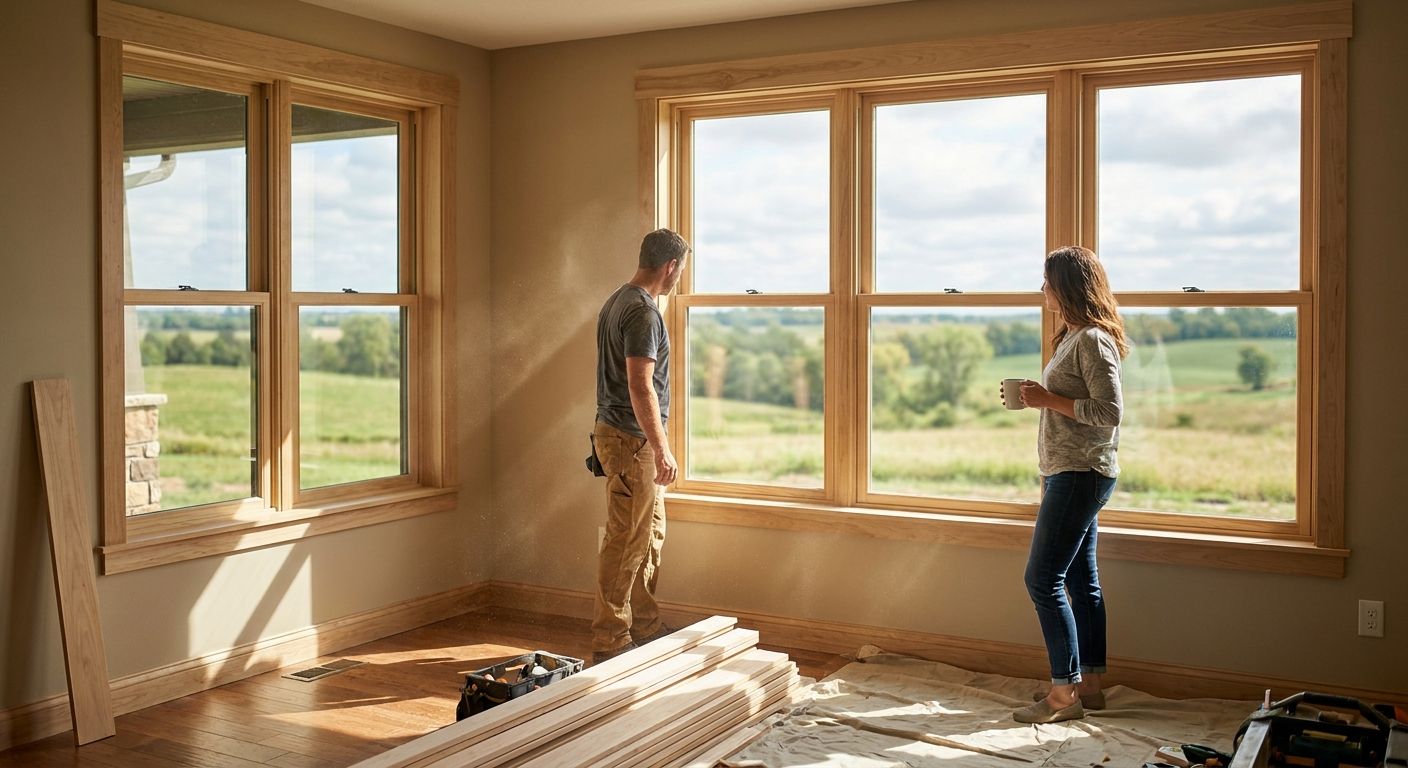
Vinyl, fiberglass, aluminum-clad wood, composite, or triple-pane — the window choice on a Central Iowa renovation decides how much you spend heating the house every winter from now until you sell it. This guide ranks the five window types homeowners in Des Moines, Ankeny, Waukee, and Carlisle install most often on remodel and addition projects in 2026, with the tradeoffs that actually show up on a job site.
- Fiberglass windows are the best windows for a Central Iowa home renovation overall — they handle freeze-thaw swings without warping.
- Vinyl windows win on budget for full-house replacements; expect tradeoffs on west-facing walls.
- Aluminum-clad wood is the pick for additions and large picture windows that need structural strength.
- Triple-pane glass cuts heating costs the most but adds frame weight and cost.
- Iowa falls in the ENERGY STAR Northern climate zone, which sets a U-factor ceiling of 0.27 for certified windows.
Why this matters
Central Iowa swings from single digits in January to 90-degree humidity in July, and that range is hard on window frames in ways coastal or Sun Belt climates never test. A window rated fine for Phoenix, Arizona, is a different product than one built for Phoenix Construction Solutions' service area in 2026.
ENERGY STAR splits the country into four climate zones, and Iowa sits in the Northern zone, which requires a U-factor of 0.27 or lower — no exceptions for looks or brand name. Skip that spec on a Des Moines renovation project and the furnace runs harder every winter for the life of the house.
Window choice also gets tangled up with the rest of the renovation scope — a kitchen bump-out or basement egress often means new rough openings, not just swap-outs. That changes both the labor cost and which window type makes sense structurally.
What makes the best windows for a Central Iowa renovation
- U-factor rated for the Northern zone — 0.27 or lower, verified on the ENERGY STAR label, not the sales brochure
- Frame stability across freeze-thaw cycles — vinyl and wood expand and contract at different rates than glass; fiberglass tracks closest to glass
- Impact resistance — Central Iowa sees hail-producing storms most summers, and frame material affects how glass holds up
- Installation quality — flashing and shimming matter as much as the window itself; a good window installed poorly still leaks air
- Maintenance load — how much scraping, caulking, or repainting the frame needs across four real seasons
- Structural fit for the opening — additions and large openings need frame strength that budget vinyl doesn't offer
Best windows for a Central Iowa renovation — at a glance
| Window type | Best for | Standout feature | Key limitation |
|---|---|---|---|
| Fiberglass windows | Iowa's freeze-thaw swings | Expands and contracts nearly the same rate as the glass itself | Higher upfront cost than vinyl |
| Vinyl windows | Budget-conscious full-house replacement | Low-maintenance frame, no repainting ever | Can warp on unshaded, west-facing walls in summer |
| Aluminum-clad wood windows | Additions and large picture windows | Wood interior with a weatherproof metal shell outside | Needs periodic exterior caulk and seal checks |
| Composite windows | Historic and character-home renovations | Wood-look interior on an engineered core that resists rot | Fewer color and style options than vinyl |
| Triple-pane windows | Cutting January heating bills | Extra pane and gas fill push U-factor well under the 0.27 ENERGY STAR line | Heavier sash, needs stronger hardware and hinges |
1. Fiberglass windows: best for Iowa's freeze-thaw swings
Fiberglass frames are pultruded, not molded, which is why they hold their shape through Iowa's temperature range better than vinyl. The material expands and contracts at almost the same rate as the glass unit it holds, so the seal around the pane stays tighter over a 20-year span.
Fiberglass windows pros:
- Matches glass expansion rate, reducing seal failure over time
- Holds paint if you want a custom exterior color
- Slim frame profile lets in more visible glass per opening
Fiberglass windows cons:
- Costs more upfront than comparable vinyl units
- Fewer manufacturers offer it regionally than vinyl
Fiberglass windows pricing: varies by supplier and size; ask for a line-item quote during your renovation estimate rather than a per-window average.
Best for: homeowners doing a full renovation who plan to stay in the house 15+ years. Verdict: Buy.
2. Vinyl windows: best for budget-conscious full-house replacement
Vinyl is the volume choice for whole-house window replacement during a renovation because the material is cheap to extrude and install fast. Most vinyl frames today are multi-chambered, which helps insulation, but the plastic still moves more than fiberglass across a 100-degree annual swing.
Vinyl windows pros:
- Lowest material cost of the five types
- Zero repainting or refinishing required
- Wide availability from nearly every Central Iowa supplier
Vinyl windows cons:
- Dark colors and unshaded west exposures can cause frame warping over time
- Can't be repainted if you change your exterior color scheme later
- Weaker structurally for very large openings
Vinyl windows pricing: the most affordable option per opening; get a written quote tied to your specific window count and sizes.
Best for: renovations replacing 10+ windows on a fixed budget. Verdict: Buy.
3. Aluminum-clad wood windows: best for additions and large picture windows
When a renovation includes an addition or a wall of glass facing the backyard, aluminum-clad wood carries the structural load better than vinyl or composite. The wood interior gives real trim options; the aluminum shell handles Iowa rain and snow without the maintenance a bare wood exterior demands.
Aluminum-clad wood pros:
- Strongest frame option for oversized openings
- Real wood interior for staining or custom trim work
- Metal exterior shell needs no repainting
Aluminum-clad wood cons:
- Highest material cost of the five types in most markets
- Exterior seals and caulk joints need a maintenance check every few years
- Longer lead times than stock vinyl or fiberglass
Aluminum-clad wood pricing: premium tier; budget for it specifically if your home addition includes large or custom-sized openings.
Best for: additions, sunrooms, and any wall with openings wider than a standard double-hung. Verdict: Buy, if the opening calls for it.
4. Composite windows: best for historic and character-home renovations
Composite windows use an engineered wood-fiber core instead of solid wood, so you get the look of a traditional window without the rot risk on an older Central Iowa farmhouse or bungalow. This matters most on renovations where the exterior trim profile needs to match a century-old house.
Composite windows pros:
- Wood-grain interior look without solid-wood maintenance
- Resists rot and insect damage better than real wood
- Handles humidity swings without the swelling vinyl can show
Composite windows cons:
- Narrower color and trim-profile selection than vinyl
- Not as widely stocked, so lead times run longer
Composite windows pricing: mid-to-upper tier; compare quotes against aluminum-clad wood before committing.
Best for: homeowners restoring original character on an older renovation. Verdict: Buy, for matching-trim projects. Hold for standard replacements.
5. Triple-pane windows: best for cutting January heating bills
Triple-pane isn't a frame material — it's a glass upgrade you can add to vinyl, fiberglass, or wood-clad frames. The third pane and extra gas fill drop the U-factor well below the ENERGY STAR Northern zone's 0.27 ceiling, which matters most on a house with a lot of west and north-facing glass.
Triple-pane pros:
- Lowest U-factor of any option on this list
- Reduces cold-spot drafts near the glass in January
- Cuts noise transmission more than double-pane
Triple-pane cons:
- Adds weight, which some older frames and hardware can't support
- Costs more per unit than double-pane glass
- Diminishing returns on small, shaded, or south-facing windows
Triple-pane pricing: typically an upgrade line item over double-pane, not a standalone window type — ask your contractor to price it per opening.
Best for: north and west-facing walls in an energy-focused renovation. Verdict: Buy for exposed walls. Skip on small, shaded openings — the payback is too slow.
“If a window's U-factor sits above 0.27, it doesn't meet ENERGY STAR's Northern zone standard, and Iowa's winters will find that gap.”
How we ranked these
Each window type was scored against the six criteria above: U-factor fit for Iowa's climate zone, frame stability through freeze-thaw, impact resistance, installation tolerance, maintenance load, and structural fit for the opening size. Fiberglass ranks first because it scores well across all six; the other four each win a specific criterion but trade off elsewhere.
Which windows should you choose?
If you're replacing every window in a 2026 renovation and staying long-term, fiberglass is the default answer. If the budget is tight and you're swapping 12+ standard-size windows, vinyl gets the job done without a structural downside. Additions and oversized openings point to aluminum-clad wood almost every time, and a historic renovation with matching trim points to composite. Triple-pane is a glass upgrade you layer onto whichever frame you pick, not a competing category.
Get a window quote for your renovation
Licensed and insured, serving Central Iowa from Carlisle.
FAQ
What are the best windows for a Central Iowa home renovation in 2026?
Fiberglass windows are the best overall pick for a Central Iowa renovation in 2026 because the frame material expands and contracts at nearly the same rate as the glass, holding up better through freeze-thaw cycles than vinyl. Vinyl remains the better choice on a tight budget for full-house replacement.
Is fiberglass better than vinyl for Iowa windows?
Fiberglass generally outperforms vinyl in Iowa's climate because it resists warping on unshaded, west-facing walls during summer heat. Vinyl still wins on upfront cost, which matters most when replacing a large number of windows at once.
What U-factor do windows need to meet in Iowa?
Iowa falls in the ENERGY STAR Northern climate zone, which requires a U-factor of 0.27 or lower for a window to carry the ENERGY STAR label. Check the label on any quote before assuming a window qualifies.
Are triple-pane windows worth it in Iowa?
Triple-pane glass is worth the added cost on north and west-facing walls with heavy winter exposure, since it drops the U-factor further than double-pane. On small, shaded, or south-facing windows, the energy savings rarely justify the extra cost.
What windows work best for a home addition in Central Iowa?
Aluminum-clad wood windows handle large or custom-sized openings better than vinyl or composite because the frame carries more structural load. This matters most on additions with wide picture windows or oversized sliders.
Do composite windows work for older Central Iowa homes?
Composite windows fit historic and character-home renovations well because the wood-grain interior matches original trim without the rot risk of solid wood. They cost more than vinyl but need far less maintenance than a real wood frame.
How much do new windows add to a renovation budget?
Window cost depends heavily on frame material, glass upgrade, and opening size, so get a line-item quote tied to your specific window count rather than a flat estimate. Vinyl runs cheapest per opening; aluminum-clad wood and triple-pane glass sit at the top of the range.
Should windows be replaced during a full home renovation or after?
Replace windows during the renovation, not after, since wall and trim work already exposes the rough openings. Doing it separately later means reopening finished walls and trim you just paid to install.
One last thing
Most homeowners assume any window labeled "energy efficient" clears Iowa's bar, but the ENERGY STAR Northern zone requirement is stricter than the South-Central and Southern zone specs sold in national big-box stores. A window that's ENERGY STAR certified for Georgia can still miss Iowa's 0.27 U-factor ceiling — always check the label against the Northern zone column, not just the certification logo, before signing off on a 2026 renovation quote.