Central Iowa remodeling guides
Best siding options for a whole home exterior renovation in Iowa
Fiber cement wins as the best siding option for a 2026 Iowa exterior renovation. Compare vinyl, steel, and wood siding for freeze-thaw and hail durability.
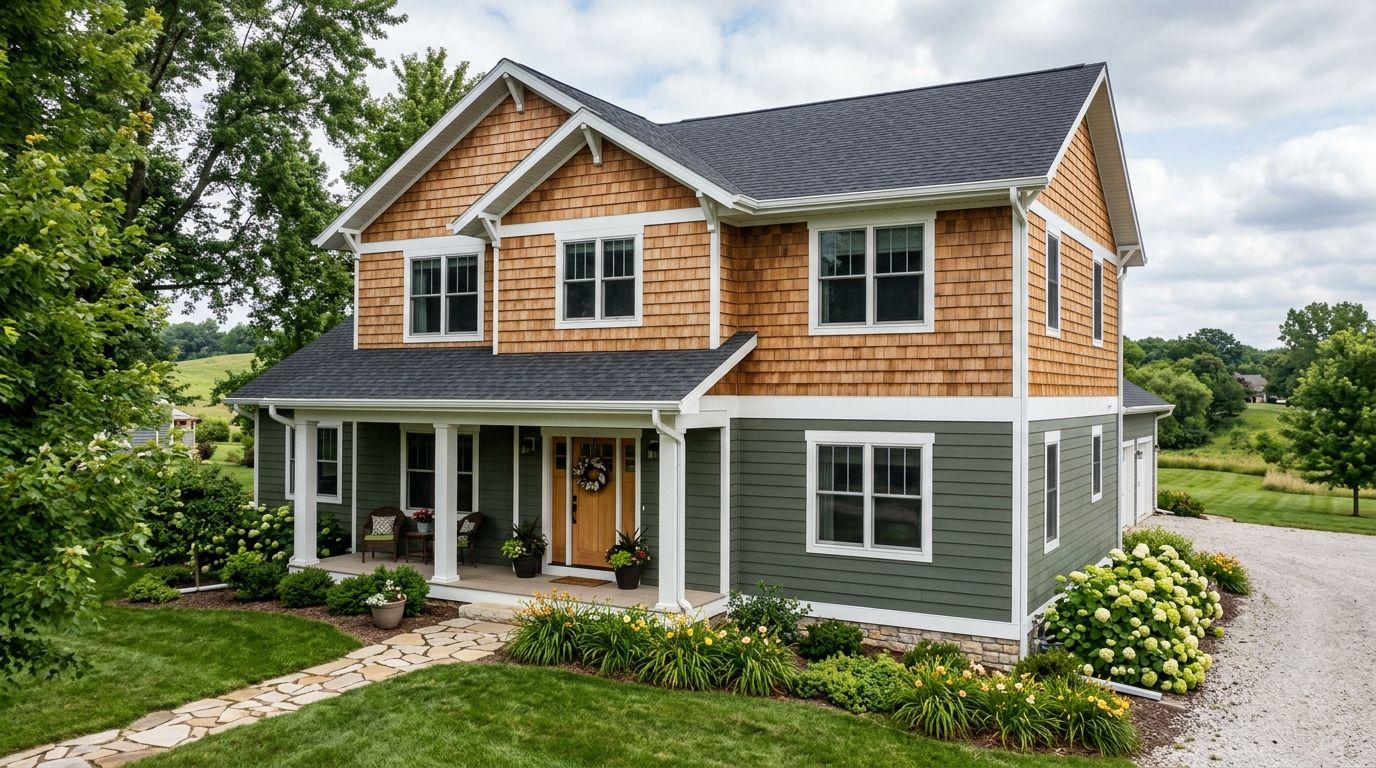
Fiber cement siding is the best overall siding option for a whole home exterior renovation in Iowa's climate. Vinyl siding wins on low upkeep and simple installation scope. Steel siding is the pick for homeowners worried about hail. Engineered wood siding gets you a wood look without raw lumber's moisture problems. Natural wood siding suits owners restoring an older home's original character, and brick veneer is the choice for anyone who wants decades of low-maintenance permanence.
- Fiber cement siding wins overall for Iowa's freeze-thaw cycles and holds up to Central Iowa hail better than vinyl.
- Vinyl siding stays the low-maintenance choice for renovations with a contained labor scope.
- Steel siding is the strongest pick against hail damage, a real risk for Central Iowa roofs and walls.
- Engineered wood siding delivers a wood look with factory moisture treatment raw lumber doesn't have.
- Brick veneer needs the least long-term upkeep of any siding option covered here.
Why this matters
Central Iowa sits in IECC climate zone 5, which means whatever siding goes on your home has to survive repeated freeze-thaw cycles from roughly October through April, plus summer humidity that regularly pushes past 80%. A siding choice that works in Phoenix, Arizona or coastal California can fail here inside a few winters.
A whole-home exterior renovation is also one of the few remodeling projects where the material choice is nearly permanent — most homeowners don't re-side a house twice in one lifetime. Getting this decision wrong costs more than a bad paint color choice ever would.
Phoenix Construction Solutions installs siding across seven Central Iowa communities — Des Moines, Norwalk, Pleasant Hill, Ankeny, Urbandale, Waukee, and West Des Moines — and the material recommendation changes based on the home's age, exposure, and whether the renovation includes new windows or a full envelope rebuild.
What makes the best siding options for Iowa
- Freeze-thaw durability — resistance to cracking and warping as temperatures swing from below 0°F to summer heat
- Hail and impact resistance — Central Iowa sees regular hail events that dent or crack weaker materials
- Moisture management — how well the material sheds Iowa's humid summers without trapping water behind the surface
- Maintenance load — repainting, caulking, and inspection frequency over the life of the siding
- Code compatibility — how easily the material pairs with zone 5 continuous insulation requirements
- Appearance flexibility — color, texture, and profile options for matching an existing home or going custom
Siding options at a glance
| Siding option | Best for | Standout feature | Key limitation |
|---|---|---|---|
| Fiber cement | Overall freeze-thaw durability | Non-combustible, holds paint longer than wood | Heavier install, needs experienced crews |
| Vinyl | Contained-scope renovations | Fast install, minimal upkeep | Can crack in extreme cold snaps |
| Engineered wood | Wood look without raw lumber issues | Factory moisture treatment | Still needs periodic repainting |
| Steel | Hail and storm resistance | Dent-resistant panel construction | Limited texture variety vs. wood-look products |
| Natural wood | Historic character homes | Authentic grain and profile matching | Highest ongoing maintenance of any option here |
| Brick veneer | Long-term low maintenance | Decades of service with minimal upkeep | Higher structural planning during install |
1. Fiber cement siding: best siding for freeze-thaw durability in Iowa
Fiber cement combines cement, sand, and cellulose fiber into a rigid board that holds paint far longer than wood and doesn't warp when Iowa's temperature swings from single digits to 90°F and back inside the same season. It's non-combustible, which matters for insurance conversations, and it takes texture and color options that mimic wood grain, stucco, or smooth panel looks.
Fiber cement pros:
- Resists cracking through repeated freeze-thaw cycles
- Non-combustible material, favorable for insurance underwriting
- Holds paint and color longer than wood or vinyl before needing a refresh
- Wide range of textures and profiles for matching architectural style
Fiber cement cons:
- Heavier boards require an experienced install crew, which limits DIY options
- Cut edges need sealing during install or moisture can wick in over time
Best for: whole-home exterior renovations where the homeowner wants a 20-30 year material and isn't chasing the lowest labor scope. Verdict: Buy.
2. Vinyl siding: best siding for a contained-scope renovation
Vinyl siding installs fast, needs no repainting, and works well on homes where the renovation budget is going mostly toward windows, the roof, or interior work rather than the exterior skin itself. It's the material most homeowners picture when they think "low-maintenance siding."
Vinyl pros:
- No repainting required over its service life
- Fast install timeline compared to masonry or fiber cement
- Wide color selection, though color is baked in rather than field-applied
Vinyl cons:
- Can become brittle and crack during severe Iowa cold snaps
- Limited ability to mimic deep architectural profiles like true wood shake
- Impact resistance lags behind fiber cement and steel
Best for: renovations where siding is a smaller line item next to windows, roofing, or additions. Verdict: Buy.
3. Engineered wood siding: best siding for a wood look without raw lumber's problems
Engineered wood siding (products like LP SmartSide fall in this category) uses treated strand or panel construction to deliver a wood look with better moisture resistance than solid lumber. It takes paint well and gives homeowners the board-and-batten or lap-siding look without the swelling and rot risk raw wood carries in Iowa's humidity.
Engineered wood pros:
- Factory-applied moisture and pest treatments raw lumber doesn't have
- Authentic wood-look profiles including board-and-batten and lap styles
- Lighter than fiber cement, which can simplify some install conditions
Engineered wood cons:
- Still needs periodic repainting to protect the treated surface
- Edge cuts need field sealing, similar to fiber cement
Best for: homeowners who want a wood aesthetic on a home addition or full exterior without the maintenance load of real wood. Verdict: Buy.
4. Steel siding: best siding for hail and storm resistance
Steel siding panels resist denting better than vinyl and hold up to Central Iowa's hail season without the cracking risk that comes with brittle materials in cold weather. It's a less common choice than fiber cement or vinyl on residential homes, but it's the strongest option here against impact damage.
Steel pros:
- Dent-resistant panel construction stands up to hail impact
- Doesn't crack in extreme cold the way vinyl can
- Non-combustible like fiber cement
Steel cons:
- Fewer texture and profile options compared to wood-look materials
- Scratches expose the substrate and need touch-up attention
Best for: homes in areas with a documented history of hail damage or storm exposure. Verdict: Buy for storm-prone properties, Hold otherwise.
5. Natural wood siding: best siding for historic character homes
Real wood siding is still the right call for homeowners restoring an older Iowa home where matching the original architectural detail matters more than minimizing maintenance. Cedar and similar species take stain and paint in a way engineered products can't fully replicate.
Natural wood pros:
- Authentic grain and texture for historic or character-driven renovations
- Can be stained rather than painted for a different finish option
Natural wood cons:
- Highest maintenance load of any option covered here — regular repainting, caulking, and moisture inspection
- Most vulnerable to Iowa's humidity and freeze-thaw cycle without diligent upkeep
- Higher risk of pest issues without ongoing treatment
Best for: historic home restorations where authenticity outweighs upkeep concerns. Verdict: Wait — only if the maintenance commitment is real.
6. Brick veneer: best siding for long-term low maintenance
Brick veneer isn't siding in the traditional sense, but it belongs on this list for whole-home exterior renovations where the goal is decades of service with almost no ongoing upkeep. It pairs well with fiber cement or engineered wood as an accent material too.
Brick veneer pros:
- Minimal ongoing maintenance once installed correctly
- Excellent freeze-thaw and moisture performance
- Doesn't need repainting or recoating
Brick veneer cons:
- Requires more structural planning during install than panel-based siding
- Limited color flexibility once installed compared to paintable materials
Best for: homeowners planning a one-time exterior investment who don't want a repaint cycle every decade. Verdict: Buy for full or partial exterior application.
How this list was ranked
Each material was weighed against the six criteria above — freeze-thaw durability, hail resistance, moisture management, maintenance load, code compatibility, and appearance flexibility — with Iowa's zone 5 climate as the baseline, not a generic national average. Fiber cement and steel scored highest on durability criteria; vinyl and brick veneer scored highest on maintenance load; engineered and natural wood split the appearance-flexibility category depending on whether the goal is a modern or historic look.
Which siding should you choose for your 2026 renovation?
If you're not sure where to start, fiber cement siding is the default answer for most Central Iowa whole-home exterior renovations in 2026 — it handles the freeze-thaw cycle, resists hail better than vinyl, and holds paint long enough to make the labor investment worth it. Choose vinyl if the renovation budget is concentrated elsewhere, like new windows or a roof replacement. Choose steel if your property has a documented hail history. Reserve natural wood for historic restorations where authenticity is the priority over upkeep.
“If a siding material can't survive an Iowa hailstorm without denting, it isn't built for this climate.”
Get a siding recommendation for your renovation
Licensed, insured, based in Carlisle, IA.
FAQ
What's the best siding option for an Iowa exterior renovation?
Fiber cement siding is the best overall option for Central Iowa in 2026 because it resists the freeze-thaw cycle and holds up better to hail than vinyl. Vinyl and engineered wood remain strong choices depending on budget scope and desired look.
Is fiber cement siding better than vinyl for Iowa homes?
Fiber cement outperforms vinyl on freeze-thaw durability and hail resistance, but vinyl installs faster and needs less ongoing attention. The right choice depends on whether durability or contained renovation scope matters more.
How does hail affect siding choice in Central Iowa?
Central Iowa sees regular hail events, which makes impact resistance a real factor in material choice. Steel siding and fiber cement hold up better against denting than vinyl or natural wood.
Does vinyl siding crack in Iowa winters?
Vinyl can become brittle and crack during severe cold snaps when temperatures drop well below freezing. Fiber cement and steel don't share this failure mode.
What siding works best with new windows during a whole-home renovation?
Fiber cement and engineered wood both integrate cleanly with new window flashing during a full exterior renovation. Coordinating siding and window work in the same phase avoids re-flashing later.
Is brick veneer worth it for a Central Iowa home?
Brick veneer is worth it for homeowners prioritizing decades of low maintenance over paintable color flexibility. It requires more structural planning during install than panel siding.
How long does whole-home siding installation take in Central Iowa?
Timelines vary by material, home size, and whether the renovation includes window replacement or structural repair alongside the siding. A licensed contractor can scope an accurate timeline after an on-site walkthrough.
One last thing
Most homeowners planning a 2026 exterior renovation focus on the siding material and forget the trim and flashing details that determine whether that material survives its first Iowa winter. A fiber cement board installed with poor edge sealing will fail years before its expected service life — the material choice only matters as much as the install quality behind it.