Central Iowa remodeling guides
Basement home gyms for Central Iowa homeowners
Building a basement home gym in Central Iowa in 2026? See the waterproofing, flooring, and code steps that determine if it lasts or fails.
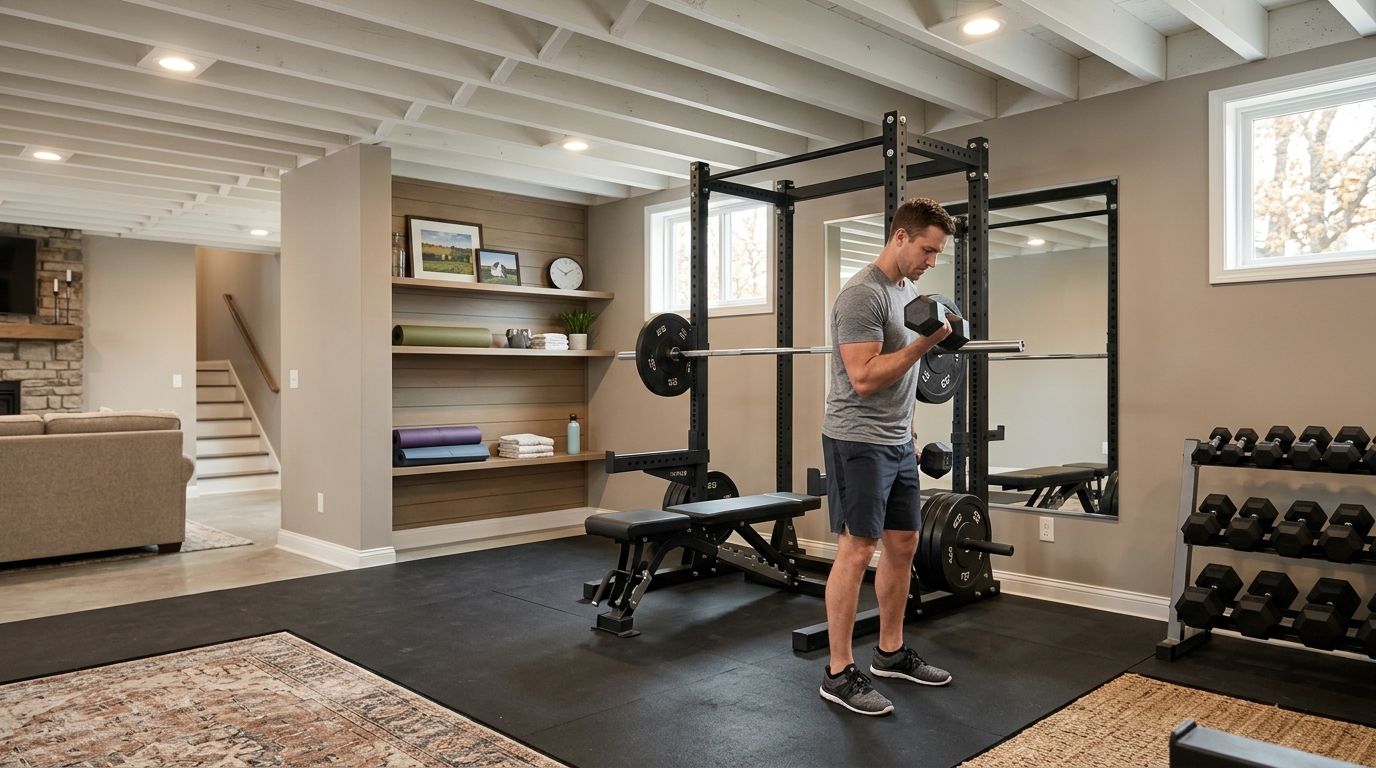
A basement home gym in Central Iowa is a below-grade fitness space converted from unfinished storage into a dedicated workout room, built to handle Iowa's humidity swings, frost-line moisture, and low ceiling heights that unfinished basements typically have. Homeowners in Des Moines, Ankeny, Waukee, and Norwalk who want this space face a different set of problems than someone finishing a basement for a family room: equipment weight loads, mirror walls, rubber flooring drainage, and ventilation for a room that generates heat and sweat instead of just foot traffic.
- A basement home gym in Central Iowa needs waterproofing done before flooring or drywall goes in, not after.
- Egress and ceiling height rules in Iowa basements can block a gym build until a licensed contractor confirms code compliance.
- Rubber flooring over a vapor barrier outperforms carpet tile for basement home gyms in humidity-prone Iowa summers.
- Phoenix Construction Solutions builds basement home gyms for Des Moines, Ankeny, Waukee, and Norwalk homeowners with permit and waterproofing work included.
Why a basement home gym matters for Central Iowa homeowners
Central Iowa winters keep people indoors five months a year, and a basement gym removes the excuse of driving to a commercial gym through snow. But basements here sit below the frost line and take on moisture differently than basements in drier climates — that changes what flooring, drywall, and ventilation choices actually hold up.
A basement home gym is also one of the few remodel categories where the wrong material choice fails fast: standing water under rubber tile mats or drywall that wasn't moisture-rated in a below-grade room in Iowa shows mold within a season, not years. Getting the waterproofing and flooring sequence right in 2026 matters more than picking out equipment.
Waterproof the space before anything else
A basement home gym sits on a slab that's already dealt with decades of groundwater pressure. Skipping this step is the single most common reason Central Iowa basement gyms fail within two years.
- Test for existing moisture with a calcium chloride or plastic-sheet test before framing
- Seal foundation cracks and install a sump pump if one isn't already present
- Add a vapor barrier under any subfloor system
- Grade exterior soil away from the foundation if drainage issues exist
- Confirm the waterproofing plan before drywall or flooring goes down, not after
Measure your ceiling height and egress requirements
Iowa building code sets minimum ceiling heights for finished basement spaces, and gym equipment like squat racks or pull-up rigs need clearance most homeowners underestimate.
- Measure floor-to-joist height, not floor-to-finished-ceiling, before buying tall equipment
- Check for ductwork or plumbing runs that eat into headroom
- Confirm whether the space needs an egress window if it's classified as a habitable room
- Account for rubber flooring thickness, which reduces usable ceiling height by up to an inch or two
Choose flooring built for sweat and impact, not foot traffic
Carpet and laminate that work fine in a basement family room fail fast under dumbbells and cardio machines.
- Rubber rolled flooring handles dropped weights and resists moisture better than interlocking foam tiles
- Interlocking rubber tiles work for lighter home gyms without heavy free weights
- Avoid carpet tile in a basement gym — it traps moisture and odor in Central Iowa's humid summers
- Confirm subfloor moisture protection before installing any flooring type, per the basement flooring guidance for Iowa homes
Plan ventilation and climate control separately from the rest of the basement
A basement gym generates more heat and moisture than any other room in the house — standard basement HVAC often isn't sized for it.
- Add a dedicated exhaust fan if the space lacks existing ductwork
- Consider a dehumidifier sized for the square footage, not the whole basement
- Insulate exterior walls to reduce temperature swings during Iowa winters
- Check that existing ductwork can handle the added heat load from equipment and bodies
Budget realistically before committing to a layout
Homeowners consistently underestimate the electrical and structural work a basement gym needs before equipment ever gets purchased.
- Get a written scope from a licensed contractor covering waterproofing, electrical, and flooring
- Ask whether financing options apply to the renovation portion of the project, detailed in how to finance a basement remodel
- Separate equipment cost from construction cost when planning — they're rarely quoted together
- Review the basement finishing cost breakdown for Des Moines before finalizing a layout
Add mirrors, mounts, and electrical last
Mirror walls, TV mounts, and outlet placement for equipment chargers depend on final equipment layout — doing this too early means redoing it.
- Frame in outlets at equipment height, not just baseboard level
- Mount mirrors on studs, not just drywall anchors, given the weight of full-wall mirror panels
- Run a dedicated circuit if adding a treadmill or rowing machine with a motor
- Wait until equipment is placed before finalizing mirror and TV mount locations
A licensed contractor enters the picture once waterproofing, egress, and electrical scope are defined — not before. Phoenix Construction Solutions handles that scope for basement home gym conversions across Carlisle and the surrounding Central Iowa communities, but the sequence above holds whether a homeowner does the framing themselves or hires it out.
Comparison: build-out options for a Central Iowa basement gym
| Option | Best For | Key Limitation |
|---|---|---|
| DIY flooring + existing walls | Homeowners with a already-waterproofed basement | Skips code and moisture checks that cause failures later |
| Contractor-led partial build (flooring, electrical, HVAC) | Homeowners with an unfinished basement and no waterproofing history | Requires permits and a licensed contractor for electrical work |
| Full basement remodel including gym as one room | Homeowners converting the whole basement (family room, bedroom, gym) | Longer timeline and higher scope than a single-room gym build |
Verdict: a contractor-led partial build is the right call for most Central Iowa basements that haven't been waterproofed or wired for equipment loads — DIY flooring over an unverified slab is the fastest path to a failed gym.
Common mistakes Central Iowa homeowners make with basement gyms
- Skipping the moisture test. Homeowners install flooring on a slab that looks dry but tests positive for vapor transmission, and the flooring lifts within a year.
- Ignoring ceiling clearance for tall equipment. A power rack or pull-up bar gets ordered before anyone measures joist height, and it doesn't fit.
- Underestimating electrical load. Treadmills and rowing machines with motors need dedicated circuits that older Central Iowa homes weren't wired for.
- Treating the gym like the rest of the basement. Standard basement insulation and ventilation aren't sized for the heat and humidity a workout space produces.
- Buying equipment before finalizing the layout. Mirror walls, outlets, and mounts get installed in the wrong spot when equipment placement changes mid-project.
Get a basement gym build quote
Licensed and insured basement remodeling across Central Iowa.
FAQ
How much does a basement home gym cost in Central Iowa in 2026?
Cost depends on waterproofing needs, flooring choice, and whether electrical work is required — the basement finishing cost breakdown for Des Moines covers the general range for a full basement conversion in 2026.
Do I need a permit for a basement home gym in Iowa?
Electrical, plumbing, and egress work typically require permits in Central Iowa jurisdictions, even for a single-room gym conversion. A licensed contractor confirms what applies before work starts.
What flooring is best for a basement home gym in Iowa?
Rubber rolled flooring over a vapor barrier handles dropped weights and Iowa's humid summers better than carpet tile or laminate.
Can I finish a basement gym myself without a contractor?
DIY works for flooring and equipment setup once waterproofing and electrical scope are already verified, but skipping that verification is the most common cause of failed basement gym builds in Central Iowa.
How do I stop moisture from ruining my basement gym floor?
Test the slab for moisture before installing any flooring, then install a vapor barrier underneath rubber or foam tile flooring.
Is a dehumidifier necessary for a basement home gym?
Yes, for most Central Iowa basements — a gym generates more heat and sweat than a standard finished room, and standard basement HVAC often isn't sized for it.
How long does it take to build a basement home gym in Iowa?
Timeline depends on whether waterproofing and electrical work are needed first — a single-room conversion with existing dry conditions moves faster than a full basement remodel.
One last thing
The detail most homeowners skip is testing the slab for moisture before they've picked a single piece of equipment — and it's the one step that determines whether the flooring lasts five years or fails in one. Central Iowa's basements sit below a frost line that shifts with every freeze-thaw cycle each winter, which is exactly why a basement home gym built without a moisture test is a bigger gamble here than in a basement in a drier climate.